
 BTC
BTC
 ETH
ETH
 USDT
USDT
 BNB
BNB
 XRP
XRP
 USDC
USDC
 SOL
SOL
 TRX
TRX
 ZEC
ZEC
 FIGR_HELOC
 HYPE
HYPE
 DOGE
DOGE
 LINK
LINK
 XMR
XMR
 WBT
WBT
 USDS
USDS
 ADA
ADA
 RAIN
RAIN
 LEO
LEO
 XLM
XLM
 NEAR
NEAR
 BCH
BCH
 UNI
UNI
 LTC
LTC
 CC
CC
 SUI
SUI
 USDE
USDE
 AVAX
AVAX
 DAI
DAI
 GRAM
GRAM
 USD1
USD1
 QNT
QNT
 HBAR
HBAR
 TAO
TAO
 SHIB
SHIB
 CRO
CRO
 BTW
BTW
 USDG
USDG
 ONDO
ONDO
 PYUSD
PYUSD
 ENA
ENA
 M
M
 XAUT
XAUT
 OKB
OKB
 RLUSD
RLUSD
 USYC
USYC
 AAVE
AAVE
 PUMP
PUMP
 BUIDL
BUIDL
 USDY
USDY
 MNT
MNT
 DOT
DOT
 WLD
WLD
 ASTER
ASTER
 SKY
SKY
 MORPHO
 WLFI
WLFI
 PEPE
PEPE
 PAXG
PAXG
 ICP
ICP
 USDD
USDD
 ARB
ARB
 ETC
ETC
 HTX
HTX
 EURSAFO
 U
U
 VVV
VVV
 BGB
BGB
 USDGO
USDGO
 USDF
USDF
 KAS
KAS
 BFUSD
BFUSD
 POL
POL
 JUP
JUP
 GT
GT
 LIT
LIT
 ALGO
ALGO
 RENDER
 CAKE
CAKE
 JST
JST
 PI
PI
 ATOM
ATOM
 KCS
KCS
 BCAP
BCAP
 FIL
FIL
 DASH
DASH
 NEXO
NEXO
 AERO
AERO
 VET
VET
 INJ
INJ
 USTB
USTB
 APT
APT
 EUTBL
EUTBL
 STABLE
 ETHFI
ETHFI
 GHO
GHO
 AKE
AKE
 XDC
XDC
 PYTH
PYTH
 PENGU
PENGU
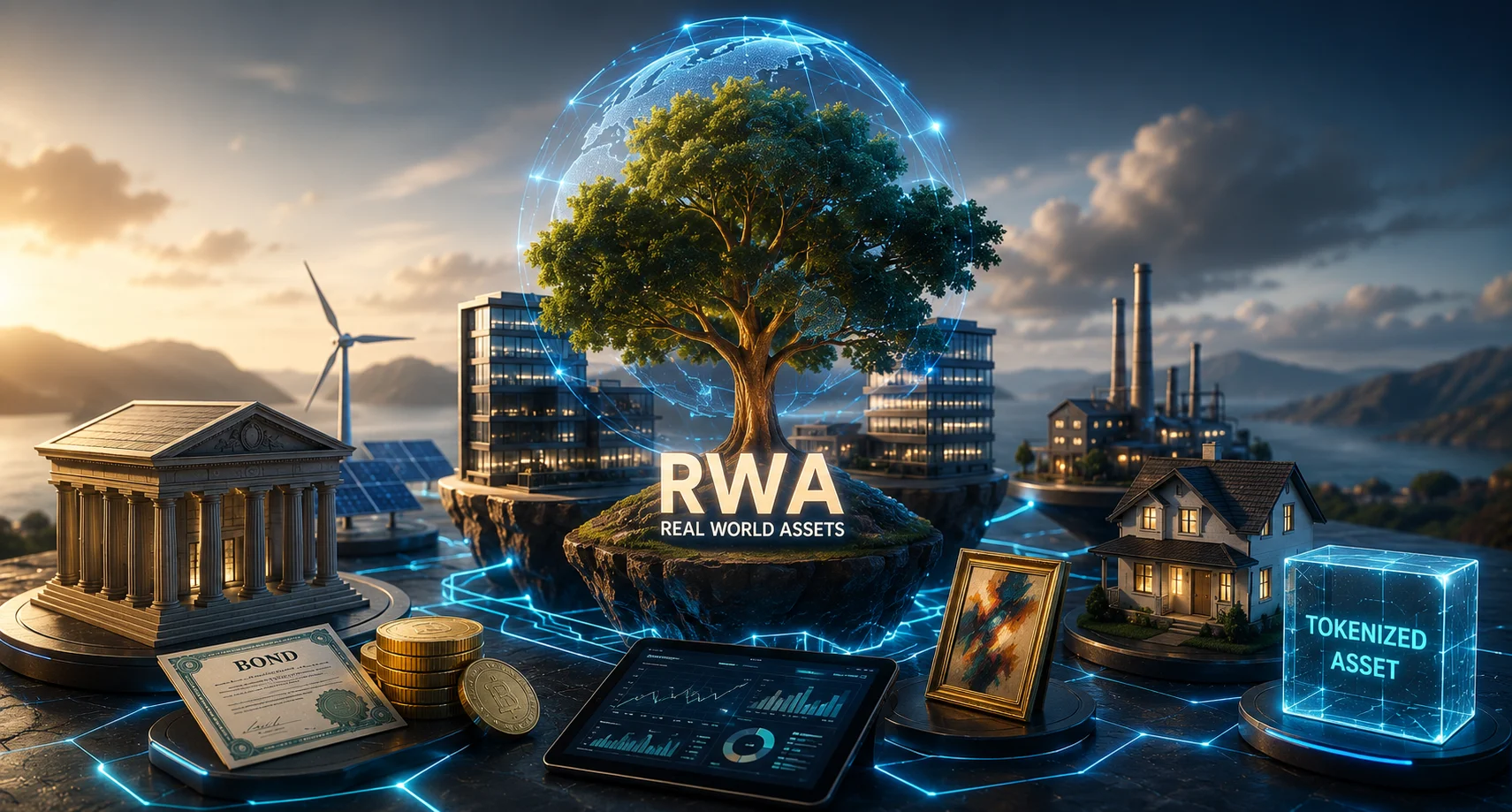

In 2026, the fundamentals of real world asset (RWA) crypto projects are strengthening even as token prices face downward pressure. This divergence is driven by rising institutional adoption, clearer regulations, and advances in tokenization technology. While crypto markets overall have cooled, RWAs are emerging as a bridge between traditional finance and blockchain, offering real-world yield and stability. This trend signals the growing maturity and practical utility of RWA protocols in a rapidly evolving digital asset landscape.
Understanding RWA Crypto: What Are Real World Assets?
Real world assets (RWAs) in crypto refer to the tokenization of tangible or off-chain assets—such as real estate, commodities, bonds, equities, and invoices—on blockchain networks. By representing these assets as tokens, RWA protocols allow them to be traded, collateralized, or integrated into decentralized finance (DeFi) systems. This process aims to unlock liquidity, increase transparency, and reduce friction in global asset markets.
In 2026, RWA crypto projects have expanded beyond early experiments, with a growing ecosystem of platforms offering tokenized versions of everything from U.S. Treasury bills to commercial real estate and private credit. The sector now attracts not only crypto-native users but also traditional institutions seeking exposure to blockchain-based yield and settlement efficiency.
How RWA Tokens Work
RWA tokens are digital representations of ownership or claims on real-world assets. These tokens are typically issued by regulated entities or protocols that maintain custody or legal rights over the underlying asset. Smart contracts automate aspects like interest payments, redemptions, and compliance checks. For example, a tokenized bond might pay out yield directly to holders via blockchain, while a real estate token could grant fractional ownership and rental income distribution.
Crucially, RWA tokens must adhere to both blockchain standards and real-world legal frameworks, making regulatory compliance and transparency essential for long-term adoption.
2026 Market Overview: RWA Crypto Price Trends and Fundamentals
The broader crypto market in 2026 has experienced notable price corrections, with many digital assets trading below their 2026 highs. RWA tokens have not been immune to this trend, with price volatility reflecting overall market uncertainty and shifting risk appetites. However, on-chain data and sector reports indicate that the underlying fundamentals of leading RWA protocols are improving even as token prices slide.
Metrics such as total value locked (TVL) in RWA protocols, the volume of tokenized assets, and the number of active institutional participants have all risen. This suggests that while speculative sentiment has cooled, the real-world utility and adoption of RWA platforms are gaining traction.
Historical Performance vs. 2026 Trends
Historically, RWA tokens have lagged behind pure-play cryptocurrencies in terms of speculative gains, but have offered more stable, yield-oriented returns. In 2026, this dynamic is more pronounced: while price charts show declines, protocol revenues, asset onboarding, and institutional partnerships are on the rise. This divergence is fueling debate among analysts about the decoupling of fundamentals from market prices in the RWA sector.
Key Drivers Behind the RWA Crypto Rebound in 2026
Several factors are contributing to the strengthening fundamentals of RWA crypto projects in 2026, even as prices remain under pressure:
- Institutional Adoption: Major asset managers, banks, and fintech firms are increasingly participating in RWA tokenization, either by issuing their own products or integrating with existing protocols.
- Regulatory Clarity: Jurisdictions in North America, Europe, and parts of Asia have provided clearer frameworks for tokenized securities and asset-backed tokens, reducing legal uncertainty and enabling compliant growth.
- Advances in Tokenization Technology: Improved smart contract standards, on-chain identity, and oracles are making it easier to tokenize, audit, and manage real-world assets on public and permissioned blockchains.
- Demand for Real Yield: In a climate of lower crypto-native yields, investors are seeking exposure to real-world cash flows, such as interest from tokenized bonds or rental income from real estate tokens.
- Integration with DeFi: RWA tokens are increasingly used as collateral in lending protocols, liquidity pools, and structured products, expanding their utility across the crypto ecosystem.
Regulatory Developments Impacting RWA Crypto
One of the most significant shifts in 2026 is the maturation of regulatory approaches to RWA tokenization. Several countries have introduced sandbox programs, pilot regimes, or explicit rules for tokenized securities and asset-backed tokens. This has encouraged both startups and established financial institutions to launch RWA products with greater confidence. However, compliance remains complex, with ongoing debates around custody, investor protections, and cross-border transfers.
DeFi campaigns can involve protocol usage, liquidity, staking, or wallet activity. Before spending gas or locking funds, compare more DeFi airdrops and review the effort-to-reward balance.
Institutional and Developer Perspectives on RWA Growth
For institutional investors, RWA crypto represents a new avenue for diversification and yield generation. Many asset managers are now allocating to tokenized treasuries, private credit, and real estate via blockchain platforms, attracted by instant settlement and transparent reporting. Some are even piloting on-chain fund structures or exploring direct issuance of tokenized debt.
Developers, meanwhile, are building the infrastructure to support this growth. Open-source RWA protocols, compliance modules, and oracle networks are evolving rapidly to meet the needs of both institutional and retail users. The focus is on interoperability, security, and seamless integration with existing DeFi and TradFi systems.
Developer Opportunities in RWA Tokenization
For blockchain developers, RWA tokenization offers a unique set of challenges and opportunities in 2026:
- Building compliant smart contracts that can handle KYC/AML requirements and legal enforcement.
- Integrating reliable oracles to verify off-chain asset data and events.
- Designing user interfaces that make complex financial products accessible to a broader audience.
- Collaborating with legal and financial experts to ensure protocols meet regulatory standards.
Open-source toolkits and developer communities are growing, lowering the barrier to entry for new projects and fostering innovation in the RWA space.
Top RWA Crypto Projects and Airdrops to Watch in 2026
Several RWA crypto projects have established themselves as leaders in 2026, based on metrics such as TVL, asset diversity, and institutional partnerships. While price action has been mixed, these protocols are expanding their offerings and user base:
- Tokenized Treasury Platforms: Protocols offering on-chain access to government bonds and money market instruments remain popular among both retail and institutional investors.
- Real Estate Tokenization: Platforms enabling fractional ownership and rental income distribution for commercial and residential properties are gaining traction, especially in regions with supportive regulation.
- Private Credit and Invoice Financing: DeFi protocols focused on tokenizing private debt and trade finance are attracting new capital from yield-seeking investors.
Some RWA protocols have announced or are rumored to be planning reward programs or airdrops for early users, liquidity providers, or developers. These initiatives are designed to bootstrap adoption and reward ecosystem participation, though eligibility and timing vary by project. For the latest updates, see the latest crypto airdrops page.
Case Studies: Leading RWA Projects
Several case studies illustrate the diversity and momentum of the RWA sector in 2026:
- A tokenized bond platform partnering with a major European bank to offer regulated, yield-bearing tokens to both retail and institutional clients.
- A real estate protocol launching a new series of commercial property tokens in Asia, with on-chain rental income distribution and secondary market trading.
- A DeFi lending protocol integrating RWA tokens as collateral, enabling users to borrow stablecoins against tokenized treasuries and invoices.
These examples highlight the growing sophistication and cross-sector collaboration driving RWA adoption.
Risks, Challenges, and Future Outlook for RWA Crypto
Despite their promise, RWA crypto projects face a unique set of risks and challenges in 2026:
- Regulatory Uncertainty: While progress has been made, regulatory approaches remain fragmented across jurisdictions, creating complexity for global users and protocols.
- Custody and Legal Risks: Ensuring that token holders have enforceable rights to underlying assets is critical. Disputes or failures in custody arrangements could undermine trust.
- Liquidity Constraints: Secondary markets for RWA tokens are still developing, and some assets may be difficult to trade or value during periods of market stress.
- Smart Contract and Oracle Risks: As with all DeFi, vulnerabilities in code or data feeds could lead to losses or disruptions.
Investors and users should conduct careful due diligence and stay informed about evolving best practices. For practical safety tips, consult the crypto safety guide.
Potential Risks and Mitigation Strategies
To navigate the RWA sector safely, market participants should:
- Verify the regulatory status and legal structure of RWA tokens before investing.
- Assess the quality and transparency of custodians and asset managers involved in tokenization.
- Monitor protocol audits, bug bounty programs, and community governance processes.
- Diversify exposure across multiple RWA protocols and asset types to reduce concentration risk.
How RWA Crypto Is Shaping the Broader Digital Asset Industry in 2026
The rise of RWA crypto is reshaping the digital asset landscape in several ways. By connecting blockchain infrastructure to real-world cash flows and assets, RWA protocols are attracting a new wave of institutional capital and mainstream attention. This is driving innovation in compliance, custody, and financial engineering, with spillover effects across DeFi, stablecoins, and even traditional finance.
For traders and investors, RWAs offer a differentiated risk-return profile, with potential for real yield and lower volatility compared to pure crypto assets. For developers, the sector presents opportunities to build next-generation financial infrastructure. And for institutions, RWA tokenization is a pathway to more efficient, transparent, and global capital markets.
As the sector matures, collaboration between crypto-native teams, traditional financial institutions, and regulators will be key to unlocking the full potential of tokenized real world assets.
What Crypto Users Should Know Before Getting Involved with RWA Tokens
For those new to RWA crypto, it’s important to understand both the opportunities and the risks. Unlike purely digital assets, RWA tokens are subject to legal, regulatory, and operational complexities. Users should:
- Research the underlying asset, issuer, and legal structure of any RWA token.
- Understand the redemption and settlement mechanisms—how and when can tokens be converted back to real-world value?
- Stay updated on regulatory developments that may affect access or compliance requirements.
- Use secure wallets and platforms, and follow best practices for digital asset safety.
For more educational resources, see our crypto guides and market analysis.
If you want to understand how eligibility, snapshots, claiming, and reward distribution usually work, start with our crypto airdrop guide before joining new campaigns.
Conclusion: The Future of RWA Crypto Beyond 2026
As 2026 unfolds, the RWA crypto rebound is defined not by soaring token prices, but by strengthening fundamentals and real-world adoption. The sector’s resilience amid broader market volatility highlights its growing importance within the digital asset ecosystem. While challenges remain, the convergence of blockchain technology and real-world assets is poised to transform capital markets, offering new opportunities for investors, institutions, and developers alike.
Market participants should approach the RWA sector with careful analysis, awareness of risks, and a commitment to ongoing learning. As tokenization technology and regulatory frameworks continue to evolve, RWAs are likely to play an increasingly central role in the future of crypto and global finance.
Helpful Crypto Resources
For deeper context, explore our crypto guides and market analysis. These resources can help you compare opportunities, understand market risks, and follow crypto trends more safely.
2026 Market Overview: RWA Crypto Price Trends and Fundamentals
Despite the overall bearish sentiment in the broader crypto market, the RWA crypto rebound 2026 narrative is underpinned by robust on-chain and off-chain fundamentals. While token prices for many RWA projects have declined in line with the general market, key metrics such as total value locked (TVL), transaction volumes, and institutional inflows have continued to rise. This divergence suggests that the underlying value proposition of real world assets crypto 2026 is gaining traction, even as speculative capital exits riskier sectors.
- TVL Growth: Leading RWA protocols have reported double-digit percentage increases in TVL since Q1 2026, driven by tokenized U.S. Treasuries and real estate-backed tokens.
- Institutional Participation: Major asset managers and banks have launched pilot programs or full-scale integrations with RWA platforms, further validating the sector.
- Yield Stability: Unlike many DeFi tokens, RWA projects continue to offer stable, real-world yields, attracting yield-seeking investors during market downturns.
Historical Performance vs. 2026 Trends
Historically, RWA tokens have lagged behind pure crypto assets in terms of price appreciation during bull markets. However, in 2026, the trend has reversed: while speculative tokens have suffered sharp corrections, RWA tokens have shown relative price resilience and increased utility. This shift is attributed to:
- Enhanced regulatory clarity, making RWA tokens more accessible to institutions.
- Improved tokenization infrastructure, reducing friction for asset onboarding.
- Growing demand for real-world yield as DeFi returns compress.
Key Drivers Behind the RWA Crypto Rebound in 2026
Regulatory Developments Impacting RWA Crypto
One of the most significant catalysts for the RWA sector in 2026 has been the introduction of comprehensive regulatory frameworks in key jurisdictions, including the EU, Singapore, and the U.S. These frameworks provide legal recognition for tokenized assets, clarify investor protections, and streamline compliance for issuers. As a result, institutional adoption RWA has accelerated, with traditional finance players now able to participate in RWA markets with greater confidence.
- EU MiCA Amendments: Expanded definitions to include tokenized bonds and real estate, enabling passporting across member states.
- U.S. SEC Guidance: Provided clear criteria for RWA token offerings, reducing legal uncertainty for project teams and investors.
- Asia-Pacific Initiatives: Regulatory sandboxes in Singapore and Hong Kong have fostered innovation in RWA tokenization and secondary trading.
Technological Advancements in Tokenization
Advances in blockchain for real world assets have made it easier to tokenize, fractionalize, and manage off-chain assets. New protocols offer improved interoperability, on-chain auditability, and automated compliance, making RWA tokens more attractive to both retail and institutional investors. These improvements have also lowered barriers for developers seeking to build on RWA infrastructure.
If you want reward-focused opportunities that involve tasks or activity, compare more earn crypto airdrops before choosing where to spend your time.
Institutional and Developer Perspectives on RWA Growth
How Institutional Investors View RWA Crypto
Institutions are increasingly viewing RWA crypto as a strategic allocation for portfolio diversification and access to real-world yield. Unlike traditional crypto assets, RWA tokens are often backed by legally enforceable claims on physical or financial assets, reducing counterparty risk. Key institutional strategies include:
- Participating in primary offerings of tokenized bonds or real estate.
- Providing liquidity to RWA lending protocols.
- Integrating RWA tokens into structured products for clients.
Developer Opportunities in RWA Tokenization
For developers, the RWA sector in 2026 offers a range of opportunities, from building tokenization platforms to creating compliance and identity solutions. Open-source SDKs and APIs have lowered the technical barrier to entry, while demand for integrations with existing DeFi protocols remains high. Developers interested in this space should focus on:
- Smart contract security and auditability for asset-backed tokens.
- Interoperability standards for cross-chain RWA transfers.
- Automated compliance modules for KYC/AML and jurisdictional requirements.
Top RWA Crypto Projects and Airdrops to Watch in 2026
Case Studies: Leading RWA Projects
Several RWA projects have emerged as leaders in 2026, each focusing on different asset classes and use cases. Notable examples include:
- Ondo Finance: Specializing in tokenized U.S. Treasuries and investment-grade bonds.
- RealT: Offering fractionalized real estate tokens with on-chain rental income distribution.
- Centrifuge: Providing tokenized trade finance and invoice factoring for SMEs.
For a broader overview of the sector, see our top crypto projects 2026 list.
Upcoming RWA Airdrops and Participation Tips
RWA airdrops 2026 remain a popular way for projects to incentivize early adopters and liquidity providers. While the criteria for eligibility have become more stringent due to regulatory scrutiny, users can still participate by:
- Staking or providing liquidity to RWA protocols.
- Completing KYC and compliance checks as required by the project.
- Engaging with governance and community initiatives.
Stay updated on the latest crypto airdrops and learn how to participate in airdrops safely.
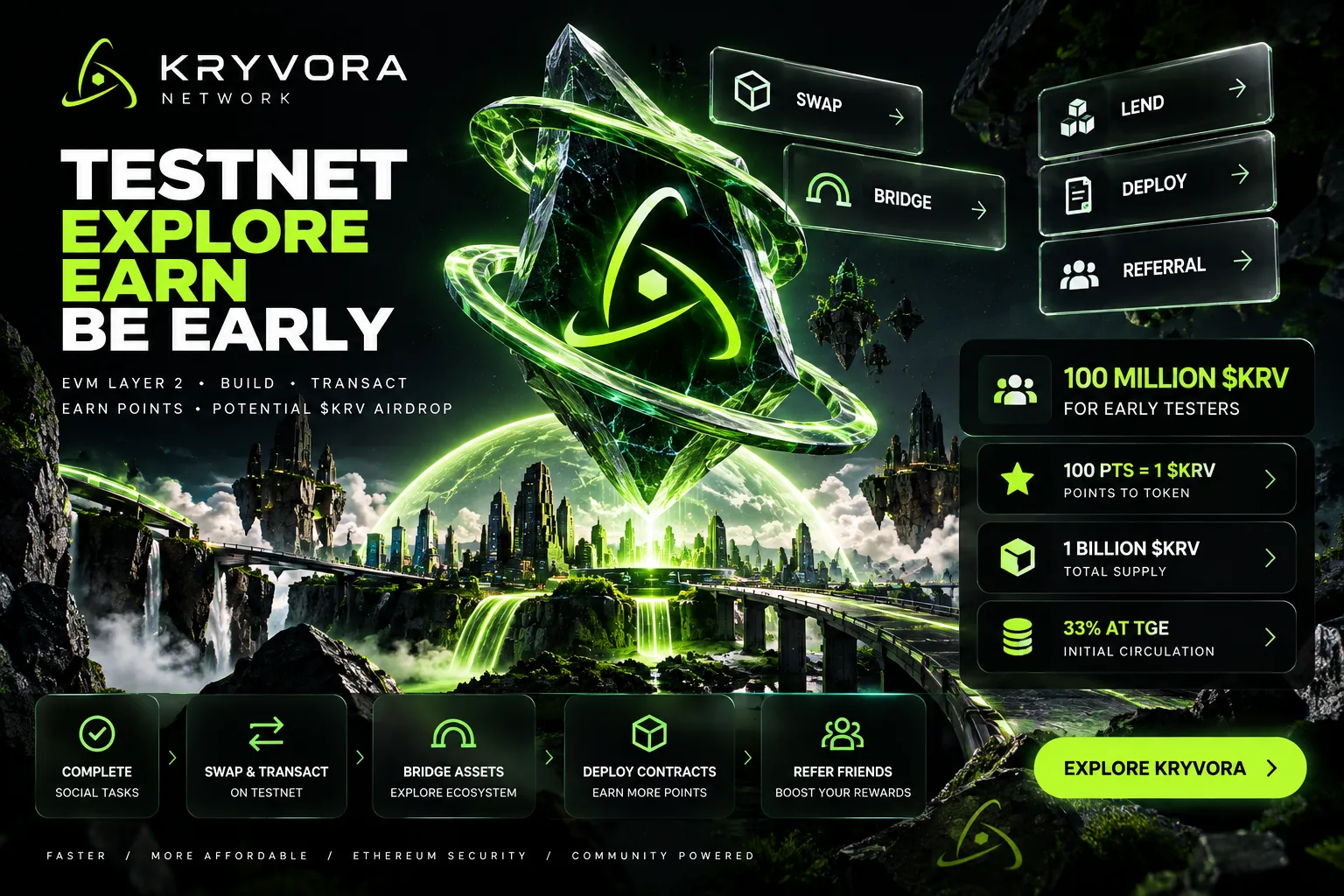
 Kryvora Network
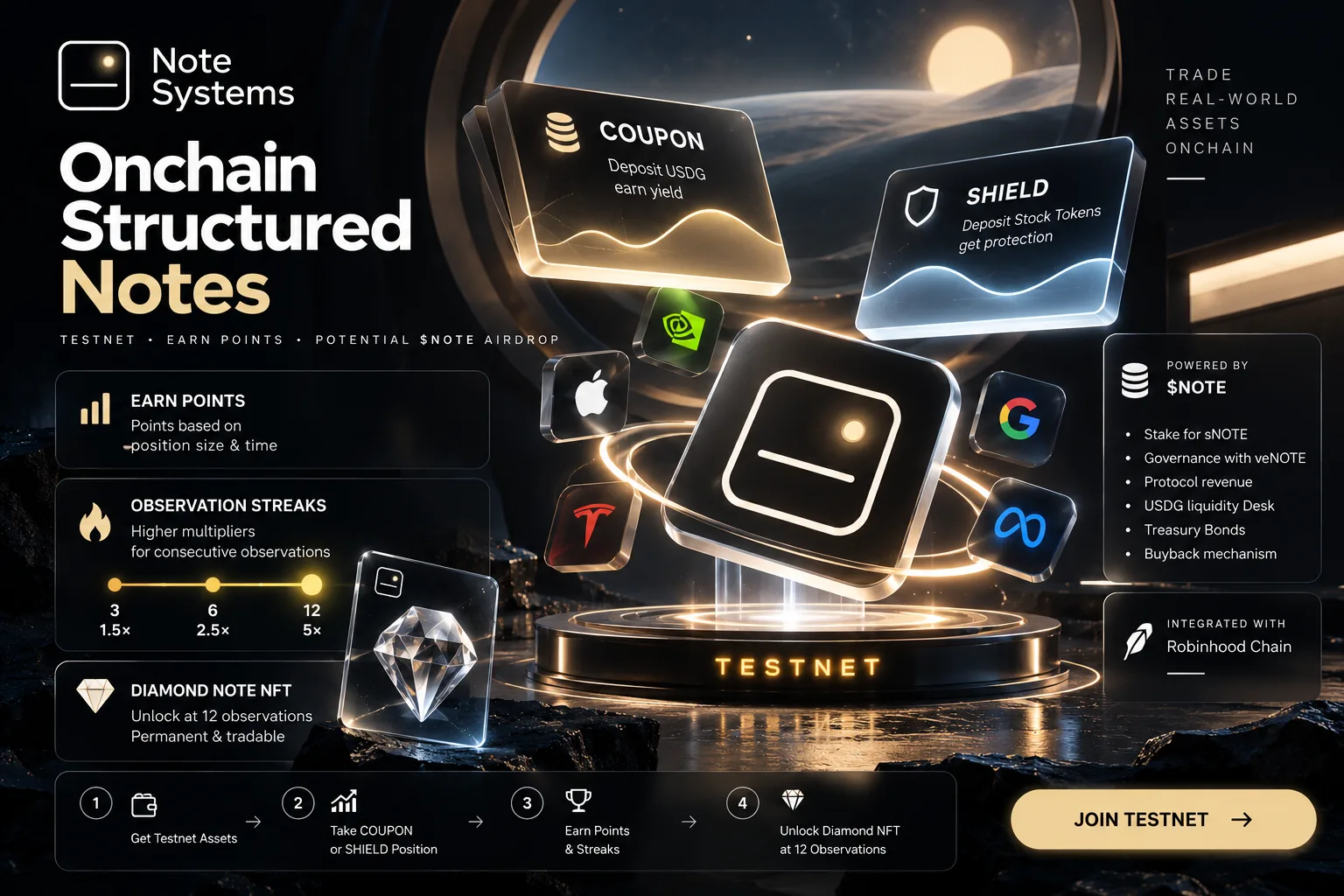
 Note Systems
 Nado
Nado
Risks, Challenges, and What Users Should Do Next
Potential Risks and Mitigation Strategies
While the fundamentals of RWA crypto are improving, investors and users should remain aware of unique risks:
- Regulatory Risk: Sudden changes in legislation or enforcement could impact project operations or token liquidity.
- Asset Custody: Off-chain asset management introduces counterparty and operational risks not present in purely on-chain assets.
- Liquidity Constraints: Secondary markets for RWA tokens are still developing, which may limit exit options during periods of volatility.
- Smart Contract Vulnerabilities: Bugs or exploits in tokenization protocols could lead to loss of funds or asset misrepresentation.
Users are advised to conduct thorough due diligence, review project audits, and consult the crypto safety guide before participating in RWA projects.
Key Takeaways
- The RWA crypto rebound 2026 is driven by rising fundamentals, not speculative hype.
- Institutional adoption and regulatory clarity are fueling sustainable growth in the sector.
- Developers and investors have new opportunities, but must remain vigilant about unique RWA risks.
- Participating in RWA airdrops and governance can offer additional upside, but eligibility requirements are stricter than in previous cycles.
Frequently Asked Questions
| Question | Answer |
|---|---|
| What makes RWA crypto different from other tokens in 2026? | RWA tokens are backed by tangible assets such as real estate, bonds, or commodities, offering real-world yield and legal enforceability, unlike purely speculative or utility tokens. |
| How can investors identify strong RWA fundamentals? | Look for projects with audited smart contracts, transparent asset custody, regulatory compliance, and growing institutional participation. |
| Are RWA airdrops still profitable in 2026? | Yes, but eligibility criteria are stricter due to compliance requirements. Engaging with reputable projects and completing KYC increases your chances. |
| What should developers know about RWA tokenization? | Focus on interoperability, compliance automation, and robust security practices. Open-source tools and APIs are widely available to accelerate development. |
| How is institutional adoption shaping the RWA market? | Institutions are driving demand for compliant, yield-generating RWA tokens, leading to increased liquidity, improved infrastructure, and greater market stability. |
Helpful Crypto Resources
For deeper context, explore our crypto guides and market analysis. These resources can help you compare opportunities, understand market risks, and follow crypto trends more safely.
Helpful Crypto Resources
For deeper context, explore our crypto guides and market analysis. These resources can help you compare opportunities, understand market risks, and follow crypto trends more safely.
Helpful Crypto Resources
For deeper context, explore our crypto guides and market analysis. These resources can help you compare opportunities, understand market risks, and follow crypto trends more safely.




 Gaming Platforms
 Crypto Casinos
 Blockchain Bridges
 Staking & Restaking
 DEX Token Swapping
 Crypto Wallets