
 BTC
BTC
 ETH
ETH
 USDT
USDT
 BNB
BNB
 XRP
XRP
 USDC
USDC
 SOL
SOL
 TRX
TRX
 ZEC
ZEC
 FIGR_HELOC
 HYPE
HYPE
 DOGE
DOGE
 LINK
LINK
 XMR
XMR
 WBT
WBT
 USDS
USDS
 ADA
ADA
 RAIN
RAIN
 LEO
LEO
 XLM
XLM
 NEAR
NEAR
 BCH
BCH
 UNI
UNI
 LTC
LTC
 CC
CC
 SUI
SUI
 USDE
USDE
 AVAX
AVAX
 DAI
DAI
 GRAM
GRAM
 USD1
USD1
 HBAR
HBAR
 TAO
TAO
 SHIB
SHIB
 CRO
CRO
 BTW
BTW
 USDG
USDG
 ENA
ENA
 QNT
QNT
 PYUSD
PYUSD
 M
M
 ONDO
ONDO
 XAUT
XAUT
 OKB
OKB
 RLUSD
RLUSD
 USYC
USYC
 AAVE
AAVE
 PUMP
PUMP
 BUIDL
BUIDL
 USDY
USDY
 MNT
MNT
 DOT
DOT
 WLD
WLD
 ASTER
ASTER
 SKY
SKY
 MORPHO
 WLFI
WLFI
 PAXG
PAXG
 PEPE
PEPE
 ICP
ICP
 ARB
ARB
 USDD
USDD
 HTX
HTX
 ETC
ETC
 EURSAFO
 U
U
 VVV
VVV
 BGB
BGB
 USDGO
USDGO
 USDF
USDF
 KAS
KAS
 BFUSD
BFUSD
 POL
POL
 GT
GT
 LIT
LIT
 JUP
JUP
 ALGO
ALGO
 RENDER
 JST
JST
 PI
PI
 KCS
KCS
 ATOM
ATOM
 BCAP
BCAP
 FIL
FIL
 CAKE
CAKE
 NEXO
NEXO
 DASH
DASH
 AERO
AERO
 VET
VET
 INJ
INJ
 USTB
USTB
 EUTBL
EUTBL
 APT
APT
 STABLE
 AKE
AKE
 GHO
GHO
 ETHFI
ETHFI
 PYTH
PYTH
 STX
STX
 XDC
XDC
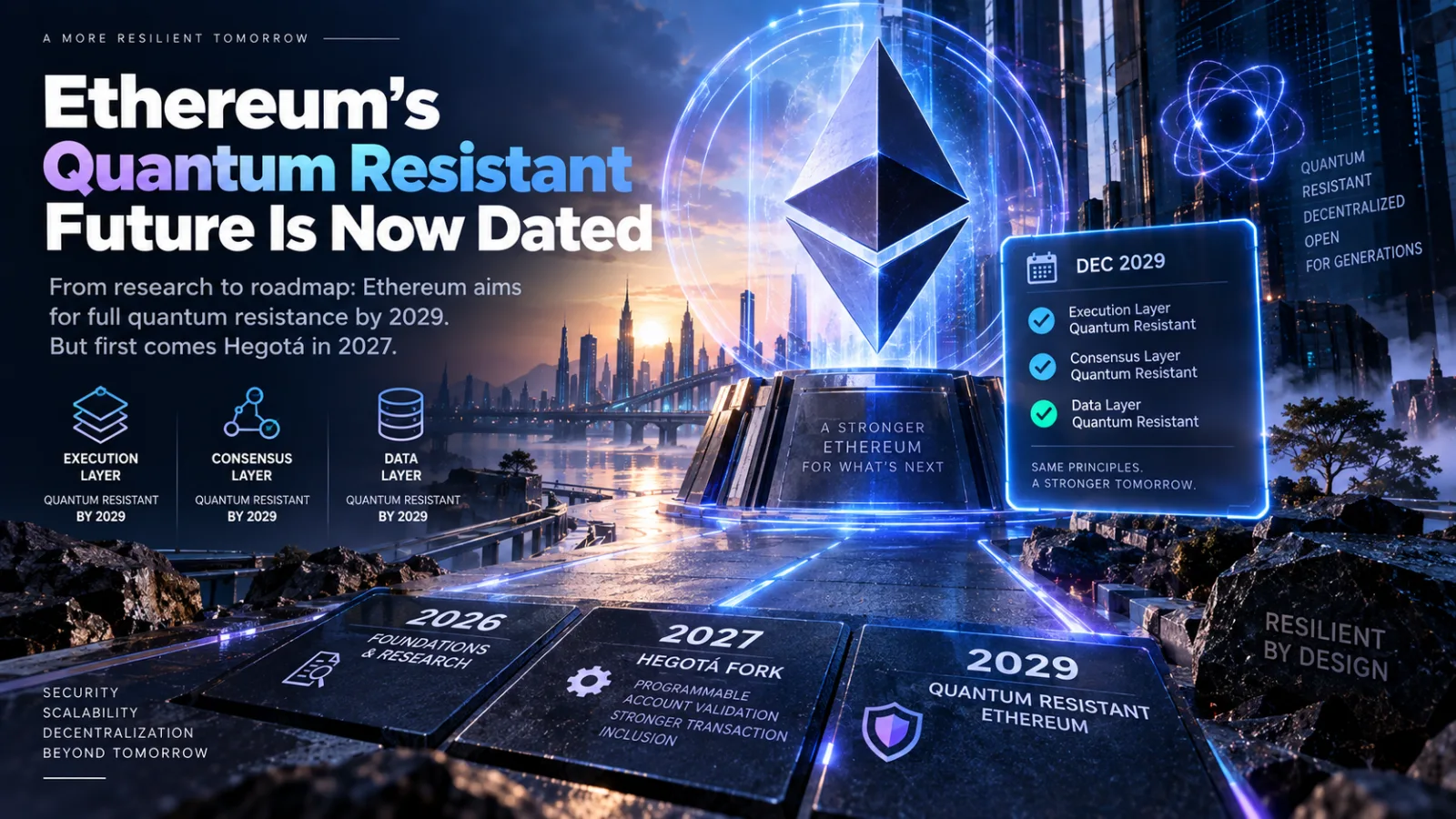

Ethereum has turned quantum resistance from distant research into a dated protocol commitment. The Ethereum Foundation's Protocol cluster now aims to make the network's execution, consensus and data layers quantum resistant by December 2029. Yet the first decisive test is not a quantum upgrade. It is Hegotá, a 2027 fork expected to introduce programmable account validation and stronger transaction inclusion guarantees. The investment question is whether Ethereum can accelerate that roadmap without letting complexity become the risk it is trying to eliminate.
For related opportunities and eligibility updates, explore AirdropHotList's latest airdrop listings.
The 2029 deadline changes what Ethereum must ship now
On September 7, 2026, the Ethereum Foundation published a new protocol priority framework built around a deliberately aggressive assumption: Ethereum should prepare as if cryptographically capable quantum computers could arrive as early as 2030. The Foundation said its December 2029 target will remain nonnegotiable until at least January 2027, when it plans to reassess quantum progress with external experts.
This is not a response to an active attack. Ethereum's official quantum security guidance says present hardware cannot break the cryptography protecting ETH accounts or network consensus. The problem is migration time. Ethereum relies on quantum vulnerable elliptic curve systems for ordinary account signatures and validator attestations, while its data availability and many zero knowledge systems also depend on cryptographic assumptions that eventually require replacement.
The deadline therefore changes near term priorities. The Foundation estimates that shipping Glamsterdam in December 2026 and reaching full readiness five forks later would require an average cadence of roughly 7.2 months per fork. A slower 12 month cadence could deliver a minimum viable safeguard by December 2029, but with reduced guarantees. That makes fork execution, testing capacity and scope control part of Ethereum's security thesis rather than routine engineering administration.
Hegotá is not the quantum fork and that is precisely the point
The Foundation describes Hegotá as the fork that determines whether subsequent post quantum upgrades arrive on time. Its proposed scope was distilled from 62 submitted Ethereum Improvement Proposals reviewed by roughly 60 protocol researchers and engineers. Two items define the current plan: EIP-8141, known as Frame transactions, and EIP-7805, known as fork choice enforced inclusion lists or FOCIL.
EIP-8141 remains a draft, but its direction is consequential. Frame transactions would let account code define transaction validation and gas payment instead of forcing every ordinary account to remain permanently tied to one authentication model. That enables native key rotation, batched actions, flexible fee payment and, eventually, migration from today's ECDSA signatures to quantum resistant alternatives.
The user facing gain could arrive before the quantum benefit. Social recovery, spending controls and sponsored gas could become protocol native account properties rather than features assembled through separate relayers and application specific systems. For wallets, exchanges and DeFi front ends, the opportunity is a cleaner account layer. The cost is another integration surface requiring careful testing across mempools, fee estimation, signatures and smart account logic.
EIP-7805 is also still a draft. It proposes committees of validators that publish lists of eligible transactions which block builders must include for attesters to accept a block. The objective is to prevent Ethereum's reliance on specialized builders from weakening censorship resistance. In practical terms, Hegotá is attempting to make accounts more programmable while making transaction inclusion less dependent on any single builder.
If you want to understand how eligibility, snapshots, claiming, and reward distribution usually work, start with our crypto airdrop guide before joining new campaigns.
The investor paradox is safer Ethereum through faster change
Ethereum's roadmap now carries a clear paradox: reducing long term cryptographic risk requires accepting more short term delivery risk. Frame transactions alter how users authenticate and pay for transactions. FOCIL changes coordination among validators, proposers, builders and attesters. Shipping both together creates interactions that cannot be evaluated by studying either proposal alone.
That follows an already demanding upgrade. The official Ethereum roadmap lists Glamsterdam for the fourth quarter of 2026, with enshrined proposer builder separation and block level access lists among its headline features. An Ethereum Foundation testnet announcement also warned that Glamsterdam includes breaking changes for some developer infrastructure, particularly tools that hardcode gas assumptions.
Hegotá implementation is expected to begin while later post quantum specifications continue maturing. This overlapping model is necessary to meet the deadline, according to the Foundation, but it raises the value of client diversity, formal verification, devnets and independent audits. Ethereum is effectively testing whether decentralized protocol development can behave like a parallel production pipeline without sacrificing the caution demanded by a settlement layer.
What the roadmap could change for ETH and rollups
For ETH holders, the immediate consequence is not a mechanical change in supply, staking yield or fees. The potential value lies in settlement credibility. A credible post quantum migration path would reduce a tail risk affecting accounts, validators and rollup infrastructure. Failure to demonstrate that path would leave uncertainty around how a mature blockchain can replace core cryptography without fragmenting users or liquidity.
Hegotá could also strengthen the network's relationship with layer 2 systems. Ethereum's roadmap says FOCIL may improve L2 settlement guarantees by separating censorship resistance from local block construction. Frame transactions, meanwhile, could give wallets a more consistent account model across Ethereum and its rollups. Neither outcome is guaranteed, but both address weaknesses that raw transaction throughput cannot solve.
The market should not treat a published target as completed engineering. The principal EIPs are drafts, Hegotá's full scope is not final, and the Foundation's tier list represents one influential protocol cluster rather than unilateral control over Ethereum. Client teams, researchers and AllCoreDevs must still convert priorities into stable specifications, interoperable implementations and successful testnets.
Still unsure about wallets, eligibility, or reward rules? Visit our FAQ page for quick answers before joining any new crypto campaign.
Three paths from roadmap to market signal
Bull case
Glamsterdam reaches mainnet without major disruption, Hegotá devnets demonstrate stable interaction between Frames and FOCIL, and wallet teams begin credible account migration experiments. Ethereum would then have evidence that it can improve scalability, censorship resistance and cryptographic agility on an accelerated schedule.
If you want reward-focused opportunities that involve tasks or activity, compare more earn crypto airdrops before choosing where to spend your time.
Base case
Ethereum preserves the 2029 objective but trims secondary Hegotá proposals to protect its two headliners. The roadmap advances, although user adoption of programmable accounts and post quantum signatures remains gradual rather than immediate.
Bear case
Glamsterdam delays consume engineering capacity, Hegotá's integration surface expands, or later cryptographic designs fail to mature quickly enough. The deadline would then become less credible, forcing the community to choose between reduced security guarantees, narrower upgrades or a revised schedule.
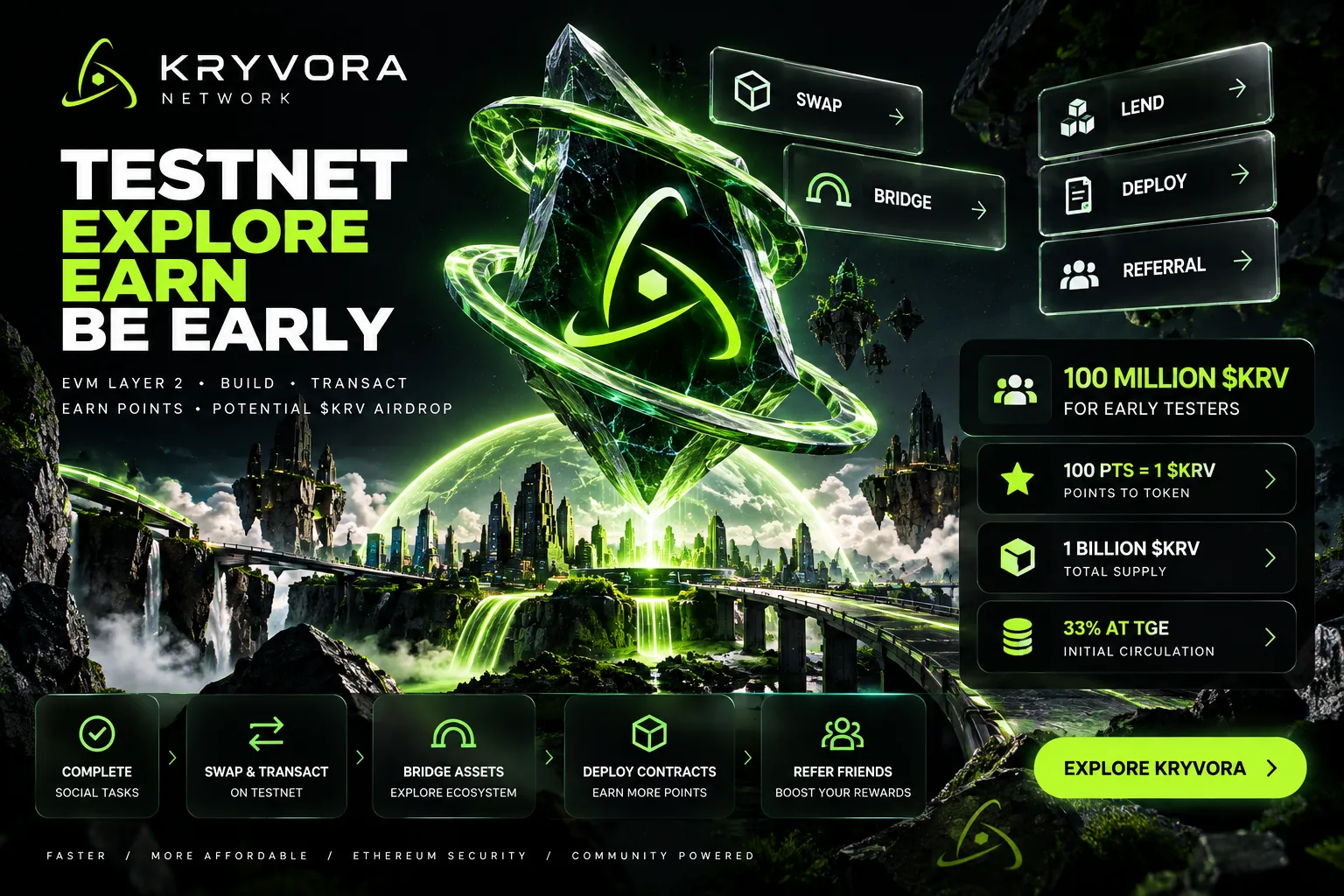
 Kryvora Network
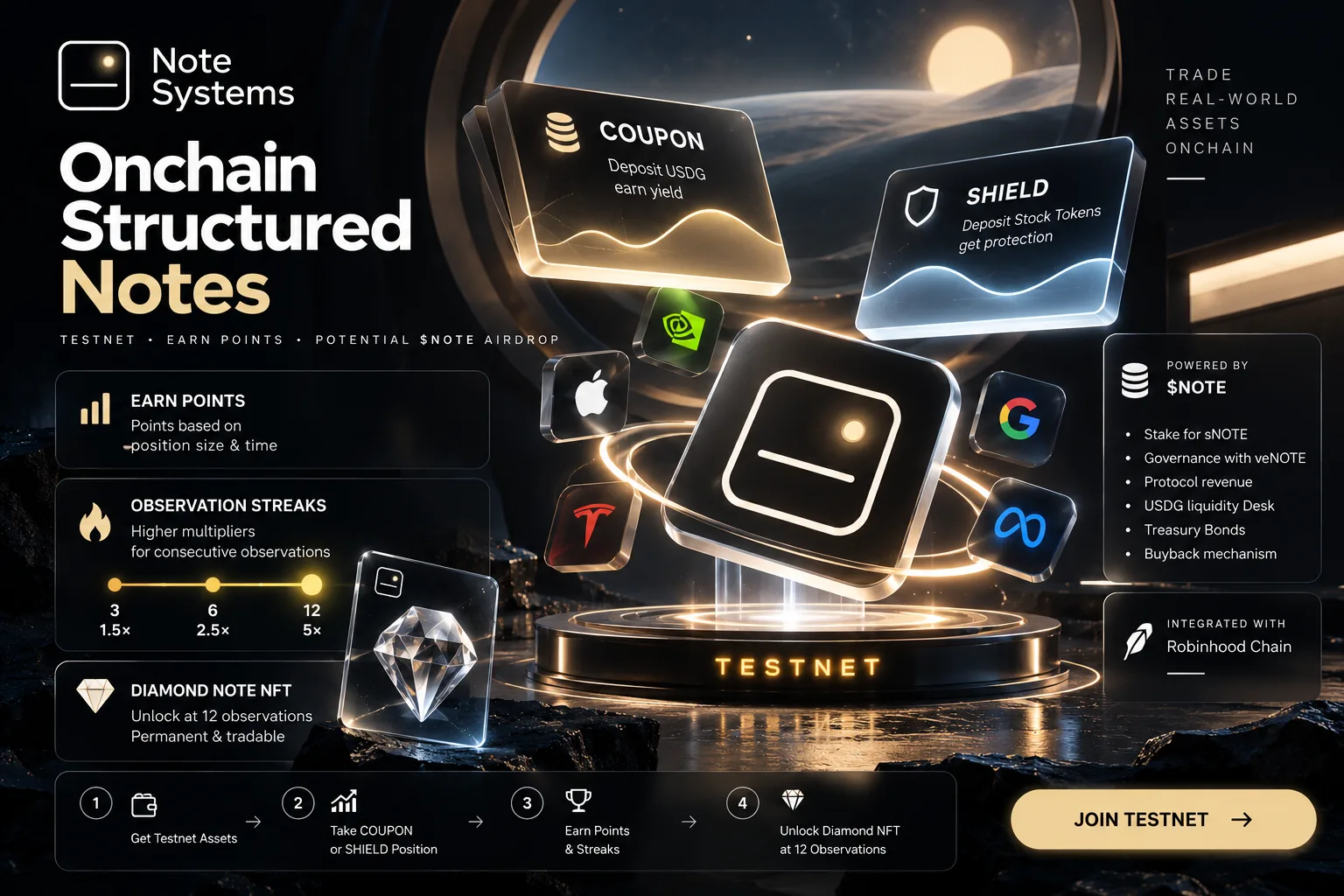
 Note Systems
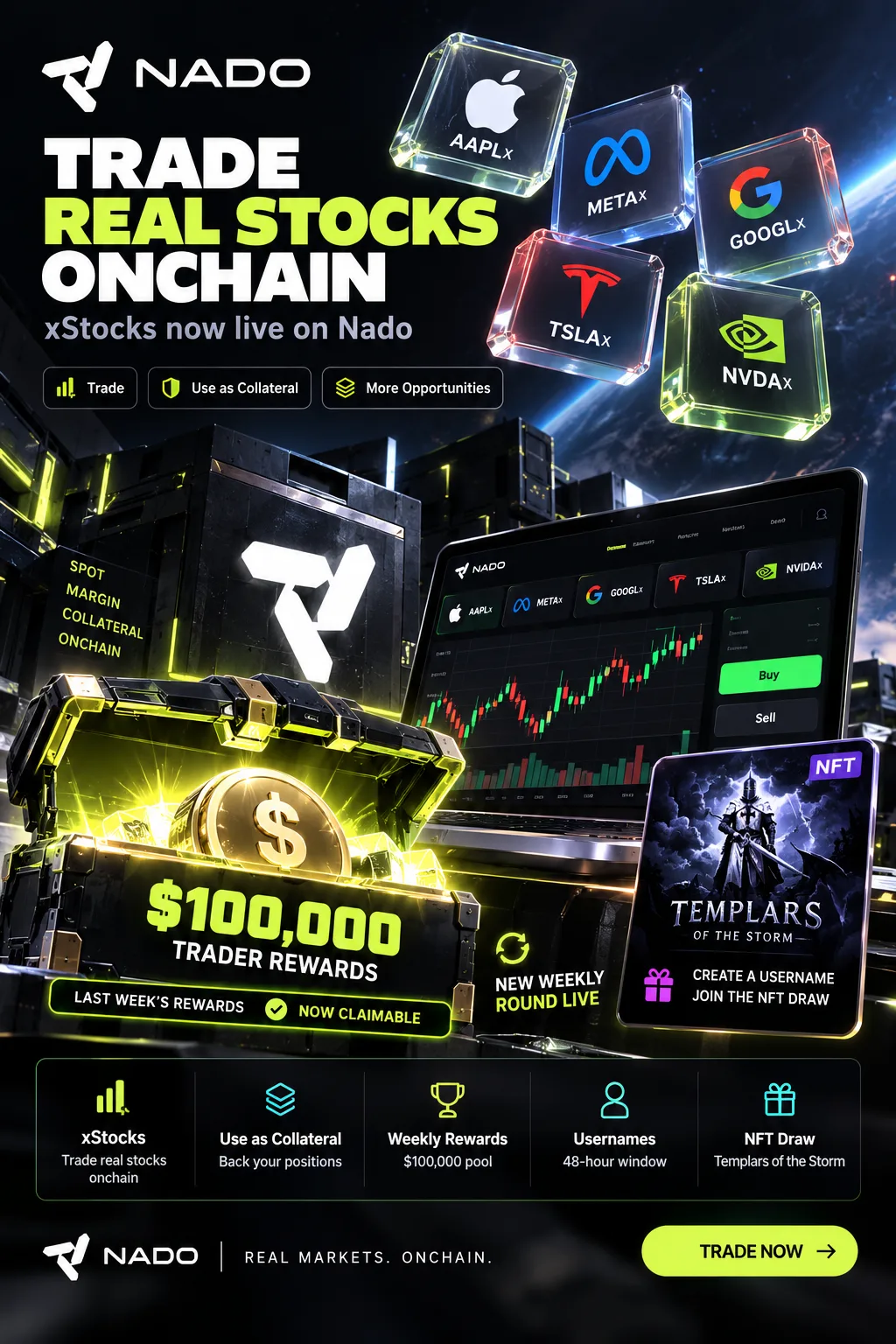
 Nado
Nado
The Ethereum watchlist
- Glamsterdam timing: whether public testnets and mainnet activation remain on course after infrastructure testing.
- Hegotá scope: whether EIP-8141 and EIP-7805 retain top priority while lower tier proposals are cut when necessary.
- Interoperability evidence: stable multi client devnets, audits and formal verification covering the interaction between programmable accounts and inclusion lists.
- Wallet migration: early support for signature agility and account recovery without centralized relayers or fragmented user experiences.
Conclusion
Ethereum's 2029 quantum deadline is ambitious, but the deeper signal is organizational. The network is trying to prepare for an uncertain cryptographic threat while simultaneously redesigning block construction, account behavior and transaction inclusion. Hegotá is where that ambition first becomes measurable. If Ethereum can keep the fork narrow, test its two defining mechanisms together and maintain momentum after Glamsterdam, the deadline gains credibility. If scope expands or delivery slows, quantum resistance will remain a roadmap promise rather than a durable ETH investment thesis.



 Gaming Platforms
 Crypto Casinos
 Blockchain Bridges
 Staking & Restaking
 DEX Token Swapping
 Crypto Wallets