
 BTC
BTC
 ETH
ETH
 USDT
USDT
 BNB
BNB
 XRP
XRP
 USDC
USDC
 SOL
SOL
 TRX
TRX
 ZEC
ZEC
 FIGR_HELOC
 HYPE
HYPE
 DOGE
DOGE
 LINK
LINK
 XMR
XMR
 WBT
WBT
 USDS
USDS
 ADA
ADA
 RAIN
RAIN
 LEO
LEO
 XLM
XLM
 NEAR
NEAR
 BCH
BCH
 UNI
UNI
 LTC
LTC
 CC
CC
 SUI
SUI
 USDE
USDE
 AVAX
AVAX
 DAI
DAI
 GRAM
GRAM
 USD1
USD1
 HBAR
HBAR
 TAO
TAO
 SHIB
SHIB
 CRO
CRO
 BTW
BTW
 USDG
USDG
 ENA
ENA
 QNT
QNT
 PYUSD
PYUSD
 M
M
 ONDO
ONDO
 XAUT
XAUT
 OKB
OKB
 RLUSD
RLUSD
 USYC
USYC
 AAVE
AAVE
 PUMP
PUMP
 BUIDL
BUIDL
 USDY
USDY
 MNT
MNT
 DOT
DOT
 WLD
WLD
 ASTER
ASTER
 MORPHO
 SKY
SKY
 PAXG
PAXG
 WLFI
WLFI
 PEPE
PEPE
 ICP
ICP
 USDD
USDD
 ARB
ARB
 HTX
HTX
 ETC
ETC
 EURSAFO
 U
U
 VVV
VVV
 BGB
BGB
 USDGO
USDGO
 USDF
USDF
 KAS
KAS
 BFUSD
BFUSD
 POL
POL
 GT
GT
 LIT
LIT
 JUP
JUP
 ALGO
ALGO
 RENDER
 JST
JST
 PI
PI
 KCS
KCS
 ATOM
ATOM
 BCAP
BCAP
 FIL
FIL
 CAKE
CAKE
 NEXO
NEXO
 DASH
DASH
 AERO
AERO
 VET
VET
 INJ
INJ
 USTB
USTB
 EUTBL
EUTBL
 APT
APT
 STABLE
 AKE
AKE
 GHO
GHO
 ETHFI
ETHFI
 PYTH
PYTH
 XDC
XDC
 STX
STX
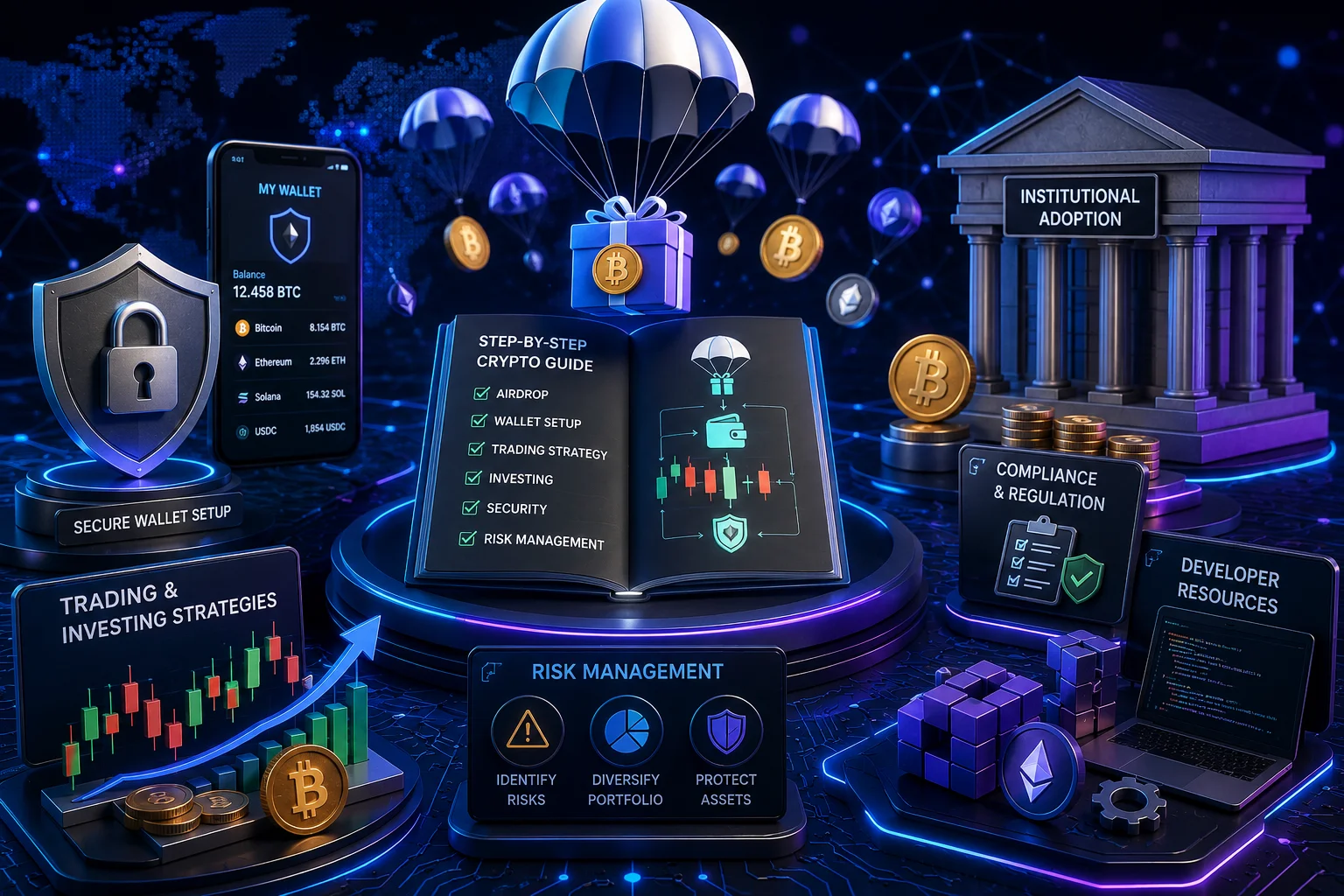

In 2026, the most effective crypto guides provide actionable steps for airdrop participation, secure wallet setup, trading and investing strategies, institutional adoption, and developer resources. Beginners should start with blockchain fundamentals and wallet security, while investors and traders need up-to-date market analysis and risk management techniques. Institutions and developers benefit from guides on compliance, integration, and building on leading blockchains, ensuring a well-rounded approach to the evolving digital asset landscape.
Introduction to Crypto Guides in 2026: Navigating a Rapidly Evolving Landscape
The crypto industry in 2026 is more complex and interconnected than ever before. With the mainstreaming of digital assets, the rise of real-world asset (RWA) tokenization, and a new wave of regulatory clarity, users across all experience levels are seeking reliable, up-to-date guides to navigate this dynamic environment. Whether you’re a first-time investor, an active trader, an institutional asset manager, or a blockchain developer, understanding the latest best practices is crucial for success and safety.
This comprehensive resource distills the most important crypto guides for 2026, covering everything from claiming airdrops and choosing wallets to advanced trading strategies, institutional adoption, and developer tools. The following sections break down each area with practical steps, trend analysis, and actionable insights tailored to the needs of today’s crypto market participants.
Beginner’s Guide: Getting Started with Crypto in 2026
For newcomers, the crypto world can be overwhelming. The sheer volume of protocols, tokens, and platforms requires a structured approach to onboarding. In 2026, the first steps remain foundational: understanding blockchain basics, setting up a secure wallet, and learning how to interact safely with decentralized applications (dApps).
Choosing the Right Crypto Wallet
Wallet selection is a critical decision for any crypto user. In 2026, options range from user-friendly mobile wallets to advanced hardware solutions. Key factors to consider include:
- Security: Hardware wallets remain the gold standard for long-term storage, while multi-signature and biometric authentication add extra layers of protection.
- Compatibility: Ensure the wallet supports the blockchains and tokens you plan to use, including emerging Layer 2s and RWA platforms.
- User Experience: For beginners, intuitive interfaces and robust customer support are essential.
For a detailed comparison, see our crypto guides and market analysis and the latest reviews of wallet solutions.
Understanding Blockchain Basics
Before making any transactions, users should grasp core concepts such as public and private keys, transaction fees, and the difference between custodial and non-custodial wallets. Educational resources and demo platforms can help users practice safely before engaging with real assets.
How to Claim Crypto Airdrops in 2026: Step-by-Step Participation and Safety
Airdrops remain a popular way for projects to distribute tokens and incentivize early adoption. However, the process has become more sophisticated, with eligibility often tied to on-chain activity, governance participation, or points campaigns. Here’s how to approach airdrops in 2026:
Step-by-Step Airdrop Participation
- Stay Informed: Follow official project channels and reputable aggregators for announcements. Avoid unofficial sources that may promote scams.
- Check Eligibility: Many airdrops now require users to complete specific actions, such as staking, voting, or using certain dApps. Read the official criteria carefully.
- Claiming Process: Always use the project’s verified website or smart contract. Double-check URLs and never share your private keys.
- Security Precautions: Beware of phishing attempts and fake airdrop sites. Consider using a fresh wallet for airdrop claims to minimize risk.
For a calendar of upcoming opportunities, visit our latest crypto airdrops page.
Still unsure about wallets, eligibility, or reward rules? Visit our FAQ page for quick answers before joining any new crypto campaign.
Crypto Investing Strategies for 2026: Navigating Volatility and Opportunity
Crypto investing in 2026 is shaped by increased institutional participation, new asset classes like tokenized RWAs, and evolving regulatory frameworks. Investors must adapt their strategies to account for these shifts while maintaining robust risk management.
Evaluating Crypto Projects Before Investing
- Fundamental Analysis: Assess the project’s team, technology, use case, and community engagement. Transparency and a clear roadmap are positive indicators.
- On-Chain Metrics: Analyze transaction volume, active addresses, and liquidity to gauge real-world usage and adoption.
- Regulatory Status: Consider the project’s compliance with local and international regulations, especially for tokenized securities and RWAs.
For more on project analysis, see our crypto guides and market analysis.
Trading Crypto in 2026: Tips and Strategies for Volatile Markets
Market volatility remains a defining feature of crypto trading. In 2026, traders have access to more sophisticated tools, including algorithmic trading bots, derivatives, and cross-chain liquidity protocols. However, the fundamentals of risk management and disciplined execution remain unchanged.
Risk Management for Crypto Traders
- Position Sizing: Never risk more than a small percentage of your portfolio on a single trade.
- Stop-Loss Orders: Use automated stop-losses to limit downside in fast-moving markets.
- Diversification: Spread exposure across multiple assets and strategies to reduce risk.
- Continuous Learning: Stay updated on new trading products, market structure changes, and regulatory developments.
For advanced strategies, refer to our crypto guides and market analysis.
Institutional Adoption of Crypto in 2026: Trends, Challenges, and Opportunities
Institutions have become major players in the crypto ecosystem, driving liquidity, innovation, and compliance standards. In 2026, asset managers, banks, and corporates are leveraging blockchain for payments, settlement, and tokenization of real-world assets.
Regulatory Considerations for Institutions
- Compliance: Institutions must adhere to evolving KYC/AML standards and jurisdiction-specific regulations.
- Custody Solutions: Institutional-grade custody providers offer multi-layer security, insurance, and regulatory reporting features.
- Integration: Seamless integration with legacy systems and cross-chain interoperability are key for institutional adoption.
For a deeper dive into institutional trends, visit our crypto guides and market analysis.
If you want reward-focused opportunities that involve tasks or activity, compare more earn crypto airdrops before choosing where to spend your time.
Developer Resources: Building on Blockchain in 2026
Blockchain development in 2026 is characterized by rapid innovation, with new Layer 1s, Layer 2s, and modular architectures competing for developer mindshare. Builders must stay current with the latest tools, languages, and best practices to remain competitive.
Top Blockchain Platforms for Developers
- Ethereum and Layer 2s: Still dominant for DeFi and NFT projects, with robust tooling and documentation.
- Solana and High-Performance Chains: Favored for high-throughput applications and real-time trading protocols.
- Emerging Modular Chains: New platforms offer customizable execution environments and enhanced scalability.
Key developer resources include open-source SDKs, audit frameworks, and cross-chain interoperability protocols. For curated tools and guides, see our crypto guides and market analysis.
Crypto Security Best Practices for 2026: Protecting Assets in a Sophisticated Threat Landscape
Security remains a top concern as threats evolve alongside the industry. In 2026, users face risks from phishing, smart contract vulnerabilities, and sophisticated social engineering attacks. Adopting a security-first mindset is non-negotiable for all participants.
Protecting Your Assets from Scams and Hacks
- Multi-Factor Authentication (MFA): Always enable MFA on exchanges and wallets.
- Hardware Wallets: Use hardware wallets for long-term storage and large balances.
- Regular Audits: Developers should subject smart contracts to third-party audits and bug bounty programs.
- Stay Updated: Monitor official channels for security advisories and software updates.
- Phishing Awareness: Never click on suspicious links or share private keys. Use bookmarks for official sites.
For a comprehensive safety checklist, consult our crypto safety guide.
Latest Regulatory Changes and Their Impact on Airdrops, Trading, and Institutional Participation in 2026
Regulatory clarity has improved in many jurisdictions, but the landscape remains fragmented. Recent changes in 2026 include stricter disclosure requirements for token issuers, enhanced consumer protection rules, and new frameworks for RWA tokenization. These developments affect how projects conduct airdrops, how exchanges list tokens, and how institutions structure their crypto offerings.
Users should stay informed about local regulations and seek guides that reflect the latest legal requirements. Projects are increasingly publishing compliance documentation and risk disclosures as part of their onboarding process.
Emerging Blockchain Platforms and Developer Ecosystems: What to Watch in 2026
The competition among blockchain platforms is intensifying, with new entrants focusing on scalability, privacy, and interoperability. Developers are gravitating toward ecosystems that offer robust tooling, active communities, and grant programs. Notable trends in 2026 include the rise of modular blockchains, privacy-preserving smart contracts, and cross-chain bridges that enable seamless asset transfers.
Staying ahead requires continuous learning and engagement with developer communities, hackathons, and open-source projects. For curated resources, check our crypto guides and market analysis.
Comparative Analysis of Crypto Wallets: Security, Usability, and Ecosystem Integration in 2026
Wallet technology has advanced significantly, with new features catering to both retail and institutional users. Key differentiators in 2026 include:
- Security Architecture: Hardware wallets, multi-signature schemes, and biometric authentication.
- Cross-Chain Support: Ability to manage assets across multiple blockchains and Layer 2 networks.
- Integration: Direct access to DeFi protocols, NFT marketplaces, and RWA platforms from within the wallet interface.
- Compliance Tools: Built-in tax reporting and regulatory compliance features for institutional users.
Choosing the right wallet depends on your specific needs and risk profile. For in-depth reviews, visit our crypto guides and market analysis.
Before connecting a wallet or approving any transaction, slow down and verify the source. Our crypto safety guide explains how to avoid fake claim pages, phishing links, risky approvals, and common wallet mistakes.
Case Studies: Successful Airdrop Participation and Security Practices in 2026
Several high-profile airdrops in 2026 have demonstrated the importance of due diligence and security. Users who followed official instructions, used dedicated wallets, and avoided suspicious links reported smooth experiences and successful claims. In contrast, those who rushed or relied on unofficial sources faced phishing attempts and, in some cases, loss of funds.
These case studies underscore the value of following trusted guides, maintaining operational security, and staying patient during high-demand events. For real-time updates and verified opportunities, refer to our latest crypto airdrops page.
Conclusion: Navigating the Crypto Landscape in 2026 with Confidence and Caution
The crypto market in 2026 offers unprecedented opportunities for investors, traders, institutions, and developers. However, the complexity and pace of change demand a disciplined, informed approach. By leveraging comprehensive guides, staying alert to security risks, and adapting to regulatory developments, users can participate safely and effectively in the evolving digital asset ecosystem.
Whether you’re claiming airdrops, building on new blockchains, or managing institutional portfolios, the right guidance is essential. Bookmark our crypto guides and market analysis for the latest insights, and always prioritize safety by reviewing our crypto safety guide before taking action.
Latest Regulatory Changes Affecting Airdrops and Trading in 2026
Regulatory frameworks for cryptocurrencies have evolved significantly in 2026, directly impacting how users participate in airdrops and engage in trading activities. Global regulators, including the U.S. SEC, EU’s ESMA, and Asian financial authorities, have introduced new compliance requirements for both project teams and individual participants. These changes aim to increase transparency, prevent fraud, and ensure fair distribution of digital assets.
- KYC & AML Requirements: Most major airdrops now require Know Your Customer (KYC) verification, especially for users in regulated jurisdictions. This helps projects comply with anti-money laundering (AML) laws and reduces the risk of fraudulent claims.
- Tax Reporting: Several countries have mandated real-time tax reporting for airdrop recipients and traders. Automated tools integrated with popular wallets help users track and report taxable events.
- Exchange Registration: Trading platforms must be registered and licensed, offering increased protection for users but also requiring more thorough onboarding processes.
For a detailed overview of compliance and security, visit our crypto safety guide.
Comparative Analysis: Best Crypto Wallets for Different User Types in 2026
Choosing the right crypto wallet in 2026 depends on your experience level, security needs, and intended use. Below is a comparative table highlighting the strengths of leading wallets for beginners, active traders, and institutional users:
| Wallet | User Type | Key Features | Security Level |
|---|---|---|---|
| SafeVault X | Beginners | Simple UI, integrated tutorials, multi-chain support | High (MPC, biometric login) |
| TradeFlex Pro | Active Traders | Real-time analytics, DEX integration, automated trading bots | Medium-High (2FA, hardware wallet sync) |
| CustodyOne Institutional | Institutions | Multi-user access, compliance tools, insurance coverage | Very High (cold storage, SOC 2 compliance) |
For more wallet options, see our guide to the best crypto wallets 2026.
Emerging Blockchain Platforms and Developer Ecosystems in 2026
2026 has seen the rise of several new blockchain platforms, each offering unique features and robust developer ecosystems. These platforms are attracting both startups and established enterprises seeking scalability, interoperability, and advanced smart contract capabilities.
- Modular Chains: Platforms like Celestia and Fuel have popularized modular architectures, allowing developers to build custom execution layers and optimize for specific use cases.
- Zero-Knowledge Rollups: zkSync and Starknet have expanded their developer toolkits, making it easier to deploy privacy-preserving and scalable dApps.
- Interoperability Solutions: Projects such as Polkadot and Cosmos continue to enhance cross-chain communication, enabling seamless asset transfers and composability between ecosystems.
Developers can access up-to-date resources and tutorials via our developer resources page.
 Kryvora Network
 Note Systems
 Nado
Nado
Case Study: Successful Airdrop Participation in 2026
Participating in airdrops remains a popular way to earn new tokens, but the process has become more sophisticated and competitive. Here’s a real-world example of a successful airdrop claim in 2026:
- Project: LayerX Protocol
- Eligibility: Users who interacted with LayerX’s testnet and completed KYC
- Steps Taken:
- Followed official announcements on the project’s verified X (Twitter) and Discord channels
- Used a secure, non-custodial wallet to interact with the testnet
- Completed KYC through a partner verification service
- Claimed tokens via the official airdrop portal, avoiding phishing links
- Outcome: Tokens were received within 48 hours, with clear instructions for staking or trading
For more opportunities, check our latest crypto airdrops page.
Institutional-Grade Security Solutions for Crypto Assets
With the influx of institutional capital into crypto, security standards have reached new heights in 2026. Institutions and high-net-worth individuals are adopting advanced solutions to safeguard their digital assets:
- Multi-Party Computation (MPC): Eliminates single points of failure by distributing private key management across multiple parties.
- Hardware Security Modules (HSMs): Used for cold storage and transaction signing, ensuring keys never leave secure hardware.
- Insurance Coverage: Leading custodians now offer insurance against theft, loss, and smart contract exploits.
- Continuous Monitoring: AI-powered monitoring tools detect suspicious activity and automate incident response.
For individual users, adopting strong security practices remains essential. See our crypto safety guide for practical tips.
What Users Should Do Next: Actionable Steps for 2026
- Stay Informed: Follow official project channels and reputable crypto news sources for updates on airdrops, regulatory changes, and security alerts.
- Verify Before Participating: Always confirm the legitimacy of airdrop portals and trading platforms. Avoid clicking on unsolicited links or sharing private keys.
- Upgrade Security: Use wallets with multi-factor authentication, regularly update software, and consider hardware wallets for significant holdings.
- Understand Tax Obligations: Use integrated tax tools or consult professionals to ensure compliance with local regulations.
- Leverage Developer Resources: Developers should engage with active communities, contribute to open-source projects, and stay updated on new toolkits and frameworks.
Risk Analysis: Navigating Volatility and Scams in 2026
Despite increased regulation and security, risks remain in the crypto space. Users should be aware of the following:
- Market Volatility: Rapid price swings can impact both investments and airdrop token values. Employ risk management strategies and avoid overexposure.
- Phishing & Social Engineering: Scammers use sophisticated tactics, including fake airdrop sites and impersonation of project teams. Always double-check URLs and official announcements.
- Smart Contract Vulnerabilities: Even audited contracts can be exploited. Only interact with reputable projects and consider using contract risk assessment tools.
- Regulatory Uncertainty: While frameworks are improving, sudden changes can affect token listings, trading access, and tax treatment.
Key Takeaways
- 2026 brings new opportunities and challenges for crypto users, with a focus on compliance, security, and user education.
- Choosing the right wallet and staying informed about regulatory changes are critical for safe participation.
- Institutions are driving higher security standards, benefiting the entire ecosystem.
- Developers and users alike should leverage emerging platforms and robust resources to stay ahead.
FAQ: Crypto Guides 2026
- What are the safest ways to store crypto in 2026?
Use hardware wallets or institutional-grade custody solutions with multi-factor authentication and insurance coverage. - How do I find legitimate airdrops in 2026?
Monitor official project channels, use trusted aggregators, and verify eligibility requirements before participating. Visit our latest crypto airdrops page for curated opportunities. - What should beginners know before investing in crypto?
Understand blockchain basics, use secure wallets, start with small amounts, and never share your private keys. Our crypto guides and market analysis offer step-by-step tutorials. - Are there new regulations affecting crypto in 2026?
Yes, most jurisdictions have updated KYC, AML, and tax reporting requirements. Stay informed to ensure compliance. - Which blockchains are most popular for developers in 2026?
Modular chains, zero-knowledge rollup platforms, and interoperable networks like Cosmos and Polkadot are leading choices. See our developer resources for more.






 Gaming Platforms
 Crypto Casinos
 Blockchain Bridges
 Staking & Restaking
 DEX Token Swapping
 Crypto Wallets