
 BTC
 ETH
 USDT
 BNB
 XRP
 USDC
 SOL
 TRX
 FIGR_HELOC
 ZEC
 HYPE
 DOGE
 XMR
 USDS
 WBT
 LINK
 LEO
 ADA
 XLM
 NEAR
 RAIN
 BCH
 USDE
 DAI
 UNI
 LTC
 CC
 AVAX
 USD1
 SUI
 GRAM
 HBAR
 XAUT
 USDG
 QNT
 PYUSD
 SHIB
 TAO
 ENA
 CRO
 RLUSD
 USYC
 USDY
 OKB
 M
 BUIDL
 AAVE
 ONDO
 PUMP
 USDF
 PEPE
 PAXG
 EURSAFO
 ASTER
 USDD
 DOT
 MNT
 WLFI
 WLD
 U
 SKY
 HTX
 ICP
 MORPHO
 BTW
 BFUSD
 BGB
 USDGO
 VVV
 ETC
 ARB
 JST
 KCS
 GT
 KAS
 POL
 ALGO
 JUP
 RENDER
 ATOM
 PI
 OUSD
 NEXO
 INJ
 LIT
 FIL
 USTB
 AKE
 GHO
 CAKE
 DASH
 XDC
 ZRO
 NIGHT
 PEARL
 ETHFI
 APT
 PYTH
 BDX
 JAAA
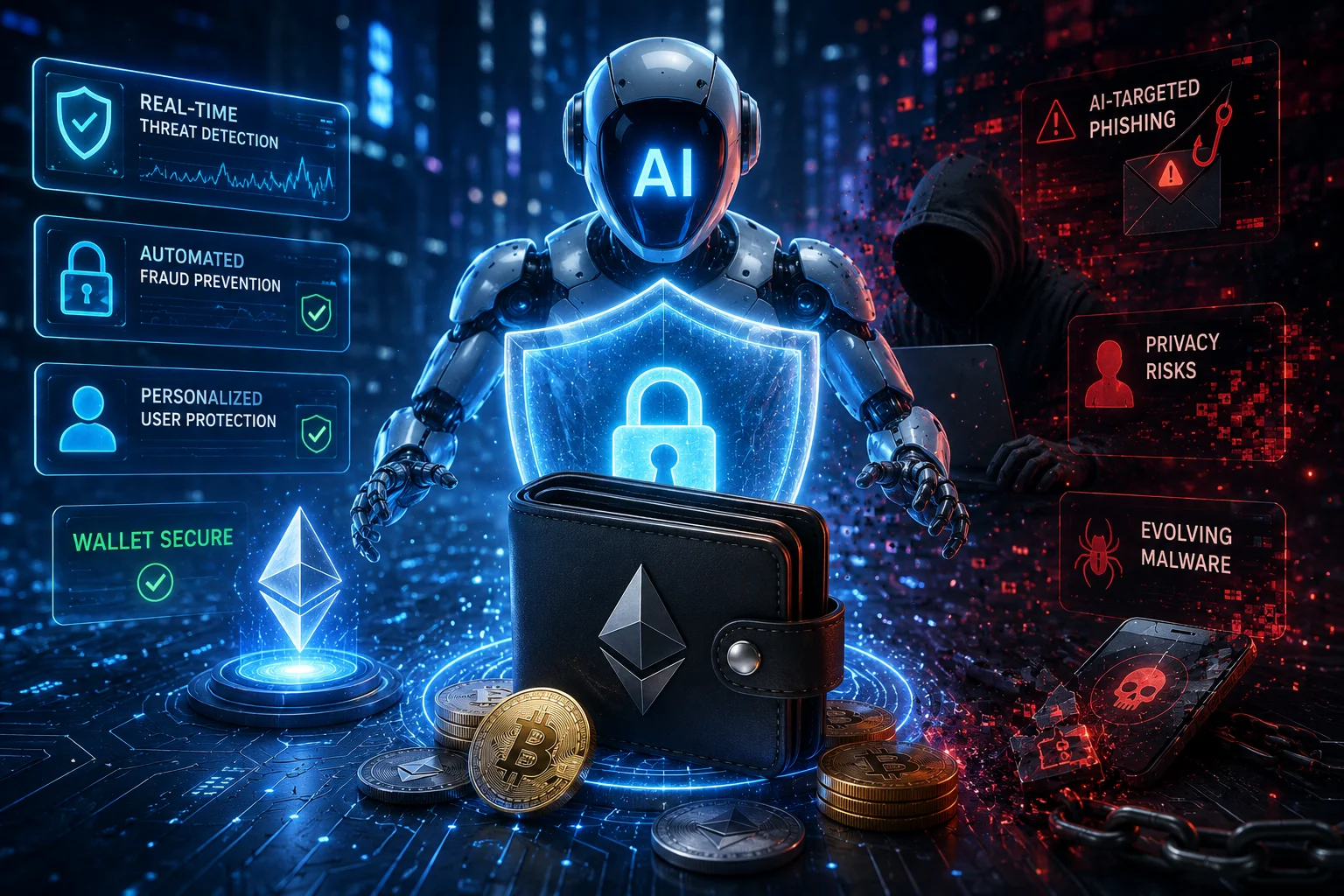

In 2026, AI agents are fundamentally reshaping crypto wallet security by delivering real-time threat detection, automated fraud prevention, and personalized user safety features. For investors and airdrop hunters, these advancements bring both unprecedented protection and new risks—including AI-targeted phishing, privacy challenges, and evolving malware. Staying informed about the latest AI security trends and following best practices is now essential for safeguarding digital assets in the rapidly changing crypto landscape.
Introduction: The Rise of AI Agents in Crypto Wallet Security
The crypto industry in 2026 is witnessing a major shift: AI agents are now embedded in most leading crypto wallets, promising smarter, faster, and more adaptive security than ever before. As digital assets become more mainstream and airdrop participation surges, the need for robust, intelligent wallet protection has never been greater. But with these innovations come new questions: How do these AI agents work? What new risks do they introduce? And how can users—especially airdrop hunters and investors—stay ahead of emerging threats?
How AI Agents Work in Crypto Wallets: 2026 Overview
AI agents in crypto wallet security 2026 are sophisticated software programs designed to monitor, analyze, and respond to threats in real time. Unlike traditional security protocols, these agents continuously learn from user behavior, transaction patterns, and external threat intelligence to adapt their defenses.
Types of AI Agents Used in Crypto Security
- Behavioral Analysis Agents: Monitor user activity for anomalies, such as unusual login locations or transaction sizes.
- Transaction Monitoring Agents: Analyze outgoing and incoming transactions for signs of fraud or phishing.
- Phishing Detection Agents: Scan wallet interfaces and communications for scam attempts or malicious links.
- Adaptive Authentication Agents: Adjust authentication requirements based on perceived risk levels.
These AI-powered systems are often integrated directly into wallet apps, providing a seamless user experience while working tirelessly in the background to keep assets safe.
Key Security Benefits of AI-Powered Crypto Wallets
The adoption of AI agents in crypto wallet security 2026 brings several tangible benefits for users:
- Real-Time Threat Detection and Prevention: AI agents can identify and block suspicious activity as it happens, reducing the window of opportunity for attackers.
- Personalized Security: By learning from individual user patterns, AI agents can tailor security protocols, such as triggering additional verification for unusual actions.
- Automated Fraud Response: Some wallets now automatically freeze or flag transactions that match known scam signatures, providing an extra layer of protection.
- Enhanced Phishing and Scam Detection: AI-driven systems can analyze URLs, smart contract interactions, and even social engineering attempts to warn users before they fall victim.
If you want to understand how eligibility, snapshots, claiming, and reward distribution usually work, start with our crypto airdrop guide before joining new campaigns.
Real-Time Threat Detection and Prevention
Unlike older security models that relied on static rules, AI agents can spot new, previously unseen attack vectors by analyzing patterns across millions of transactions. This proactive approach is especially important as scammers and hackers become more sophisticated in 2026.
Risks and Vulnerabilities: What Investors Need to Know
While AI-powered wallet protection offers significant advantages, it also introduces new risks and vulnerabilities that investors must understand.
Potential AI Exploits and How to Avoid Them
- Adversarial AI Attacks: Malicious actors may attempt to "trick" AI agents by mimicking legitimate behavior or exploiting weaknesses in machine learning models.
- Data Privacy Concerns: AI agents require access to sensitive user data to function effectively, raising questions about how this information is stored, processed, and protected.
- False Positives and User Friction: Overly aggressive AI security can sometimes block legitimate transactions, causing frustration and potential loss of opportunities.
- AI-Targeted Phishing: Attackers may design scams that specifically bypass or confuse AI-driven defenses.
Investors should be aware that no security system is infallible. The dynamic nature of AI means that both defenders and attackers are constantly evolving their tactics. Staying informed and vigilant is critical.
AI Wallet Security for Airdrop Hunters: Unique Challenges and Solutions
Airdrop hunters face a distinct set of security risks, as they often interact with new tokens, smart contracts, and platforms. In 2026, AI agents offer both protection and new challenges for this group.
Airdrop Security: Avoiding Fake AI Agents
- Fake Wallets and Malicious AI Agents: Some phishing campaigns now distribute fake wallets claiming to offer "advanced AI security" but are actually designed to steal private keys or seed phrases.
- Smart Contract Risks: AI agents can help analyze smart contracts for red flags, but sophisticated scams may still slip through.
- Overreliance on Automation: Airdrop hunters should not blindly trust AI warnings or approvals—manual verification remains essential.
To stay safe, airdrop hunters should only use reputable wallets with transparent security features and avoid downloading wallet apps from unofficial sources. For more on safe airdrop participation, see our latest crypto airdrops page.
Before connecting a wallet or approving any transaction, slow down and verify the source. Our crypto safety guide explains how to avoid fake claim pages, phishing links, risky approvals, and common wallet mistakes.
User Safety Tips for Navigating AI-Driven Wallets in 2026
Whether you’re a beginner or a seasoned investor, following these best practices can help you maximize the benefits of AI-powered wallet protection while minimizing risks:
- Understand Your Wallet’s AI Features: Read documentation to know what your wallet’s AI agent can and cannot do.
- Regularly Update Wallet Software: Ensure you’re running the latest version to benefit from security patches and AI model improvements.
- Review and Manage Permissions: Limit the data your wallet shares with third parties and disable unnecessary features.
- Enable Multi-Factor Authentication (MFA): Combine AI-based security with traditional methods for layered protection.
- Manually Verify Suspicious Activity: If your AI agent flags a transaction, double-check details before proceeding.
- Stay Informed About New Threats: Follow trusted sources and our crypto guides and market analysis for the latest updates.
For a comprehensive overview of crypto safety, visit our crypto safety guide.
Emerging Trends and Future Predictions for Crypto Wallet Security in 2026
The landscape of crypto wallet AI security is evolving rapidly. Here are some of the most important trends and predictions for the remainder of 2026 and beyond:
- Collaborative AI Defense Networks: Wallets are beginning to share anonymized threat intelligence, allowing AI agents to learn from attacks across the ecosystem.
- Zero-Knowledge AI Verification: New privacy-preserving technologies are being integrated to allow AI agents to verify transactions without exposing sensitive data.
- Decentralized AI Security Protocols: Instead of relying on a single provider, some wallets are adopting open-source AI models governed by decentralized communities.
- Personalized Security Recommendations: AI agents are expected to offer more tailored advice, such as suggesting optimal security settings based on user behavior and risk profile.
- Integration with DeFi and NFT Platforms: As more users interact with decentralized finance and NFT ecosystems, AI wallet security is expanding to cover these new vectors.
Case Studies: Lessons from Recent AI-Related Wallet Security Incidents
While no major AI-specific wallet breaches have been confirmed in 2026, several incidents from previous years (2026-2026) offer valuable lessons:
- False Sense of Security: In some cases, users placed too much trust in AI-driven alerts, ignoring manual verification and falling for sophisticated scams.
- Adversarial Attacks: Security researchers demonstrated that certain AI models could be manipulated by carefully crafted transactions, highlighting the need for ongoing model updates.
- Data Privacy Debates: Community discussions in 2026 focused on how much user data AI agents should access, leading to new privacy standards in wallet design.
These examples underscore the importance of combining AI-powered security with user education and traditional best practices.
Comparing Leading AI-Powered Crypto Wallets and Their Security Features
Not all AI-powered wallets are created equal. Here’s a comparison of common features found in top wallets in 2026:
| Feature | Basic Wallets | Advanced AI Wallets |
|---|---|---|
| Real-Time Threat Detection | Limited | Comprehensive, adaptive |
| Phishing & Scam Alerts | Manual or basic | Automated, context-aware |
| Personalized Security Settings | Static | Dynamic, user-specific |
| Smart Contract Analysis | Minimal | Automated, AI-driven |
| Privacy Controls | Basic | Advanced, customizable |
| Multi-Factor Authentication | Optional | Integrated with AI risk assessment |
When choosing a wallet, users should prioritize those that are transparent about their AI features, regularly audited, and widely reviewed by the community.
What Users Should Do Next: Actionable Steps for 2026
With the rapid evolution of AI wallet security, users should take proactive steps to protect their assets:
- Audit Your Wallet Settings: Regularly review security configurations and update them as new features become available.
- Participate in Community Feedback: Engage with wallet providers and report suspicious activity or usability issues.
- Educate Yourself: Stay current with security best practices through resources like our crypto guides and market analysis.
- Be Skeptical of "Too Good to Be True" Claims: Especially when it comes to airdrops or new wallet apps promising revolutionary AI security.
Remember, technology is only as effective as the user’s understanding and vigilance.
Still unsure about wallets, eligibility, or reward rules? Visit our FAQ page for quick answers before joining any new crypto campaign.
Conclusion: Staying Safe with AI in Crypto Wallets
AI agents are transforming the way crypto wallets defend against threats in 2026, offering smarter, more adaptive protection for investors and airdrop hunters alike. However, these advancements also bring new risks—such as adversarial attacks, privacy concerns, and the potential for overreliance on automation. By staying informed, practicing good security hygiene, and choosing reputable wallets, users can harness the benefits of AI-driven security while minimizing exposure to emerging threats. For ongoing updates and expert insights, explore our crypto guides and market analysis and crypto safety guide.
Recent AI-Related Crypto Wallet Security Incidents (2024–2025)
As AI agents became integral to crypto wallet security, the years 2024 and 2025 saw several high-profile incidents that shaped the current landscape. These events highlighted both the strengths and vulnerabilities of AI-powered wallet protection, offering valuable lessons for investors and airdrop hunters in 2026.
- Adversarial AI Attacks: In late 2024, a coordinated attack exploited weaknesses in a popular AI-driven wallet’s threat detection algorithms. Malicious actors used adversarial machine learning techniques to bypass security checks, resulting in targeted phishing attacks on high-value wallets. The incident prompted urgent updates to AI models and increased scrutiny of model training data.
- Data Privacy Breaches: Early 2025 saw a privacy breach where a wallet’s AI agent inadvertently logged sensitive user metadata during a software update. Although no funds were lost, the event raised concerns about data handling and transparency in AI-powered wallets.
- Fake AI Agent Scams: Several airdrop hunters fell victim to scam wallets that mimicked legitimate AI security features. These fake agents lured users with promises of enhanced airdrop eligibility, only to siphon private keys and drain funds.
Risks and Vulnerabilities Unique to AI-Powered Crypto Wallets
While AI agents in crypto wallet security 2026 offer advanced protection, they also introduce new risks that users must understand:
- Adversarial Manipulation: Attackers may craft transactions or behaviors specifically designed to confuse or evade AI detection, exploiting blind spots in machine learning models.
- Data Privacy Concerns: AI agents require access to extensive user and transaction data to function optimally. If not properly secured, this data could be exposed or misused.
- Model Drift and False Positives: Over time, AI models can become less accurate if not regularly updated, leading to missed threats or unnecessary transaction blocks.
- Fake AI Agents: The rise of AI-themed scams means users must verify that their wallet’s AI features are legitimate and not a front for phishing or malware.
AI Wallet Security for Airdrop Hunters: Unique Challenges
Airdrop hunters face distinct risks when using AI-powered wallets. The promise of automated eligibility checks and scam detection is appealing, but it comes with caveats:
- Automated Airdrop Scanning: AI agents can quickly analyze airdrop opportunities, but malicious projects may attempt to game these systems, slipping through automated filters.
- Fake Airdrop Alerts: Sophisticated phishing campaigns now use AI-generated alerts to mimic legitimate wallet notifications, tricking users into connecting to malicious dApps.
- Eligibility Data Exposure: AI agents often require access to wallet balances, transaction history, and social profiles to assess airdrop eligibility. If compromised, this data can be exploited for targeted attacks.
For the latest vetted opportunities, see our latest crypto airdrops page.
 Arcus Exchange
 JoinCare
 Breath of Estova
User Safety Tips for Navigating AI-Driven Wallets
To maximize crypto investor safety 2026, follow these best practices when using AI-powered wallet protection:
- Verify AI Features: Only use wallets with transparent documentation about their AI security features. Check for independent audits and community reviews.
- Regularly Update Wallet Software: Ensure your wallet and its AI modules are always up to date to benefit from the latest threat intelligence and bug fixes.
- Monitor AI Alerts Carefully: Treat all AI-generated warnings seriously, but verify their authenticity—especially before approving transactions or connecting to new dApps.
- Limit Data Sharing: Be cautious about granting wallets access to additional personal or social data unless absolutely necessary for airdrop eligibility.
- Enable Multi-Factor Authentication: Combine AI security with traditional protections like hardware wallet integration and multi-factor authentication for layered defense.
- Stay Informed: Follow trusted sources and guides, such as our crypto safety guide, for the latest on AI wallet security threats and solutions.
Emerging Trends and Future Predictions for AI Wallet Security in 2026
Looking ahead, several trends are shaping the future of AI in blockchain security and crypto wallet trends 2026:
- Personalized Security Profiles: AI agents are increasingly tailoring security settings to individual user behaviors, providing custom threat responses and transaction approvals.
- Collaborative AI Defense Networks: Wallets are beginning to share anonymized threat data, allowing AI agents to learn from attacks across the ecosystem in real time.
- Zero-Knowledge AI Verification: New privacy-preserving techniques are emerging, enabling AI agents to assess risk and eligibility without exposing sensitive user data.
- AI vs. AI Arms Race: As defenders deploy smarter AI, attackers are also leveraging AI to craft more convincing phishing attempts and malware, making ongoing vigilance critical.
- Regulatory Oversight: Authorities are starting to issue guidelines for AI-powered wallets, focusing on transparency, data protection, and user consent.
Key Takeaways for Investors and Airdrop Hunters
- AI agents offer powerful new tools for crypto wallet security, but users must remain proactive and informed.
- Risks such as adversarial attacks, data privacy, and fake AI agents require careful attention—especially for airdrop hunters.
- Regular updates, layered security, and critical evaluation of AI features are essential for safeguarding assets in 2026.
- Stay up to date with trusted resources and consider reviewing our crypto guides and market analysis for ongoing education.
Frequently Asked Questions (FAQ)
| Question | Answer |
|---|---|
| What is an AI agent in crypto wallet security? | An AI agent is a software program embedded in a crypto wallet that uses machine learning to detect threats, prevent fraud, and personalize security settings in real time. |
| Can AI agents completely prevent wallet hacks? | No system is foolproof. While AI agents significantly reduce risk, users must still follow best practices and remain vigilant against new attack vectors. |
| Are AI-powered wallets safe for storing large investments? | AI-powered wallets can enhance security, but large holdings should be protected with additional measures such as hardware wallets and multi-factor authentication. |
| How do AI agents help airdrop hunters stay secure? | AI agents can automatically screen airdrop opportunities for scams and phishing, but users should verify alerts and avoid sharing unnecessary personal data. |
| What should I do if my AI wallet detects suspicious activity? | Immediately halt all transactions, review recent activity, update your wallet software, and consult your provider’s support or our crypto safety guide for next steps. |





 Gaming Platforms
 Crypto Casinos
 Blockchain Bridges
 Staking & Restaking
 DEX Token Swapping
 Crypto Wallets