
 BTC
BTC
 ETH
ETH
 USDT
USDT
 BNB
BNB
 XRP
XRP
 USDC
USDC
 SOL
SOL
 TRX
TRX
 ZEC
ZEC
 FIGR_HELOC
 HYPE
HYPE
 DOGE
DOGE
 LINK
LINK
 XMR
XMR
 WBT
WBT
 USDS
USDS
 ADA
ADA
 RAIN
RAIN
 LEO
LEO
 XLM
XLM
 NEAR
NEAR
 BCH
BCH
 UNI
UNI
 LTC
LTC
 CC
CC
 SUI
SUI
 USDE
USDE
 AVAX
AVAX
 DAI
DAI
 GRAM
GRAM
 USD1
USD1
 HBAR
HBAR
 TAO
TAO
 SHIB
SHIB
 QNT
QNT
 CRO
CRO
 BTW
BTW
 USDG
USDG
 ENA
ENA
 PYUSD
PYUSD
 M
M
 ONDO
ONDO
 XAUT
XAUT
 OKB
OKB
 RLUSD
RLUSD
 USYC
USYC
 AAVE
AAVE
 PUMP
PUMP
 BUIDL
BUIDL
 USDY
USDY
 MNT
MNT
 DOT
DOT
 WLD
WLD
 ASTER
ASTER
 MORPHO
 SKY
SKY
 PAXG
PAXG
 WLFI
WLFI
 PEPE
PEPE
 ICP
ICP
 USDD
USDD
 ARB
ARB
 HTX
HTX
 ETC
ETC
 EURSAFO
 U
U
 VVV
VVV
 BGB
BGB
 USDGO
USDGO
 USDF
USDF
 KAS
KAS
 BFUSD
BFUSD
 POL
POL
 JUP
JUP
 GT
GT
 LIT
LIT
 ALGO
ALGO
 RENDER
 CAKE
CAKE
 JST
JST
 PI
PI
 KCS
KCS
 ATOM
ATOM
 BCAP
BCAP
 FIL
FIL
 NEXO
NEXO
 DASH
DASH
 AERO
AERO
 VET
VET
 INJ
INJ
 USTB
USTB
 EUTBL
EUTBL
 APT
APT
 STABLE
 AKE
AKE
 GHO
GHO
 ETHFI
ETHFI
 PYTH
PYTH
 XDC
XDC
 PENGU
PENGU
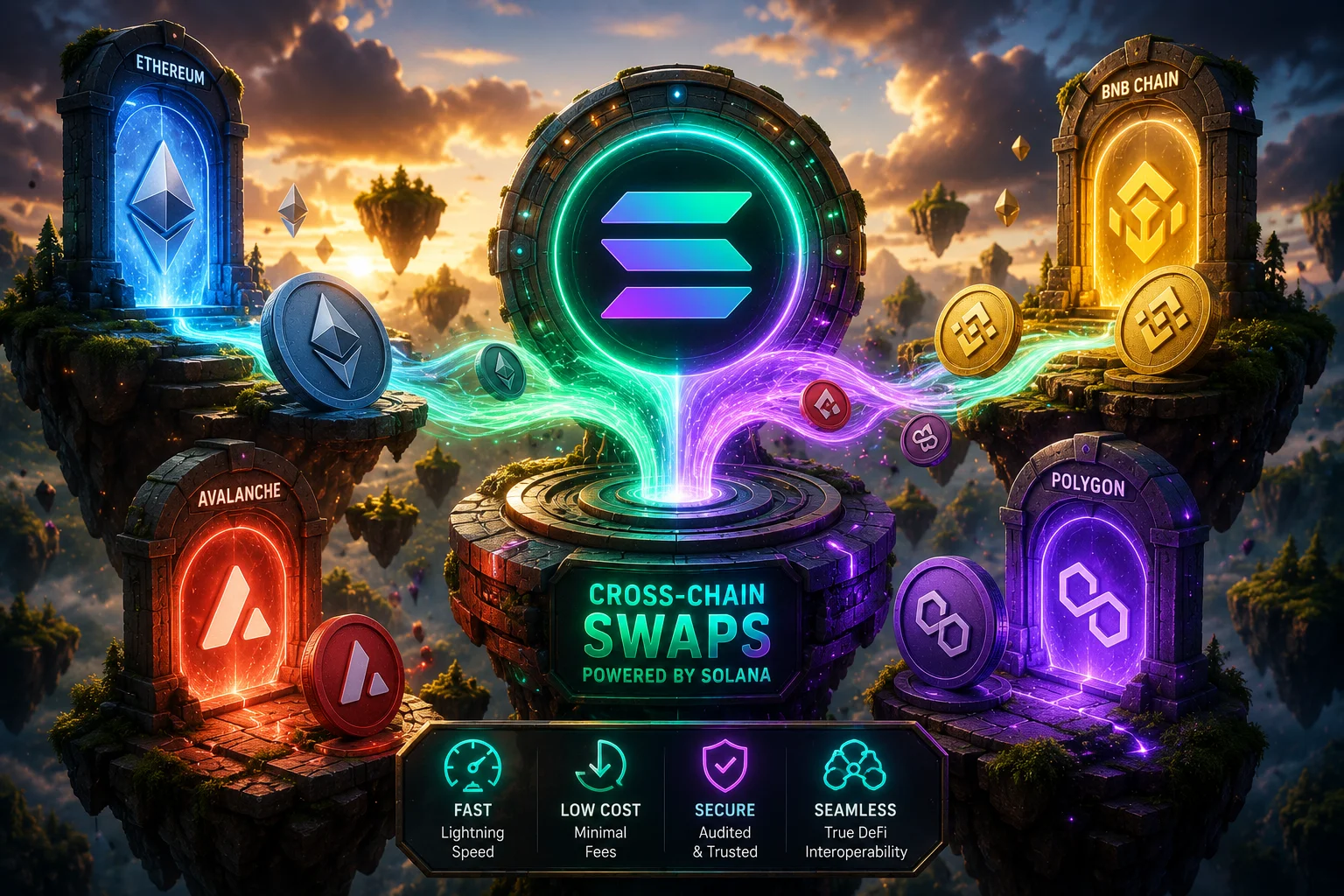

Solana DeFi cross-chain swaps in 2026 allow users to seamlessly exchange assets between Solana and other blockchains without relying on centralized exchanges. Powered by advanced interoperability protocols and bridges, these swaps offer fast, low-cost, and secure transactions, making it easier for traders, investors, and airdrop hunters to access a wider range of DeFi opportunities across multiple networks. In this guide, we break down the latest Solana cross-chain innovations, top protocols, security tips, and how users can benefit from the next wave of crypto interoperability.
Understanding Solana DeFi Cross-Chain Swaps in 2026
Cross-chain swaps have become a cornerstone of decentralized finance (DeFi) in 2026, and Solana is at the forefront of this evolution. A cross-chain swap lets users trade tokens from one blockchain for tokens on another without using centralized exchanges. Instead, users interact with smart contracts and interoperability protocols that handle the transfer and conversion securely and transparently.
Solana’s high throughput, low fees, and growing ecosystem have made it a preferred hub for cross-chain activity. In 2026, builders have introduced new bridges and protocols that make it possible to swap assets between Solana, Ethereum, Cosmos, Avalanche, and other leading chains with unprecedented speed and reliability.
What Makes Solana Unique for Cross-Chain Swaps?
Solana’s architecture is designed for speed and scalability. Its proof-of-history consensus mechanism allows for thousands of transactions per second, which is critical for cross-chain swaps that require fast settlement. Unlike some blockchains that struggle with congestion and high fees, Solana’s network remains efficient even during periods of high demand.
Key advantages of Solana for cross-chain swaps in 2026 include:
- Ultra-low transaction fees: Swapping assets on Solana typically costs a fraction of a cent, making it attractive for both small and large trades.
- High-speed execution: Transactions are confirmed in seconds, reducing the risk of price slippage and failed swaps.
- Expanding interoperability: New bridges and protocols launched in 2026 have increased the number of supported blockchains and assets.
- Active developer community: Builders are rapidly deploying new tools, security enhancements, and user-friendly interfaces.
How Solana Powers Crypto Interoperability in 2026
Crypto interoperability is the ability for different blockchains to communicate and transfer assets or data seamlessly. In 2026, Solana has become a key player in this space thanks to its robust infrastructure and the rise of cross-chain protocols.
Solana’s interoperability is powered by:
- Cross-chain bridges: Protocols like Wormhole, Portal, and new entrants in 2026 have enabled secure asset transfers between Solana and dozens of other chains.
- Atomic swaps: Smart contracts that allow for trustless, direct exchanges of tokens between users on different blockchains.
- Unified liquidity pools: Some protocols aggregate liquidity across multiple chains, allowing users to access deeper markets and better prices.
These innovations have made it possible for users to move capital efficiently, participate in DeFi opportunities on multiple networks, and avoid the risks and delays of centralized exchanges.
Top Solana DeFi Protocols Enabling Cross-Chain Swaps
Several protocols have emerged as leaders in Solana’s cross-chain DeFi landscape in 2026. Here’s a look at some of the most popular and trusted options:
- Wormhole: One of the earliest and most widely used bridges, Wormhole connects Solana with Ethereum, BNB Chain, Polygon, and more. Its 2026 upgrades focus on enhanced security and support for additional assets.
- Portal: Portal has gained traction for its user-friendly interface and support for atomic swaps between Solana and Cosmos-based chains. It offers real-time swap execution and transparent fee structures.
- Jupiter: Jupiter is a leading aggregator on Solana, routing swaps through the most efficient paths—including cross-chain routes—while minimizing slippage and fees.
- New 2026 Protocols: Several new protocols have launched in 2026, focusing on privacy-preserving swaps, lower fees, and support for emerging blockchains. Community feedback and audits have been central to their adoption.
When choosing a protocol, users should consider factors such as supported assets, security audits, community reputation, and fee transparency. For a broader overview, check out our crypto guides and market analysis.
Key Features of Leading Solana Cross-Chain Protocols
- Multi-chain support: Access to a growing list of blockchains and tokens.
- Non-custodial design: Users retain control of their assets throughout the swap process.
- Transparent fees: Upfront display of all costs, with competitive rates compared to other blockchains.
- Security audits: Regular third-party reviews to ensure protocol safety.
Before connecting a wallet or approving any transaction, slow down and verify the source. Our crypto safety guide explains how to avoid fake claim pages, phishing links, risky approvals, and common wallet mistakes.
Step-by-Step Guide: Using Solana Cross-Chain Swaps in 2026
Getting started with Solana cross-chain swaps is easier than ever in 2026, thanks to improved interfaces and wallet integrations. Here’s a practical walkthrough for beginners and experienced users alike:
- Choose a compatible wallet: Popular options include Phantom, Solflare, and multi-chain wallets that support Solana and the target blockchain.
- Select a cross-chain protocol: Visit the official app for Wormhole, Portal, Jupiter, or another trusted protocol.
- Connect your wallet: Authorize the app to access your wallet. Always double-check the URL to avoid phishing scams.
- Pick the assets to swap: Choose the token you want to send and the token you want to receive on the destination chain.
- Review fees and rates: The protocol will display estimated fees and the exchange rate. Compare these with other protocols if needed.
- Initiate the swap: Confirm the transaction in your wallet. The protocol will handle the cross-chain transfer and conversion.
- Wait for confirmation: Most swaps complete within seconds to a few minutes, depending on network conditions.
- Verify receipt: Check your wallet on the destination chain to ensure the new tokens have arrived.
For more safety tips, visit our crypto safety guide.
Tips for Beginners: Getting Started with Solana DeFi
- Start with small amounts to familiarize yourself with the process.
- Use official protocol links and avoid third-party aggregators unless they are well-reviewed.
- Keep your wallet software updated and enable security features like hardware wallet support.
Comparing Solana Cross-Chain Swaps to Other Blockchains in 2026
Solana’s cross-chain swaps stand out for their speed and cost efficiency, but how do they compare to swaps on Ethereum, BNB Chain, or Avalanche?
| Blockchain | Average Swap Fee (2026) | Typical Confirmation Time | Supported Protocols |
|---|---|---|---|
| Solana | Less than $0.01 | Seconds | Wormhole, Portal, Jupiter, others |
| Ethereum | $2 to $10 (variable) | Minutes | Hop, Connext, Multichain |
| BNB Chain | ~$0.10 | Seconds to minutes | Multichain, Celer |
| Avalanche | ~$0.05 | Seconds | Multichain, Avalanche Bridge |
Solana’s low fees and rapid confirmation times make it especially attractive for frequent traders, airdrop hunters, and users moving smaller amounts of capital. However, users should always consider network conditions and protocol reputation before swapping.
Security and Risks of Solana DeFi Cross-Chain Swaps
While cross-chain swaps offer powerful new capabilities, they also introduce unique risks. In 2026, the Solana community and protocol teams have prioritized security, but users must remain vigilant.
- Smart contract vulnerabilities: Bugs or exploits in bridge contracts can put user funds at risk. Always use protocols with recent security audits and active bug bounty programs.
- Phishing and fake apps: Scammers may create fake swap interfaces. Only use official links and double-check URLs.
- Bridge downtime: Maintenance or network congestion can delay swaps. Monitor protocol status pages for updates.
- Asset risk: Wrapped tokens may carry additional risk if the underlying bridge is compromised.
For a comprehensive overview of best practices, see our crypto safety guide.
Best Practices for Secure Cross-Chain Swapping
- Use hardware wallets for large transactions.
- Check for recent audits and community feedback before using a new protocol.
- Start with small test swaps to confirm functionality.
- Stay informed about protocol updates and known issues.
If you want reward-focused opportunities that involve tasks or activity, compare more earn crypto airdrops before choosing where to spend your time.
Solana DeFi Airdrops for Cross-Chain Users in 2026
Airdrop hunters have found new opportunities in Solana’s cross-chain DeFi ecosystem. In 2026, many protocols reward users for providing liquidity, participating in governance, or simply using cross-chain swap features.
To maximize your chances of qualifying for airdrops:
- Use new and established cross-chain protocols regularly.
- Participate in governance votes and community initiatives.
- Provide liquidity to cross-chain pools when available.
- Follow official protocol channels for airdrop announcements and eligibility criteria.
For the latest opportunities, check our curated list of latest crypto airdrops.
How to Qualify for Solana DeFi Airdrops in 2026
- Complete cross-chain swaps using eligible protocols.
- Hold or stake protocol tokens if required.
- Engage with testnets and beta features, as some projects reward early testers.
Remember, airdrop eligibility rules can change quickly. Always verify requirements on official sources before taking action.
Investor Strategies for Maximizing Cross-Chain Opportunities
Investors and traders can leverage Solana’s cross-chain swaps to diversify portfolios, access new DeFi products, and optimize yield strategies. Here are some practical approaches:
- Arbitrage: Take advantage of price differences between assets on Solana and other blockchains.
- Yield farming: Provide liquidity to cross-chain pools for potential rewards and airdrops.
- Portfolio rebalancing: Move assets between chains to manage risk and capture new opportunities.
- Airdrop participation: Use new protocols and features to increase eligibility for future token distributions.
As always, carefully assess risks and avoid overexposure to any single protocol or asset.
Case Studies: Real-World Examples of Solana Cross-Chain Swaps
In 2026, users have successfully leveraged Solana cross-chain swaps for a variety of purposes:
- DeFi traders: Quickly moved stablecoins from Ethereum to Solana to take advantage of lower fees and higher yields.
- NFT collectors: Swapped assets between Solana and Polygon to access exclusive NFT drops.
- Liquidity providers: Bridged tokens to participate in multi-chain liquidity pools, earning both trading fees and protocol rewards.
These examples highlight the flexibility and efficiency of Solana’s cross-chain ecosystem.
Future Trends: The Evolution of Solana Interoperability in 2026 and Beyond
Looking ahead, several trends are shaping the future of Solana interoperability:
- Increased protocol composability: More DeFi apps are integrating cross-chain features directly into their platforms.
- Privacy enhancements: New protocols are exploring privacy-preserving swaps to protect user data.
- Decentralized bridge governance: Community-driven oversight is reducing single points of failure.
- Support for emerging blockchains: Solana bridges are expanding to include Layer 2s and new ecosystems.
Builders continue to push the boundaries of what’s possible, making Solana a key hub for the next generation of crypto interoperability. For ongoing updates and in-depth analysis, explore our crypto guides and market analysis.
Key Takeaways for Users Exploring Solana DeFi Cross-Chain Swaps in 2026
- Solana’s cross-chain swaps offer fast, low-cost, and secure asset transfers across multiple blockchains.
- Top protocols like Wormhole, Portal, and Jupiter provide robust options for both beginners and advanced users.
- Security remains a top priority—always use audited protocols and follow safety best practices.
- Airdrop opportunities abound for active cross-chain users, but eligibility rules vary by protocol.
- Stay informed about new interoperability trends and protocols to maximize your DeFi experience.
Solana DeFi cross-chain swaps in 2026 are reshaping how users interact with the broader crypto ecosystem. By understanding the latest tools, trends, and safety practices, you can unlock new opportunities and participate in the next wave of decentralized finance.
If you want to understand how eligibility, snapshots, claiming, and reward distribution usually work, start with our crypto airdrop guide before joining new campaigns.
Top Solana DeFi Protocols Enabling Cross-Chain Swaps in 2026
Solana's DeFi ecosystem in 2026 is defined by a robust lineup of cross-chain swap protocols. These platforms leverage advanced interoperability solutions to connect Solana with major blockchains like Ethereum, Cosmos, and Avalanche. Here are some of the most prominent protocols powering seamless asset transfers:
- Wormhole V3: The latest iteration of the Wormhole bridge offers ultra-fast, low-fee swaps between Solana and over 20 supported chains. Its decentralized guardians and improved security architecture have made it a go-to for both retail and institutional users.
- PortalSwap: Specializing in user-friendly cross-chain swaps, PortalSwap integrates with Solana wallets and provides real-time fee and slippage estimates. Its liquidity aggregation ensures competitive rates for major and emerging tokens.
- Jupiter Aggregator: Jupiter has expanded in 2026 to route cross-chain swaps through multiple bridges, optimizing for the best price and lowest risk. Its integration with Solana DeFi protocols makes it a favorite for active traders.
- Allbridge Core: Focused on security and transparency, Allbridge Core supports a wide range of tokens and offers detailed analytics on swap performance and bridge health.
For a deeper dive into the leading protocols, check out our crypto guides and market analysis.
Step-by-Step Guide: Using Solana Cross-Chain Swaps
Participating in Solana DeFi cross-chain swaps in 2026 is more accessible than ever. Here’s a simple walkthrough using a typical protocol like Wormhole V3:
- 1. Connect Your Wallet: Use a supported Solana wallet (such as Phantom, Solflare, or Backpack) and connect to the swap protocol’s interface.
- 2. Select Source and Destination Chains: Choose Solana as your source or destination, and pick the other blockchain you wish to swap with (e.g., Ethereum).
- 3. Choose Tokens and Enter Amount: Select the token you want to swap and the token you wish to receive. Enter the amount and review the estimated fees and slippage.
- 4. Approve and Initiate Swap: Approve the transaction in your wallet. The protocol will handle the transfer, bridging, and settlement automatically.
- 5. Confirm Receipt: After a few seconds to minutes (depending on network congestion), your new tokens will appear in your destination wallet.
For more tips on getting started, see our crypto safety guide.
Solana DeFi Cross-Chain Swap Fees: 2026 Comparison
| Protocol | Average Fee (USD) | Supported Chains | Settlement Time |
|---|---|---|---|
| Wormhole V3 | $0.10 - $0.25 | Solana, Ethereum, Cosmos, Avalanche, more | 10s - 2min |
| PortalSwap | $0.15 - $0.30 | Solana, Ethereum, BNB Chain, Polygon | 15s - 3min |
| Jupiter Aggregator | $0.12 - $0.22 | Multi-chain | 10s - 1min |
| Ethereum Mainnet (for comparison) | $2.00 - $8.00 | Ethereum, L2s | 2min - 10min |
Solana’s low fees and fast settlement times make it a preferred choice for cross-chain swaps, especially compared to Ethereum’s mainnet costs in 2026.
Security and Risks of Solana DeFi Cross-Chain Swaps
While Solana cross-chain swaps are designed for security, users should remain vigilant. Here are key risks and best practices:
- Bridge Vulnerabilities: Despite audits, bridges can be targeted by exploits. Always use reputable, well-audited protocols.
- Phishing Attacks: Only interact with official protocol websites. Bookmark trusted URLs and double-check wallet prompts.
- Slippage and Front-Running: Large swaps may suffer from slippage or be front-run by bots. Use protocols with slippage protection and review transaction details before confirming.
- Wallet Security: Protect your wallet seed phrase and use hardware wallets for larger amounts.
For more on staying safe, visit our crypto safety guide.
 Kryvora Network
 Note Systems
 Nado
Nado
Solana DeFi Airdrops for Cross-Chain Users in 2026
Many Solana DeFi protocols incentivize cross-chain activity with airdrops. In 2026, airdrop eligibility often depends on:
- Volume and frequency of cross-chain swaps
- Early adoption of new interoperability features
- Participation in governance or liquidity provision
To maximize your chances, regularly use leading cross-chain protocols, engage with their communities, and monitor official announcements. Stay updated on the latest crypto airdrops for new opportunities.
How to Qualify for Solana DeFi Cross-Chain Airdrops
- Connect your wallet and perform legitimate swaps on major protocols
- Participate in testnets or beta launches when invited
- Hold protocol governance tokens or provide liquidity
Always verify airdrop details from official sources to avoid scams.
Case Study: Successful Cross-Chain Swap on Solana
In early 2026, a user swapped USDC from Solana to ETH on Ethereum using Wormhole V3. The process took under a minute, with a total fee of $0.18. The user received a bonus airdrop from the protocol for being an early adopter of the new bridge feature. This example highlights the speed, cost-effectiveness, and potential rewards of using Solana for cross-chain swaps.
Key Takeaways
- Solana DeFi cross-chain swaps in 2026 are fast, affordable, and increasingly secure.
- Leading protocols like Wormhole V3, PortalSwap, and Jupiter Aggregator offer robust interoperability.
- Security remains paramount—use trusted platforms and follow best practices.
- Active users can benefit from airdrops and new DeFi opportunities by participating in cross-chain swaps.
FAQ: Solana DeFi Cross-Chain Swaps in 2026
- What are the main benefits of Solana DeFi cross-chain swaps in 2026?
Low fees, fast settlement, and access to a wide range of assets across multiple blockchains. - Which wallets support Solana cross-chain swaps?
Popular wallets include Phantom, Solflare, Backpack, and Ledger (via integrations). - How do I participate in Solana DeFi airdrops for cross-chain users?
Use cross-chain protocols regularly, join testnets, and follow official announcements. See the latest crypto airdrops page for updates. - What are the risks involved in cross-chain swaps on Solana?
Bridge exploits, phishing, and slippage. Always use reputable protocols and secure your wallet. - Can beginners use Solana DeFi cross-chain swaps easily?
Yes, most protocols offer intuitive interfaces and guides. For more help, see our crypto guides and market analysis. - How do fees compare between Solana and other blockchains for cross-chain swaps?
Solana offers significantly lower fees and faster settlement compared to Ethereum mainnet and some L2s. - What new interoperability protocols are emerging on Solana in 2026?
Innovations include Wormhole V3, Allbridge Core, and new decentralized bridge aggregators focused on security and speed.




 Gaming Platforms
 Crypto Casinos
 Blockchain Bridges
 Staking & Restaking
 DEX Token Swapping
 Crypto Wallets