
 BTC
 ETH
 USDT
 BNB
 USDC
 XRP
 SOL
 TRX
 FIGR_HELOC
 HYPE
 ZEC
 XMR
 DOGE
 LEO
 USDS
 WBT
 LINK
 ADA
 XLM
 USDE
 DAI
 NEAR
 BCH
 LTC
 RAIN
 CC
 AVAX
 UNI
 XAUT
 SUI
 GRAM
 USD1
 RLUSD
 USDG
 HBAR
 PYUSD
 USDY
 TAO
 SHIB
 QNT
 CRO
 M
 USYC
 EURSAFO
 OKB
 AAVE
 PAXG
 USDF
 U
 BUIDL
 PEPE
 ENA
 ONDO
 WLFI
 USDD
 ASTER
 HTX
 BFUSD
 MNT
 ICP
 DOT
 PUMP
 MORPHO
 SKY
 JST
 BGB
 VVV
 USDGO
 WLD
 OUSD
 ETC
 ARB
 POL
 KCS
 JUP
 PIEVERSE
 RENDER
 NIGHT
 KAS
 GT
 INJ
 BTW
 ALGO
 LIT
 ATOM
 PEARL
 GHO
 USTB
 PI
 NEXO
 XDC
 JAAA
 BDX
 ZRO
 USD0
 CAKE
 EURC
 STX
 FIL
 TUSD
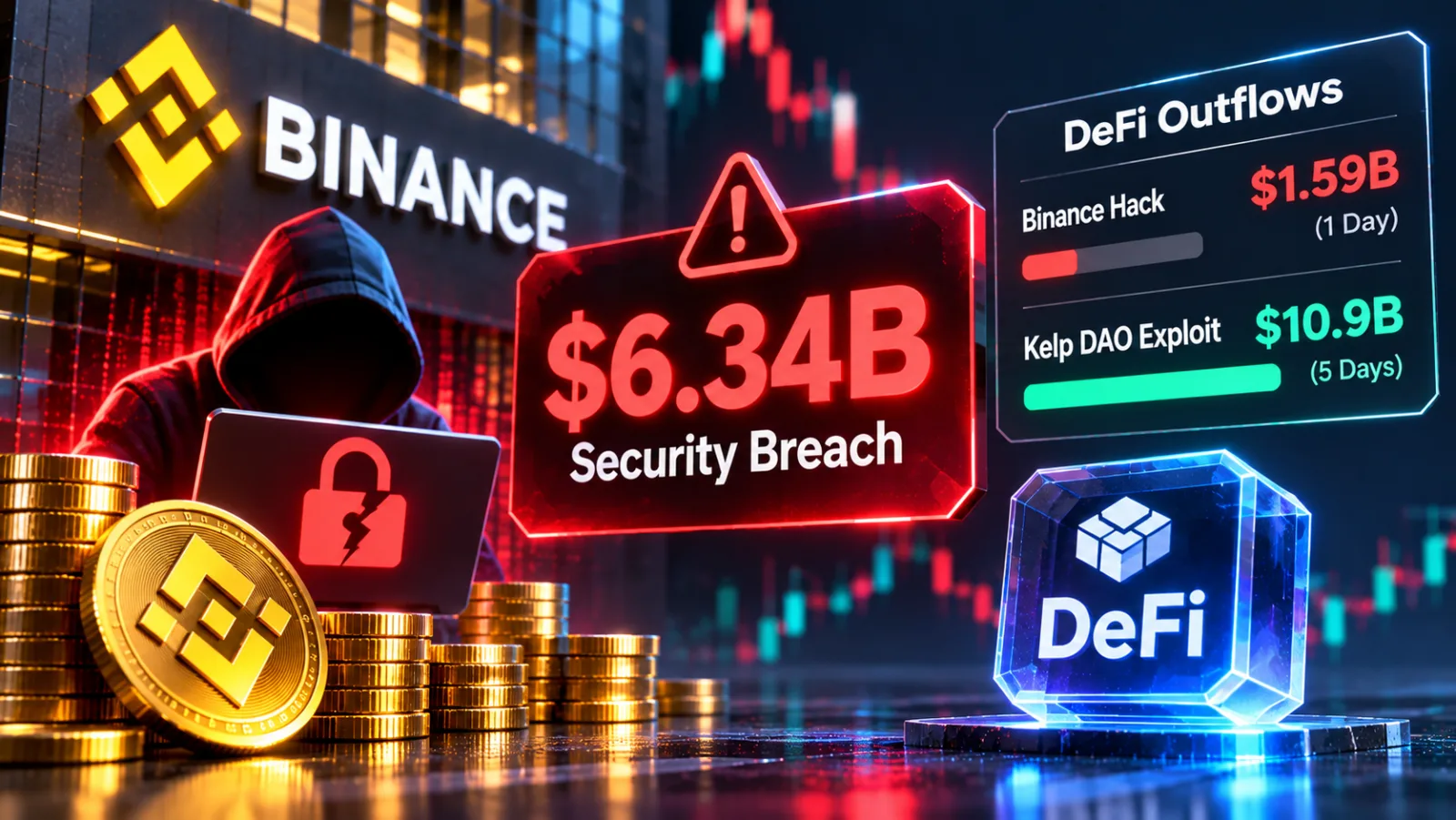

Binance's official report puts its October 29 security breach at approximately $6.34 billion, making it the largest crypto theft tracked by Elliptic. Yet DeFi's reaction was surprisingly contained. Sentora data reported by crypto.news shows $1.59 billion left lending markets in the first day, while April's $292 million Kelp DAO exploit drove $10.9 billion out over five days. The comparison uses different windows, but the tension is real: DeFi did not fear the biggest loss most. It feared the loss embedded in its own collateral machinery.
For practical risk controls, review AirdropHotList's crypto safety guide.
The paradox sits in collateral, not headline size
Sentora's comparison creates an investor paradox. The Kelp theft was less than 5% of the Binance loss, yet the reported lending outflow was nearly seven times larger. Binance triggered withdrawals equal to roughly 3% of lending total value locked, with about 60% returning within three days. Kelp prompted withdrawals equal to approximately 21% of lending TVL, with none returning during Sentora's five day observation period.
The distinction is not merely centralized exchange risk versus DeFi risk. It is about where uncertainty enters the system. Binance lost assets from exchange controlled hot wallets. The damage was enormous, but it did not automatically make collateral already deposited across lending protocols insolvent. Kelp's compromised rsETH, by contrast, touched the credit stack itself. Depositors had to consider whether an asset supporting loans across shared markets was still trustworthy.
That is the central lesson: the size of a theft does not determine the size of its contagion. The location of the damaged asset does.
DeFi campaigns can involve protocol usage, liquidity, staking, or wallet activity. Before spending gas or locking funds, compare more DeFi airdrops and review the effort-to-reward balance.
Kelp reached inside DeFi's balance sheet
On April 18, attackers released 116,500 rsETH worth roughly $292 million from Kelp DAO's LayerZero bridge against a burn that never occurred. Chainalysis found that the attackers compromised internal RPC infrastructure and disrupted external nodes, feeding false information to a single verifier configuration. The onchain transactions appeared valid even though the crosschain event they represented was fictitious.
This mattered because rsETH was not simply sitting in one treasury. It was a liquid restaking token integrated into DeFi, including lending markets where collateral value determines borrowing power and liquidation safety. Once the bridge failure broke confidence in the asset's crosschain integrity, users faced a difficult question: which pools, borrowers and vaults were carrying exposure that had not yet become visible?
Shared liquidity turns that uncertainty into a reason to exit early. A depositor does not need to hold the compromised token directly to worry that another borrower is using it as collateral against the same pool. Kelp therefore threatened the assumptions behind DeFi credit, not just the balance sheet of one project.
If this opportunity involves trading, deposits, or exchange activity, review our crypto trading guide for beginners to understand fees, risk control, and safer decision-making.
Binance stayed mostly outside the credit stack
Binance's breach followed a different path. The exchange said attackers combined fake recruitment interviews, malicious developer software, compromised employee devices and access to wallet infrastructure. They then abused Ethereum's EIP 7702 authorization mechanism to give an attacker controlled contract execution rights over a hot wallet. Binance said it found no evidence that wallet private keys were leaked.
Crucially, Binance committed its own resources to filling the hole. Its November 3 update said 98% of the affected token assets had been replenished by October 31, with purchases of less liquid assets continuing. That commitment placed a corporate balance sheet between the theft and customer losses, limiting the incentive for DeFi lenders to treat every connected asset as impaired.
The stress was still real. Sentora's incident report said its two main Morpho vaults experienced withdrawals of 11% to 13% within six hours. Even so, both met every redemption. Sentora recorded one liquidation of about $35,000 and no bad debt or depositor losses. Liquidity tightened, but the credit machinery did not break.
Aave's freeze bought time but exposed a tradeoff
The attacker did reach into DeFi by supplying stolen USDT to Aave and borrowing WETH before the tokens were frozen. Aave's guardians responded by broadly freezing reserves across V3 and V4, then moved through a staged rollback that kept assets identified in the attacker's cluster from providing new borrowing power.
Aave's public response shows how protocol controls can contain an unknown threat without immediately liquidating existing borrowers. Withdrawals and repayments remained possible under the later zero loan to value settings, while affected collateral could not support new debt.
That defense has a cost. Freezing markets can push utilization higher elsewhere and make available liquidity feel scarcer, even when no bad debt exists. The Binance incident therefore became a test of operational liquidity rather than collateral solvency. Kelp was the opposite: the immediate fear was that collateral itself could no longer be trusted.
Still unsure about wallets, eligibility, or reward rules? Visit our FAQ page for quick answers before joining any new crypto campaign.
The stablecoin off switch contained one risk and created another
Stablecoin issuers helped prevent the Binance theft from becoming a larger onchain liquidation event. Binance reported that approximately $2.85 billion had been frozen or intercepted by November 3. Circle blocked 823 million stolen USDC before it could be converted, while Tether and other issuers immobilized additional balances.
The intervention protected markets, but it also exposed crypto's split architecture. Fiat backed stablecoins can be stopped by their issuers. Native Bitcoin and Ether cannot. The same administrative controls criticized as centralization risks became emergency circuit breakers when stolen assets began moving through decentralized venues.
The remaining permissionless assets keep the market risk alive. The FBI attributed the theft to North Korea's TraderTraitor activity and warned that the actors were expected to use DeFi and instant swap services for laundering. By 08:45 UTC on November 6, Elliptic had traced about $124 million converted from other stolen assets into Bitcoin, while approximately $3.11 billion remained in theft linked addresses.
 GoMining │ Bitcoin Mining
 Squeekchain
 Arcus Exchange
The comparison still has limits
Sentora's headline figures should not be treated as a perfectly controlled experiment. The Binance figure covers the initial day of outflows, while Kelp's covers five days. Binance also moved quickly to recapitalize, and precautionary freezes reduced opportunities for new leverage. Sentora's no bad debt finding applies to the markets it assessed, not every lending venue in crypto.
The counter case is that Binance contagion has been delayed rather than defeated. Large sales of stolen ETH or BTC could depress collateral prices, raise liquidation pressure and produce a second round of withdrawals. Laundering through lending protocols could also force additional freezes or risk parameter changes. The first shock was smaller than Kelp's, but the unfreezable portion of the theft remains an active market variable.
Conclusion
The Binance hack did not prove that DeFi is immune to multibillion dollar exchange failures. It showed that DeFi reacts most violently when an exploit corrupts collateral assumptions inside shared credit markets. For investors, the important number is not only how much was stolen. It is how much compromised value can still borrow, be liquidated or move through interconnected pools.
- Attacker asset sales: Watch whether the largest theft linked ETH and BTC wallets begin moving into exchanges, bridges or lending venues.
- Lending liquidity: Monitor utilization, withdrawal queues and bad debt across Aave, Morpho and other major credit markets.
- Risk controls: Track whether Aave and other protocols restore remaining collateral settings or impose fresh restrictions.
- Fund recovery: Follow Binance's asset replenishment, legal recovery efforts and the conversion of frozen stablecoins into recoverable funds.


 Gaming Platforms
 Crypto Casinos
 Blockchain Bridges
 Staking & Restaking
 DEX Token Swapping
 Crypto Wallets