
 BTC
BTC
 ETH
ETH
 USDT
USDT
 BNB
BNB
 XRP
XRP
 USDC
USDC
 SOL
SOL
 TRX
TRX
 ZEC
ZEC
 FIGR_HELOC
 HYPE
HYPE
 DOGE
DOGE
 LINK
LINK
 XMR
XMR
 WBT
WBT
 USDS
USDS
 ADA
ADA
 RAIN
RAIN
 LEO
LEO
 XLM
XLM
 NEAR
NEAR
 BCH
BCH
 UNI
UNI
 LTC
LTC
 CC
CC
 SUI
SUI
 USDE
USDE
 AVAX
AVAX
 DAI
DAI
 GRAM
GRAM
 USD1
USD1
 HBAR
HBAR
 QNT
QNT
 TAO
TAO
 SHIB
SHIB
 BTW
BTW
 CRO
CRO
 USDG
USDG
 PYUSD
PYUSD
 ENA
ENA
 ONDO
ONDO
 M
M
 XAUT
XAUT
 OKB
OKB
 RLUSD
RLUSD
 USYC
USYC
 AAVE
AAVE
 PUMP
PUMP
 BUIDL
BUIDL
 USDY
USDY
 MNT
MNT
 DOT
DOT
 WLD
WLD
 ASTER
ASTER
 SKY
SKY
 MORPHO
 PAXG
PAXG
 WLFI
WLFI
 PEPE
PEPE
 ICP
ICP
 USDD
USDD
 HTX
HTX
 ARB
ARB
 ETC
ETC
 EURSAFO
 U
U
 BGB
BGB
 USDGO
USDGO
 VVV
VVV
 USDF
USDF
 BFUSD
BFUSD
 KAS
KAS
 POL
POL
 JUP
JUP
 GT
GT
 LIT
LIT
 ALGO
ALGO
 CAKE
CAKE
 RENDER
 JST
JST
 PI
PI
 KCS
KCS
 ATOM
ATOM
 BCAP
BCAP
 FIL
FIL
 DASH
DASH
 NEXO
NEXO
 AERO
AERO
 VET
VET
 INJ
INJ
 USTB
USTB
 EUTBL
EUTBL
 APT
APT
 STABLE
 AKE
AKE
 GHO
GHO
 ETHFI
ETHFI
 XDC
XDC
 PYTH
PYTH
 PENGU
PENGU
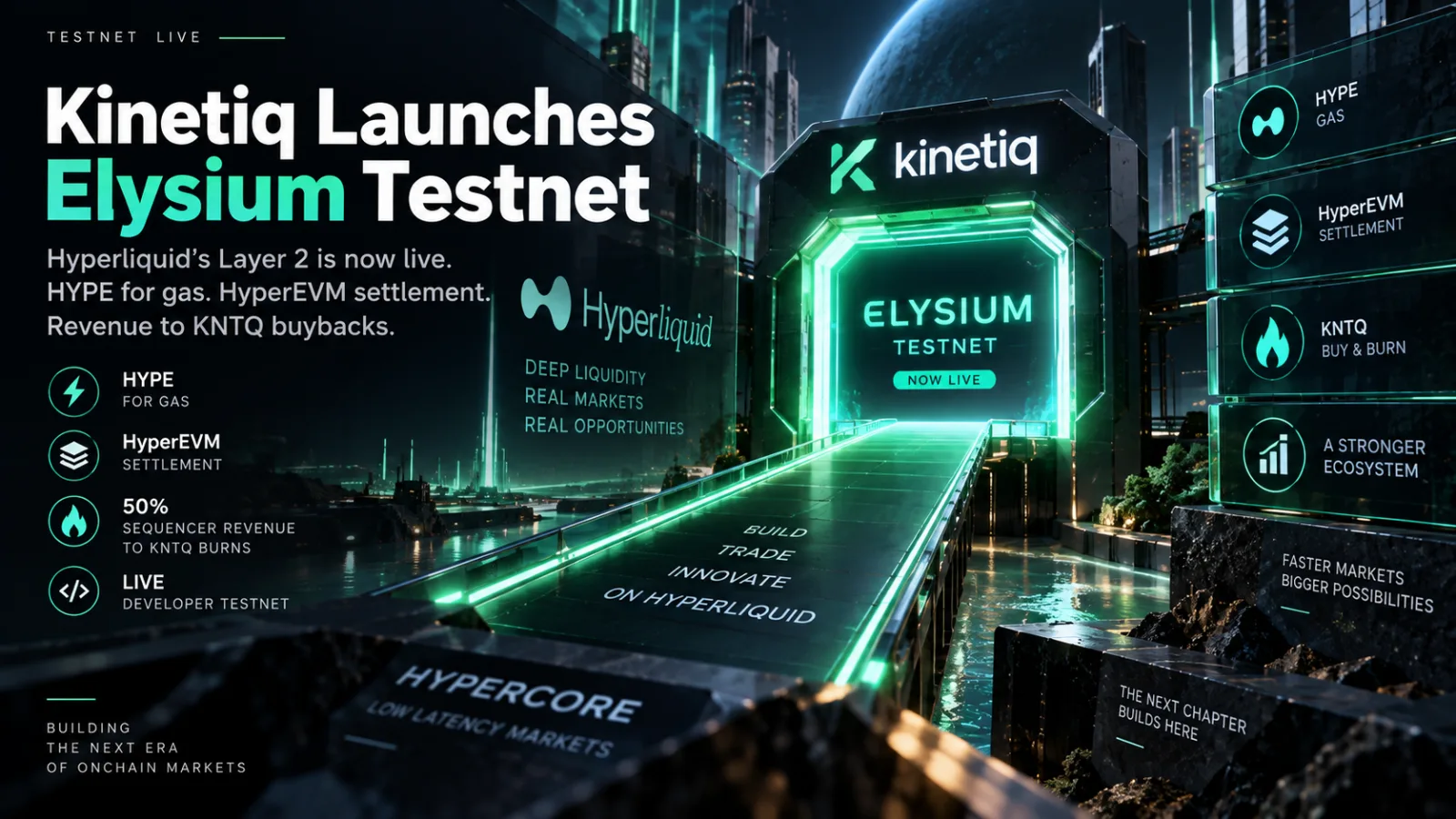

Kinetiq switched on the public Elysium testnet on September 22, moving its Hyperliquid focused Layer 2 from a design thesis into a live developer network. The immediate consequence is bigger than another EVM sandbox: Elysium uses HYPE for gas, settles through HyperEVM, and is designed to route half of future sequencer revenue toward KNTQ purchases and burns. Yet the feature that could make the chain genuinely differentiated, low latency contract access to HyperCore's books, is not part of the initial launch. That gap now defines the trade.
For related opportunities and eligibility updates, explore AirdropHotList's latest airdrop listings.
The testnet makes Kinetiq's scaling claim measurable
Elysium's open testnet is running under chain ID 99801, with a public RPC and a live block explorer producing blocks and indexing contracts. It uses Arbitrum Orbit's Nitro and ArbOS stack, is operated with Conduit, and targets real canonical blocks every 100 to 200 milliseconds. Kinetiq is aiming for 300 million gas units per second of execution capacity, although its documentation says that target must still be validated through load testing before mainnet.
The comparison that matters is not simply Elysium against other fast chains. It is Elysium against HyperEVM, whose small blocks carry 3 million gas every second, alongside larger 30 million gas blocks every 60 seconds. Those constraints help HyperEVM remain connected to HyperCore, but they leave limited room for sustained market making, rapidly refreshed quotes and other high frequency workloads.
Elysium's answer is to add a faster application layer without exporting activity to an unrelated ecosystem. Solidity and Vyper contracts can deploy with standard tools including Foundry, Hardhat, viem and ethers. HYPE remains the gas asset, and the chain is intended for spot AMMs, proprietary market maker AMMs, automated strategies, lending and structured products rather than one narrowly defined application.
DeFi campaigns can involve protocol usage, liquidity, staking, or wallet activity. Before spending gas or locking funds, compare more DeFi airdrops and review the effort-to-reward balance.
The architecture keeps new liquidity inside Hyperliquid
The most consequential design choice is the bridge path between Elysium, HyperEVM and HyperCore. According to Kinetiq's token bridging documentation, HYPE moves from HyperEVM to Elysium as native gas on a one to one basis. HyperEVM tokens can enter through a canonical bridge, while assets launched on Elysium can be mirrored onto HyperEVM and eventually linked to HyperCore spot markets.
That creates a potential token lifecycle contained within the Hyperliquid ecosystem: launch and bootstrap liquidity on Elysium, mirror the asset to HyperEVM, graduate to a HyperCore spot order book and potentially add a perpetual market through HIP 3. The investment case is therefore not just cheaper transactions. It is whether Elysium can become an origination layer for assets and applications that later generate trading activity elsewhere in Hyperliquid.
The critical limitation is timing. Elysium launches on standard ArbOS, while its native HyperCore market data precompile and ElysiumCoreWriter are scheduled for a network upgrade approximately four weeks after mainnet. Those additions are intended to let contracts read order books, prices, balances and positions with roughly 150 to 350 milliseconds of freshness, then submit trade intents to users' HyperCore accounts in about 100 to 200 milliseconds. Until that upgrade is deployed and tested, Elysium has speed and bridging, but not its complete HyperCore integration.
Still unsure about wallets, eligibility, or reward rules? Visit our FAQ page for quick answers before joining any new crypto campaign.
HYPE becomes the operating asset while KNTQ captures fees
For HYPE, the direct mechanism is utility. Developers and users need HYPE to pay Elysium gas, with no separate network token required. If Elysium attracts applications and capital from outside Hyperliquid, it could also create more opportunities for arbitrage between its AMMs and HyperCore order books. That may turn Elysium activity into additional HyperCore volume and fees, although this remains an adoption thesis rather than guaranteed value accrual.
KNTQ has a more explicit economic link. Kinetiq's published sequencer allocation assigns 50% of Elysium sequencer revenue to open market KNTQ purchases, 25% to builders whose applications consume blockspace and 25% to the Kinetiq treasury. Tokens purchased through the KNTQ allocation are intended to be sent to the Hyperliquid Assistance Fund address, making them unavailable to the market.
The arrangement produces a useful investor paradox: HYPE is the asset required to operate the chain, while KNTQ is designed to capture a larger direct share of its sequencer economics. The two tokens benefit through different mechanisms, and neither mechanism matters without genuine application demand.
Kinetiq had already purchased 5,391,458 KNTQ at an average price of $0.15 by September 16, representing about 2.15% of the circulating supply reported at that time. Its KIP 5 policy redirected future protocol funded purchases away from sKNTQ stakers and toward permanent supply reduction. Elysium could expand that buyback engine, but only after the network generates meaningful sequencer revenue.
Not every reward campaign deserves your time. Before you commit, compare this opportunity with our active airdrops list and focus on campaigns with clearer upside, better trust signals, and realistic participation steps.
The launch still carries familiar rollup risks
Elysium begins with a single sequencer and permissioned validation. Its AnyTrust data availability committee stores full transaction data while compact certificates are posted to HyperEVM, with full data posting used as a fallback if the committee becomes unavailable. Kinetiq's security documentation outlines eventual permissionless fraud proofs through Arbitrum BoLD, but that decentralization is a future step rather than a launch feature.
The testnet also cannot prove that liquidity will follow infrastructure. Fast blocks may attract automated deployments, farming behavior or short lived experiments without producing durable markets. Mainnet parameters remain subject to revision, and the delayed HyperCore read and write upgrade introduces additional execution risk.
Airdrop users should make another distinction. Kinetiq's public materials confirm an open testnet and an economic allocation for successful builders, but they do not announce an Elysium token, points campaign or retroactive user reward. Testnet participation can help evaluate the network, but it does not create a verified claim on a future airdrop.
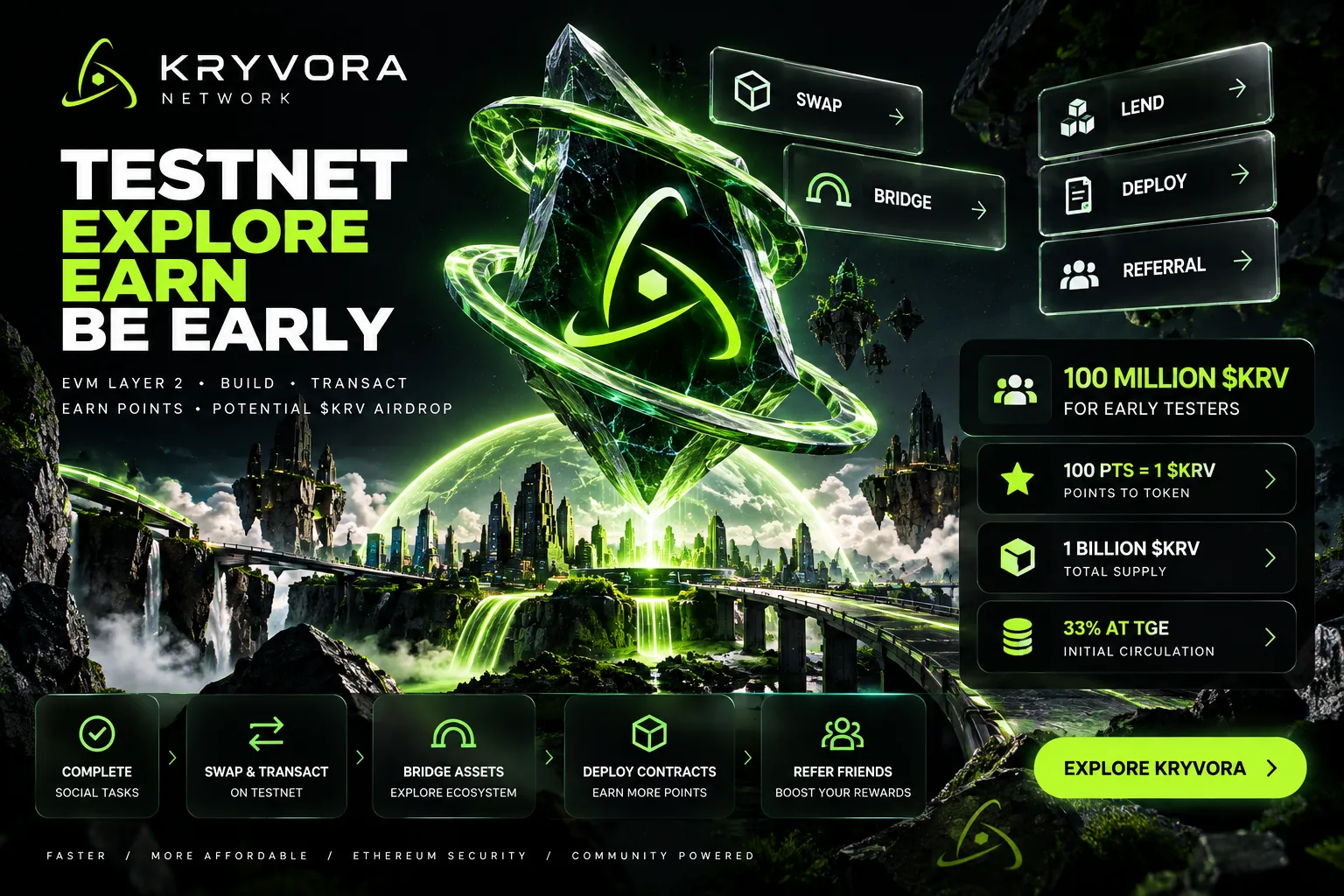
 Kryvora Network
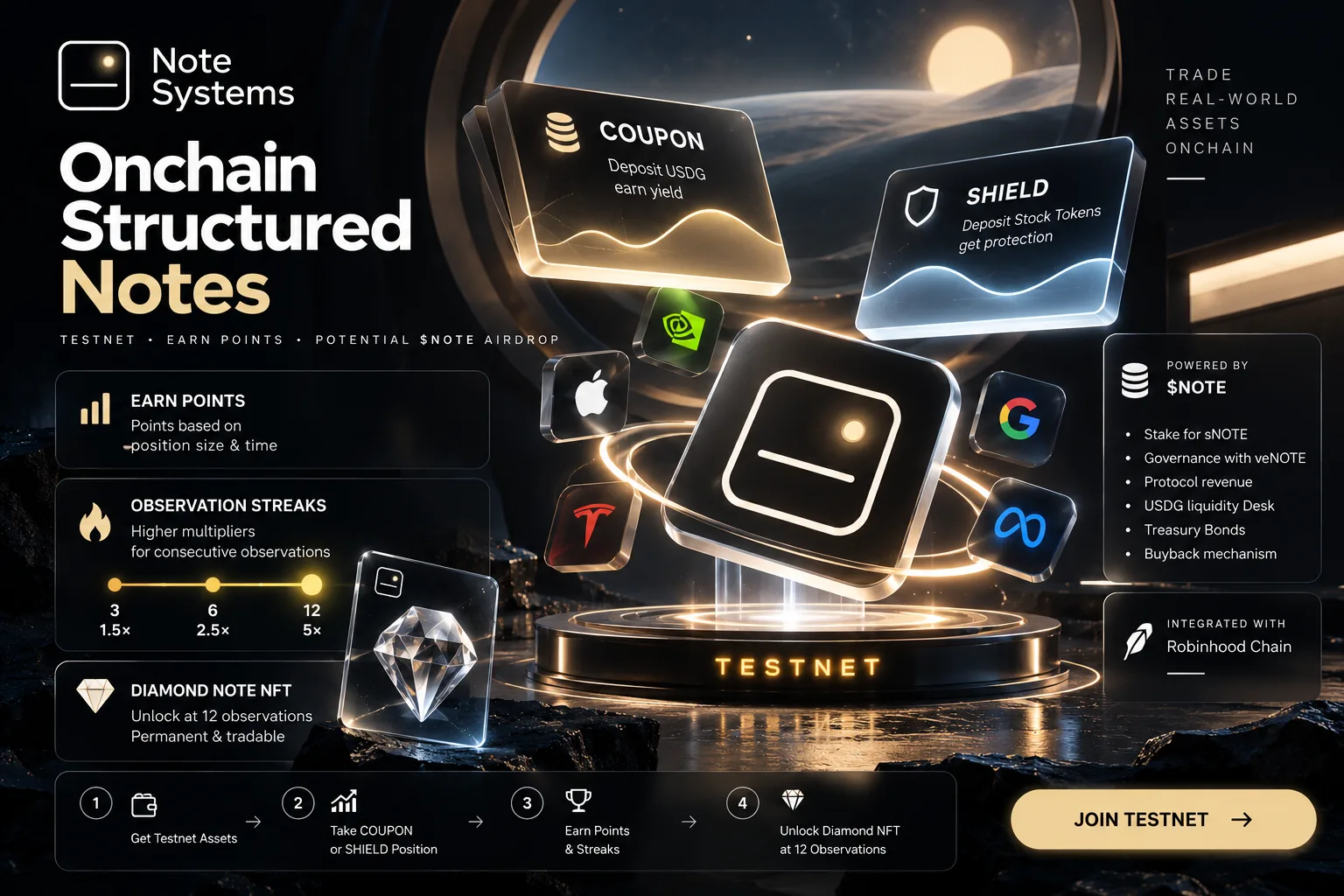
 Note Systems
 Nado
Nado
Conclusion: Elysium has launched the test, not proved the thesis
Elysium gives Hyperliquid a credible attempt at something it currently lacks: a high throughput EVM environment engineered around its own liquidity rather than loosely bridged to it. The live testnet confirms that the base chain, RPC and explorer exist. It does not yet confirm that traders, market makers and developers will create the activity needed to benefit HYPE or activate KNTQ's sequencer revenue loop.
The next evidence should come from four signals:
- Applications generating sustained blockspace demand rather than one time testnet transactions.
- Meaningful HYPE, stablecoin and token liquidity entering through Elysium's bridges.
- The HyperCore read and write upgrade shipping with the promised latency and reliable callbacks.
- Observable sequencer revenue translating into builder funding and KNTQ purchases after mainnet.
If those signals arrive, Elysium could become Hyperliquid's missing application layer. If they do not, it will remain a technically fast chain waiting for the market structure that was supposed to make its speed valuable.



 Gaming Platforms
 Crypto Casinos
 Blockchain Bridges
 Staking & Restaking
 DEX Token Swapping
 Crypto Wallets