
 BTC
 ETH
 USDT
 BNB
 XRP
 USDC
 SOL
 TRX
 FIGR_HELOC
 ZEC
 HYPE
 DOGE
 XMR
 USDS
 WBT
 LINK
 LEO
 ADA
 NEAR
 XLM
 RAIN
 BCH
 USDE
 DAI
 UNI
 LTC
 CC
 AVAX
 USD1
 SUI
 GRAM
 HBAR
 XAUT
 USDG
 QNT
 PYUSD
 SHIB
 TAO
 ENA
 CRO
 RLUSD
 USYC
 USDY
 OKB
 M
 BUIDL
 AAVE
 ONDO
 PUMP
 USDF
 PEPE
 BTW
 EURSAFO
 PAXG
 ASTER
 USDD
 DOT
 WLFI
 MNT
 WLD
 U
 SKY
 ICP
 MORPHO
 HTX
 BFUSD
 BGB
 USDGO
 VVV
 ETC
 ARB
 JST
 KCS
 GT
 KAS
 POL
 ALGO
 JUP
 RENDER
 ATOM
 PI
 OUSD
 NEXO
 INJ
 LIT
 FIL
 USTB
 AKE
 GHO
 ZRO
 CAKE
 DASH
 NIGHT
 XDC
 PEARL
 ETHFI
 APT
 PYTH
 BDX
 STX
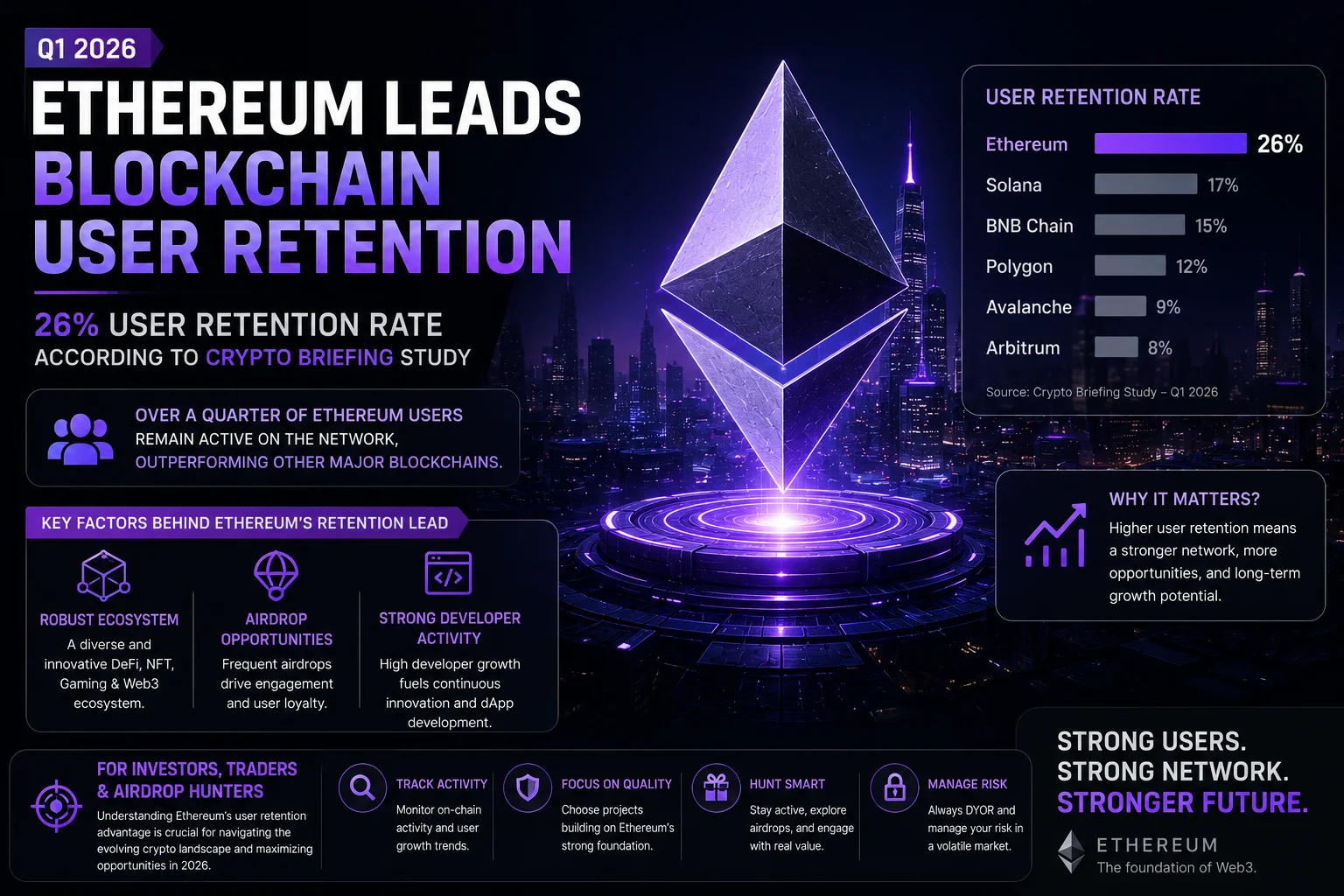

In Q1 2026, Ethereum leads blockchain user retention with a 26% rate, according to a Crypto Briefing study. This means that over a quarter of Ethereum users remain active on the network, outperforming other major blockchains. Factors contributing to this include a robust ecosystem, frequent airdrop opportunities, and strong developer activity. For investors, traders, and airdrop hunters, understanding Ethereum's user retention advantage is crucial for navigating the evolving crypto landscape and maximizing opportunities in 2026.
Understanding Blockchain User Retention in 2026: Why It Matters More Than Ever
Blockchain user retention is a critical metric that measures how many users remain active on a network over time. In 2026, as the crypto market matures and competition intensifies, user retention rates have become a key indicator of a blockchain's health, adoption, and long-term viability. High retention suggests that users find ongoing value in the network—whether through DeFi, NFTs, gaming, or airdrop participation—while low retention can signal ecosystem stagnation or user dissatisfaction.
For both project teams and individual investors, understanding these trends is essential. High user retention often correlates with strong network effects, increased developer activity, and more robust airdrop opportunities. Conversely, blockchains with declining retention may struggle to attract new projects and capital.
Ethereum’s User Retention Rate: Q1 2026 Study Findings Explained
What Is User Retention in Crypto?
User retention in the blockchain context refers to the percentage of users who continue to interact with a network after their initial engagement. This can include wallet activity, smart contract interactions, staking, trading, or participating in governance and airdrops. The Q1 2026 Crypto Briefing study found that Ethereum's user retention rate stands at 26%, leading the industry and setting a new benchmark for blockchain engagement.
Methodology of the Q1 2026 Study
The study analyzed on-chain activity across major blockchains, tracking wallet addresses, transaction frequency, and participation in ecosystem events such as airdrops and governance votes. Retention was measured by the proportion of users who remained active over a rolling three-month period, providing a snapshot of sustained engagement rather than one-time activity spikes.
Comparing Ethereum to Other Blockchains: Retention Rates and Trends
DeFi campaigns can involve protocol usage, liquidity, staking, or wallet activity. Before spending gas or locking funds, compare more DeFi airdrops and review the effort-to-reward balance.
Ethereum vs Solana, Polygon, and Other Blockchains
Ethereum's 26% retention rate in Q1 2026 places it ahead of other major blockchains. For comparison, Solana and Polygon—two of Ethereum's closest competitors—reported estimated retention rates of 18% and 15% respectively, according to the same study. Other networks, such as Avalanche and BNB Chain, trailed further behind, with retention rates hovering around 12-14%.
| Blockchain | User Retention Rate (Q1 2026) |
|---|---|
| Ethereum | 26% |
| Solana | 18% |
| Polygon | 15% |
| Avalanche | 14% |
| BNB Chain | 12% |
This data highlights Ethereum's unique ability to keep users engaged over time, despite growing competition and the proliferation of alternative Layer 1 and Layer 2 networks.
Key Factors Driving Ethereum’s High User Retention in 2026
Ecosystem Growth and Developer Activity
Ethereum's robust ecosystem is a major driver of its high retention rate. In 2026, the network boasts thousands of active dApps, ranging from DeFi protocols and NFT marketplaces to gaming platforms and social networks. This diversity ensures that users have multiple reasons to stay engaged, even as their interests evolve.
Developer activity on Ethereum remains unmatched, with a steady stream of protocol upgrades, new dApp launches, and cross-chain integrations. The ongoing transition to scalable Layer 2 solutions has further reduced transaction costs and improved user experience, making it easier for newcomers to participate and for veterans to remain active.
Airdrop Participation and Its Impact
Airdrops have become a cornerstone of user engagement on Ethereum. In 2026, airdrop campaigns are more sophisticated and targeted, rewarding not just early adopters but also long-term, active participants. This shift incentivizes users to remain engaged with the ecosystem, as ongoing activity can increase eligibility for future airdrops.
For airdrop hunters, Ethereum remains the most fertile ground. The network's high-profile airdrops often set industry standards, and many projects use airdrop strategies to bootstrap communities and reward loyalty. For the latest opportunities, check the latest crypto airdrops page.
What Drives User Retention on Ethereum Blockchain? Insights from 2026
- Network Effects: Ethereum’s large and active user base creates a self-reinforcing cycle of engagement. The more users and developers participate, the more valuable the network becomes for everyone.
- DeFi and NFT Innovation: Ethereum remains the primary platform for DeFi and NFT projects, offering users a wide range of financial and creative opportunities.
- Layer 2 Adoption: The rise of Layer 2 solutions has slashed fees and improved transaction speeds, making daily use more practical and affordable.
- Security and Trust: Ethereum’s long track record and decentralized validator set provide users with confidence in the network’s resilience and reliability.
- Airdrop Strategies: Projects increasingly use airdrops to reward ongoing engagement, not just one-time actions, driving sustained user activity.
The Role of Airdrops in Ethereum User Engagement: 2026 Trends
Airdrops have evolved into a sophisticated tool for user retention on Ethereum. In 2026, projects are leveraging on-chain analytics to identify and reward users who demonstrate consistent engagement, such as providing liquidity, voting in governance, or participating in testnets. This approach not only attracts new users but also encourages existing ones to remain active, hoping to qualify for future rewards.
Some of the most successful airdrop campaigns in 2026 have focused on rewarding long-term holders and active community members, rather than simply distributing tokens to anyone who interacts once. This shift has contributed to Ethereum’s industry-leading retention rate and has set a new standard for airdrop strategy across the blockchain sector.
To learn more about airdrop participation and best practices, visit our crypto guides and market analysis section.
NFT-related campaigns often depend on timing, community activity, and collection mechanics. You can compare more NFT airdrops before deciding which opportunities are worth your attention.
Implications for Investors, Traders, and Airdrop Hunters in 2026
Investor and Trader Perspectives
For investors, Ethereum’s high user retention rate signals a healthy, growing ecosystem with strong network effects. Consistent user engagement often translates to greater demand for ETH and related tokens, as well as increased activity across DeFi, NFTs, and other sectors. Traders may find more liquidity and opportunities on Ethereum compared to less active blockchains.
Airdrop hunters, meanwhile, benefit from Ethereum’s active ecosystem and frequent distribution events. Staying engaged—by using dApps, participating in governance, or providing liquidity—can increase eligibility for valuable airdrops. However, users should always exercise caution and follow security best practices, as airdrop scams remain a risk in the crypto space. For safety tips, review our crypto safety guide.
How to Maximize User Retention: Strategies for Projects and Users
Best Practices for Improving Blockchain User Retention
- Build Community: Projects should foster active, inclusive communities through regular updates, AMAs, and reward programs.
- Reward Ongoing Engagement: Airdrops and loyalty programs should prioritize long-term activity over one-off interactions.
- Enhance User Experience: Streamlined onboarding, low fees (via Layer 2), and intuitive interfaces help retain users.
- Educate Users: Providing clear, accessible guides and resources empowers users to explore the ecosystem confidently.
- Prioritize Security: Transparent security practices and prompt responses to vulnerabilities build user trust and reduce churn.
For users, staying informed about new projects, participating in governance, and maintaining good security hygiene are key to maximizing both engagement and potential rewards. Explore our crypto guides and market analysis for actionable tips.
Detailed Comparison: Ethereum User Retention vs. Other Major Blockchains in 2026
Ethereum’s 26% retention rate is not just a statistical outlier—it reflects deeper trends in blockchain adoption and user behavior. Solana, despite its high throughput and low fees, has struggled with intermittent network outages and a more centralized validator set, which may have impacted user confidence. Polygon, while popular for gaming and NFT projects, faces stiff competition from newer Layer 2 solutions and alternative scaling networks.
Other blockchains, such as Avalanche and BNB Chain, continue to innovate but have yet to match Ethereum’s breadth of dApps, developer activity, and community engagement. As a result, Ethereum remains the primary destination for both new and returning users seeking a vibrant, secure, and opportunity-rich environment.
Actionable Tips for New Users, Investors, and Airdrop Hunters in 2026
- Engage Regularly: Use dApps, participate in governance, and provide liquidity to increase your chances of qualifying for future airdrops.
- Stay Informed: Follow reputable crypto news sources and community channels to keep up with the latest trends and opportunities.
- Practice Security: Use hardware wallets, enable two-factor authentication, and be wary of phishing attempts, especially during airdrop campaigns.
- Explore Layer 2: Take advantage of Ethereum’s Layer 2 solutions for lower fees and faster transactions.
- Participate in Testnets: Many projects reward testnet participation with mainnet airdrops—an easy way to get involved and learn.
For a comprehensive overview of safety practices, visit our crypto safety guide.
If this opportunity involves trading, deposits, or exchange activity, review our crypto trading guide for beginners to understand fees, risk control, and safer decision-making.
Potential Challenges Ahead for Ethereum’s User Retention
While Ethereum currently leads in user retention, several challenges could impact its position in the coming quarters. Increased competition from emerging Layer 1 and Layer 2 networks, evolving regulatory environments, and potential scalability bottlenecks may all influence user behavior. Additionally, the growing complexity of the ecosystem could make onboarding more difficult for new users, potentially affecting retention rates.
Security remains a top concern. As Ethereum continues to attract capital and users, it becomes a more attractive target for malicious actors. Projects and users alike must remain vigilant, prioritize best practices, and respond quickly to emerging threats. For ongoing updates and safety tips, refer to our crypto safety guide.
Future Predictions: Will Ethereum Maintain Its Lead in User Retention?
Looking ahead, Ethereum’s ability to maintain its lead in user retention will depend on several factors:
- Continued Ecosystem Innovation: Ongoing development of dApps, DeFi protocols, and NFT platforms will be crucial for keeping users engaged.
- Scalability Solutions: Further adoption of Layer 2 and sharding technologies could enhance user experience and reduce churn.
- Community Engagement: Projects that prioritize community building and reward long-term participation are likely to see higher retention.
- Security and Trust: Maintaining a strong security track record will be essential for user confidence.
Industry experts suggest that while Ethereum faces increasing competition, its first-mover advantage, developer community, and established user base position it well for continued leadership in blockchain user retention. However, users and projects must remain proactive in adapting to new trends and challenges.
Key Takeaways: What Ethereum’s 26% User Retention Rate Means for 2026
- Ethereum leads the industry with a 26% user retention rate in Q1 2026, outpacing Solana, Polygon, and other major blockchains.
- High retention is driven by a vibrant ecosystem, active developer community, innovative airdrop strategies, and robust Layer 2 adoption.
- For investors and airdrop hunters, Ethereum remains the top destination for engagement and opportunity—but security and ongoing participation are key.
- Projects seeking to improve retention should focus on rewarding long-term activity, enhancing user experience, and building strong communities.
- Potential challenges include increased competition, regulatory uncertainty, and the need for continued scalability and security improvements.
For more in-depth analysis and the latest airdrop opportunities, explore our crypto guides and market analysis and latest crypto airdrops sections.
Comparing Ethereum to Other Blockchains: Retention Rates and Trends
While Ethereum’s 26% user retention rate in Q1 2026 is impressive, it’s important to contextualize this figure within the broader blockchain landscape. Competing networks like Solana, Polygon, and Avalanche have also made significant strides in user acquisition and ecosystem development, but their retention rates lag behind Ethereum’s. According to the Crypto Briefing study, Solana posted a 17% retention rate, Polygon came in at 14%, and Avalanche trailed with 12%. These figures highlight Ethereum’s continued dominance in maintaining user engagement and loyalty.
| Blockchain | User Retention Rate (Q1 2026) |
|---|---|
| Ethereum | 26% |
| Solana | 17% |
| Polygon | 14% |
| Avalanche | 12% |
These statistics underscore Ethereum’s ability to foster a sticky user base, even as alternative chains offer lower fees and faster transactions. The network effect, established developer community, and a wide range of DeFi and NFT projects continue to set Ethereum apart.
Key Factors Driving Ethereum’s High User Retention
- Robust Ecosystem: Ethereum’s vast array of DeFi protocols, NFT marketplaces, and DAOs provide users with diverse opportunities to interact and earn, encouraging them to remain active.
- Frequent and Targeted Airdrops: Many projects launching on Ethereum incentivize ongoing participation through airdrops, rewarding loyal users and encouraging engagement. For the latest opportunities, check out our latest crypto airdrops page.
- Developer Activity: Ethereum consistently leads in developer count and project launches, ensuring a steady stream of innovation and new use cases that keep users engaged.
- Security and Trust: As one of the most battle-tested blockchains, Ethereum’s security record inspires confidence among users and developers alike.
- Interoperability and Layer 2 Growth: The rise of Layer 2 solutions and cross-chain bridges has made Ethereum more accessible and affordable, further supporting user retention.
 Arcus Exchange
 JoinCare
 Breath of Estova
The Role of Airdrops in Ethereum User Engagement
Airdrops remain a powerful tool for driving user retention on Ethereum. In 2026, airdrop campaigns have become more sophisticated, often requiring users to complete specific on-chain actions, hold tokens for extended periods, or participate in governance. This not only rewards loyal users but also encourages deeper engagement with the ecosystem.
Recent high-profile airdrops—such as those from decentralized exchanges and Layer 2 projects—have seen record participation rates, with many users actively seeking out new opportunities. According to blockchain user retention statistics 2026, networks that regularly distribute airdrops see up to 30% higher retention among eligible users compared to those that do not.
For airdrop hunters, Ethereum’s high retention rate signals a fertile ground for future rewards. To maximize eligibility, users should stay active, interact with new protocols, and monitor upcoming campaigns. For step-by-step guidance, visit our crypto guides and market analysis section.
User Impact: What Ethereum’s Retention Rate Means for Investors and Airdrop Hunters
The implications of Ethereum’s leading retention rate are significant for both investors and airdrop hunters:
- Network Value: High retention rates typically correlate with strong network effects, which can enhance the value proposition for long-term investors.
- Increased Airdrop Opportunities: Projects are more likely to launch on networks with active, engaged users, leading to more frequent and potentially lucrative airdrops.
- Lower Risk of Ecosystem Fragmentation: A sticky user base reduces the risk of users migrating en masse to competing chains, supporting the stability of Ethereum’s ecosystem.
- Enhanced Liquidity and Activity: Consistent user engagement means higher liquidity in DeFi protocols and NFT markets, benefiting traders and collectors alike.
Airdrop Eligibility Update: How to Stay Qualified in 2026
As airdrop strategies evolve, so do the requirements for eligibility. In 2026, many Ethereum projects now require users to:
- Maintain a minimum on-chain activity level (e.g., regular swaps, staking, or governance participation)
- Hold specific tokens or NFTs in their wallets for set periods
- Engage with new Layer 2 protocols or bridge assets across chains
- Participate in community governance or provide liquidity to select pools
Staying informed and active is key. For a comprehensive overview of current and upcoming airdrops, refer to our latest crypto airdrops resource.
Risk Analysis: Potential Challenges to Ethereum’s Retention Rate
Despite its current lead, Ethereum faces several risks that could impact user retention in future quarters:
- Rising Transaction Fees: While Layer 2 solutions have alleviated some cost pressures, network congestion during peak periods can still drive users to alternative chains.
- Security Threats: As the largest smart contract platform, Ethereum remains a prime target for exploits and hacks, which could undermine user trust if not addressed swiftly.
- Regulatory Uncertainty: Ongoing regulatory developments in major jurisdictions could affect user participation, especially for DeFi and privacy-focused projects.
- Competition from Emerging Chains: New blockchains with innovative consensus models or unique features may lure users away if Ethereum fails to keep pace with technological advancements.
Users are encouraged to follow best practices for security and stay updated on ecosystem changes. For tips on staying safe, visit our crypto safety guide.
Key Takeaways
- Ethereum leads blockchain user retention in Q1 2026 at 26%, outpacing Solana, Polygon, and Avalanche.
- Factors such as a robust ecosystem, frequent airdrops, and active development drive this high retention rate.
- Airdrop eligibility requirements are evolving—active participation and engagement are more important than ever.
- Investors and airdrop hunters can benefit from Ethereum’s strong network effects, but should remain aware of potential risks.
Frequently Asked Questions
- What does a 26% user retention rate mean for Ethereum in 2026?
It means that more than a quarter of users who joined Ethereum remain active, indicating strong ongoing engagement and ecosystem health. - How can airdrop hunters benefit from Ethereum’s high user retention?
High retention attracts more projects and airdrop campaigns, increasing the chances for active users to qualify for rewards. - Which blockchains have the highest user retention after Ethereum?
According to Q1 2026 data, Solana (17%), Polygon (14%), and Avalanche (12%) follow Ethereum in user retention rates. - What strategies help increase blockchain user retention?
Frequent airdrops, engaging dApps, strong community governance, and ongoing developer activity are key strategies. - Are airdrops still effective for user retention in 2026?
Yes, airdrops remain a major driver of user engagement, especially when combined with other incentives and community-building efforts.





 Gaming Platforms
 Crypto Casinos
 Blockchain Bridges
 Staking & Restaking
 DEX Token Swapping
 Crypto Wallets