
 BTC
 ETH
 USDT
 BNB
 XRP
 USDC
 SOL
 TRX
 FIGR_HELOC
 ZEC
 HYPE
 DOGE
 XMR
 USDS
 WBT
 LINK
 LEO
 ADA
 NEAR
 XLM
 RAIN
 BCH
 USDE
 DAI
 LTC
 UNI
 CC
 AVAX
 USD1
 SUI
 GRAM
 HBAR
 XAUT
 USDG
 QNT
 PYUSD
 SHIB
 TAO
 ENA
 CRO
 RLUSD
 USYC
 USDY
 OKB
 M
 BUIDL
 AAVE
 BTW
 ONDO
 PUMP
 USDF
 PEPE
 EURSAFO
 PAXG
 ASTER
 USDD
 DOT
 MNT
 WLFI
 WLD
 U
 SKY
 ICP
 HTX
 MORPHO
 BFUSD
 BGB
 USDGO
 VVV
 ETC
 ARB
 JST
 KCS
 GT
 KAS
 POL
 ALGO
 JUP
 RENDER
 ATOM
 PI
 OUSD
 NEXO
 INJ
 LIT
 FIL
 USTB
 AKE
 GHO
 ZRO
 DASH
 CAKE
 XDC
 PEARL
 NIGHT
 ETHFI
 APT
 PYTH
 BDX
 JAAA


Coinbase Derivatives filed rules on September 18 to bring crypto-style perpetual futures to large U.S. stocks and ETFs, with trading proposed from Sunday evening through Friday afternoon. The structure has no fixed expiry and uses funding payments to track the underlying security-but it is not ready to launch. The SEC filing took immediate effect under its procedural framework, while the CFTC still lists the product as awaiting approval. The unresolved question is whether crypto's dominant derivatives format can survive its translation into regulated American securities markets.
For additional context, explore AirdropHotList's crypto market analysis.
The filing moved forward, but Coinbase does not have a launch approval
The distinction between an effective rule filing and an approved product is crucial. Coinbase Derivatives' September 18 SEC filing establishes proposed listing, trading, settlement and corporate-action rules for cash-settled futures on individual stocks and ETF shares. The document explicitly states that Coinbase submitted the proposal concurrently to the CFTC and that the commodities regulator had not approved it.
The CFTC product database labels Coinbase's Single Stock Perpetual Futures Contract "Approval Pending (45)," reflecting the review route used for novel contracts outside the digital-commodity category already addressed by the agency. There is no confirmed launch date, final product lineup or completed margin framework.
If cleared, the contracts would trade from 8 p.m. Eastern on Sunday until 5 p.m. Friday, subject to holidays, maintenance and regulatory halts. They would be cash-settled, convey no ownership in the underlying company and remain open without scheduled expiration. Funding payments would instead help pull the contract toward a reference price derived from the stock or ETF.
Crypto's perpetual model meets securities-market guardrails
This is an equities product built around crypto market structure. Perpetual futures concentrate liquidity in one continuously maintained contract rather than dividing it among monthly expirations. When a perp trades above or below its reference market, periodic payments between long and short positions are designed to encourage convergence.
Yet Coinbase's domestic design is materially more constrained than the stock perps it launched for eligible non-U.S. traders in March. That international product offers 24/7 trading, USDC settlement and leverage of up to 10 times on single stocks. The U.S. proposal stops for the weekend, must follow halts in the underlying security and would initially target only exceptionally liquid assets.
The proposed initial listing standards require an underlying company to have at least $100 billion in market capitalization, more than 20 million shares in estimated deliverable supply and average daily transaction value of at least $450 million over the previous six months. Coinbase also says it intends to begin with the most liquid qualifying securities. Its filing references separate margin amendments that would impose a minimum requirement of no less than 15% of current market value, although final customer terms remain unfinished.
That creates the investor paradox: Wall Street may adopt crypto's most successful trading instrument only after stripping away some of the features-weekend trading, broader asset access and potentially higher leverage-that made offshore perps so popular.
If you prefer curated opportunities instead of browsing everything manually, check our featured airdrops and compare higher-signal campaigns first.
Coinbase is exporting its derivatives engine beyond crypto
The strategic prize is larger than fees from a new stock product. Coinbase wants one regulated account to span spot crypto, perpetuals, conventional futures, equities and other financial contracts. If customers can manage those exposures through shared infrastructure, the exchange gains more opportunities to retain collateral, order flow and active traders across market cycles.
Its latest operating figures show why derivatives have become central to that plan. Coinbase reported 10.3% crypto trading-volume market share in the second quarter of 2026, its third consecutive quarterly record. The company also said its crypto derivatives share reached another all-time high while 88% of net revenue came from sources other than Bitcoin spot trading.
For crypto investors, the consequence is not that stock perps directly increase Bitcoin or Ethereum demand. The stronger transmission mechanism is platform economics: a broader derivatives business can make Coinbase less dependent on episodic spot-market volatility while funding the compliance, clearing and distribution infrastructure used by its crypto products.
Competition is already visible. The CFTC's September 18 database also lists pending Kalshi applications for perpetual contracts tied to numerous individual stocks and ETFs. That suggests the regulatory decision will shape a venue race, rather than determine the fate of one isolated Coinbase product.
The Bitcoin-perpetual dispute still hangs over the category
The current opening began on May 29, when the CFTC approved a Bitcoin perpetual contract and issued a policy statement on perpetual listings. It said perps referencing other asset classes-including equity securities-should undergo case-by-case review because each underlying market creates different regulatory concerns.
CME subsequently sued the CFTC and its chairman, arguing in its June 18 complaint that the agency unlawfully treated Bitcoin perpetuals as futures rather than swaps. The court has not resolved that claim, and the complaint represents CME's allegations rather than a judicial finding.
Coinbase's stock proposal follows a different path because single-stock futures are security futures subject to overlapping SEC and CFTC requirements. That may provide a more established statutory framework, but it does not remove uncertainty over how regulators and courts will ultimately treat perpetual contracts. Analysis: a broad judicial rejection of the CFTC's approach to crypto perps could also slow exchanges' attempts to export the same mechanism into additional markets.
If this opportunity involves trading, deposits, or exchange activity, review our crypto trading guide for beginners to understand fees, risk control, and safer decision-making.
Three scenarios define what happens next
Bull case: approval validates crypto-native market structure
The CFTC approves the product, Coinbase completes its margin filing and contract-specific appendices identify the first stocks, index methodology and funding schedule. A launch would demonstrate that a structure refined in crypto can become regulated U.S. financial infrastructure.
Before connecting a wallet or approving any transaction, slow down and verify the source. Our crypto safety guide explains how to avoid fake claim pages, phishing links, risky approvals, and common wallet mistakes.
Base case: a narrower product arrives after a longer review
Regulators request revisions, conservative position limits or tighter risk controls. Coinbase eventually launches contracts on a small group of mega-cap names, but the offering looks closer to conventional security futures than offshore crypto perps.
Bear case: classification and investor-protection concerns stall the plan
The CFTC delays or rejects the proposal, the separate margin process remains incomplete, or litigation weakens the regulatory foundation for perpetual products. Coinbase would retain its international stock-perp business, but its U.S. "everything exchange" strategy would lose a major bridge between crypto and traditional markets.
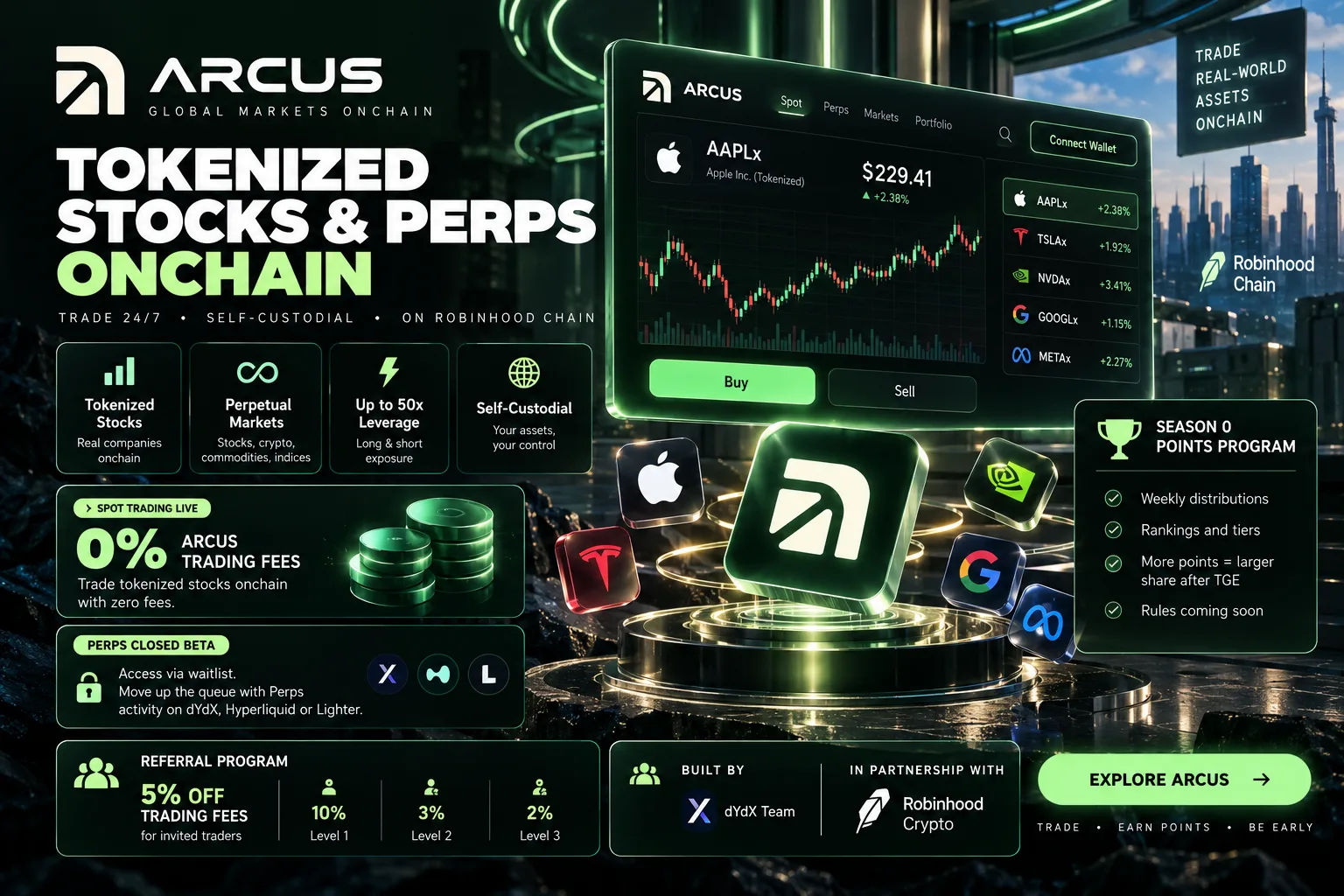
 Arcus Exchange
 JoinCare
 Breath of Estova
Investor watchlist
- CFTC status: A change from "Approval Pending (45)" to an approval, withdrawal or extended review.
- Margin and leverage: The separate rule filing that will determine capital requirements and practical retail accessibility.
- Product appendices: The first named stocks or ETFs, funding intervals, index sources, position limits and price controls.
- CME litigation: Any court ruling that changes how U.S. law distinguishes perpetual futures from swaps.
Conclusion: The product is equities, but the test belongs to crypto
Coinbase has not won permission to launch U.S. stock perps; it has advanced the rules into the decisive regulatory stage. What happens next will indicate whether crypto's perpetual-futures architecture can become a durable part of regulated American finance-or whether the model remains divided between tightly constrained domestic products and more flexible offshore markets. For crypto traders, that classification battle matters more than any unverified Fed-week token watchlist.




 Gaming Platforms
 Crypto Casinos
 Blockchain Bridges
 Staking & Restaking
 DEX Token Swapping
 Crypto Wallets