
 BTC
 ETH
 USDT
 BNB
 XRP
 USDC
 SOL
 TRX
 FIGR_HELOC
 ZEC
 HYPE
 DOGE
 XMR
 USDS
 WBT
 LINK
 LEO
 ADA
 NEAR
 XLM
 RAIN
 BCH
 USDE
 DAI
 LTC
 UNI
 CC
 AVAX
 USD1
 SUI
 GRAM
 HBAR
 XAUT
 USDG
 QNT
 PYUSD
 SHIB
 TAO
 ENA
 CRO
 RLUSD
 USYC
 USDY
 OKB
 M
 BUIDL
 AAVE
 BTW
 ONDO
 PUMP
 USDF
 PEPE
 EURSAFO
 PAXG
 ASTER
 USDD
 DOT
 MNT
 WLFI
 WLD
 U
 SKY
 ICP
 HTX
 MORPHO
 BFUSD
 BGB
 USDGO
 VVV
 ETC
 ARB
 JST
 KCS
 GT
 KAS
 POL
 ALGO
 JUP
 RENDER
 ATOM
 PI
 OUSD
 NEXO
 INJ
 LIT
 FIL
 USTB
 AKE
 GHO
 ZRO
 DASH
 CAKE
 XDC
 PEARL
 NIGHT
 ETHFI
 APT
 PYTH
 BDX
 JAAA
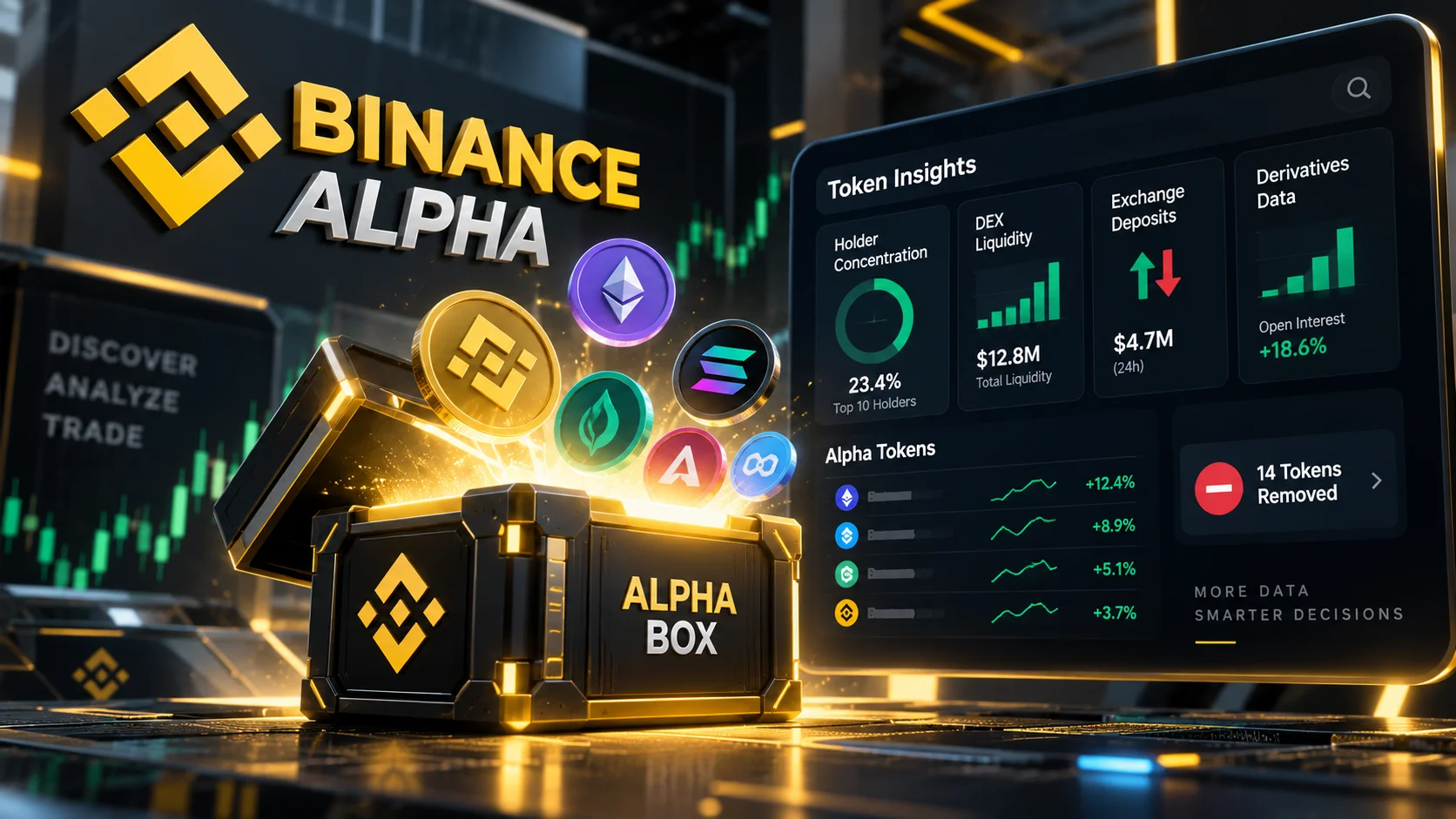

Binance Alpha's latest shift is not the launch of a new airdrop model. The Alpha Box debuted on February 11, 2026. What changed now is more consequential for anyone chasing Alpha rewards: Binance has added holder concentration, DEX liquidity, exchange-deposit and derivatives data to its research interface-less than a week after removing 14 tokens from Alpha's featured list. The tension is clear. Binance is still using airdrops and trading rewards to accelerate participation, but it is also giving users more ways to see when the token behind the reward may be structurally fragile.
For related opportunities and eligibility updates, explore AirdropHotList's latest airdrop listings.
The "new" Alpha Box story is six months behind the market
The circulating CoinMarketCap headline describing a new Binance Alpha airdrop model and resilience during a market rout refers to an older market window, not September 13. The underlying article says it was created six months ago and discusses February 12 ETF flows, a February 14 political deadline and the inaugural Alpha Box.
Binance's official Alpha Box announcement was published on February 10, with the first event scheduled for February 11. The model pools tokens from multiple projects into one campaign. Eligible users spend Alpha Points and receive one randomly selected token allocation rather than choosing the project themselves. Claims are first-come, first-served, points are non-refundable, and the eligibility threshold can fall as an event progresses.
That distinction matters because the model changes an airdrop hunter's decision from "Is this token worth claiming?" to "Is the expected value of an unknown token worth the points and execution risk?" It broadens project exposure, but it also removes selection from the user at the moment of redemption. Binance explicitly states that it does not guarantee the value, liquidity or performance of tokens received through the mechanism.
Still unsure about wallets, eligibility, or reward rules? Visit our FAQ page for quick answers before joining any new crypto campaign.
Binance's real September upgrade puts token plumbing on-screen
On September 10, Binance expanded its DYOR hub for supported Alpha tokens with five groups of data: labeled top holders, DEX liquidity, centralized-exchange wallet sweeps, project fundamentals, and Binance open interest and funding rates.
Each category addresses a recurring failure point in early-stage token launches. Holder labels and concentration data can expose supply controlled by a small number of wallets. Hourly and daily DEX liquidity trends can reveal whether a market is deepening or becoming harder to exit. Exchange-wallet sweep activity can help identify large deposits that may precede sell-side pressure, although a deposit alone does not prove an intended sale.
Project data covering teams, social accounts, code activity, total value locked, fees and revenue adds another filter between a compelling campaign and a functioning protocol. Open interest and funding rates complete the picture by showing whether speculative leverage is building faster than spot demand.
The interface aggregates public data from sources including Arkham, CoinMarketCap, DefiLlama, RootData, GitHub, X and Binance. It does not eliminate the need to verify contracts, unlock schedules or wallet labels independently, and Binance says coverage will expand gradually rather than appearing for every Alpha token immediately.
Not every reward campaign deserves your time. Before you commit, compare this opportunity with our active airdrops list and focus on campaigns with clearer upside, better trust signals, and realistic participation steps.
A 14-token purge shows why the extra data arrived now
The timing is difficult to ignore. On September 4, Binance removed 14 assets from the Alpha featuring list after determining that they did not meet its standards. The group included MTP, BDXN, TALE, BOS, MAIGA, TIMI, SAROS, U, SERAPH, RVV, AIAV, PENGUIN, ODOS and SN3.
Removal did not freeze those assets: Binance said users could still sell or withdraw them. But the action reinforces a crucial distinction. Alpha exposure is not a Binance spot-listing guarantee, an endorsement of long-term quality or permanent access to platform visibility. It is a discovery and trading layer for assets that Binance itself describes as carrying higher-than-normal volatility and loss risk.
This produces the defining Alpha paradox: the platform makes early tokens easier to discover and rewards users for acting quickly, while the assets most dependent on that speed are often the ones that demand the slowest due diligence. The new analytics reduce information friction, but they do not neutralize token concentration, shallow liquidity or incentive-driven demand.
Before connecting a wallet or approving any transaction, slow down and verify the source. Our crypto safety guide explains how to avoid fake claim pages, phishing links, risky approvals, and common wallet mistakes.
Trading rewards still push users toward speed and volume
Binance is simultaneously refining the incentive side of Alpha. A Cluster Protocol trading competition launched on September 8 ranks participants by purchase volume while applying an Early Bird Boost that began at three times effective volume. A separate 1.2-times boost applies to qualifying "Rising Traders" who have won rewards in fewer than three previous Alpha competitions, subject to a cap.
Only purchases count toward that competition's ranking; sales do not. There is also no general trading-volume cap. Those rules can stimulate early demand and recurring participation, but investors should distinguish incentivized turnover from durable market depth. A token can show intense activity during a reward campaign without developing balanced two-way liquidity after the incentives expire.
For airdrop users, the practical calculation now has three parts: the value of Alpha Points, the trading and blockchain costs incurred while earning them, and the liquidity available when a distributed token becomes sellable. A nominal reward is not the same as realizable value.
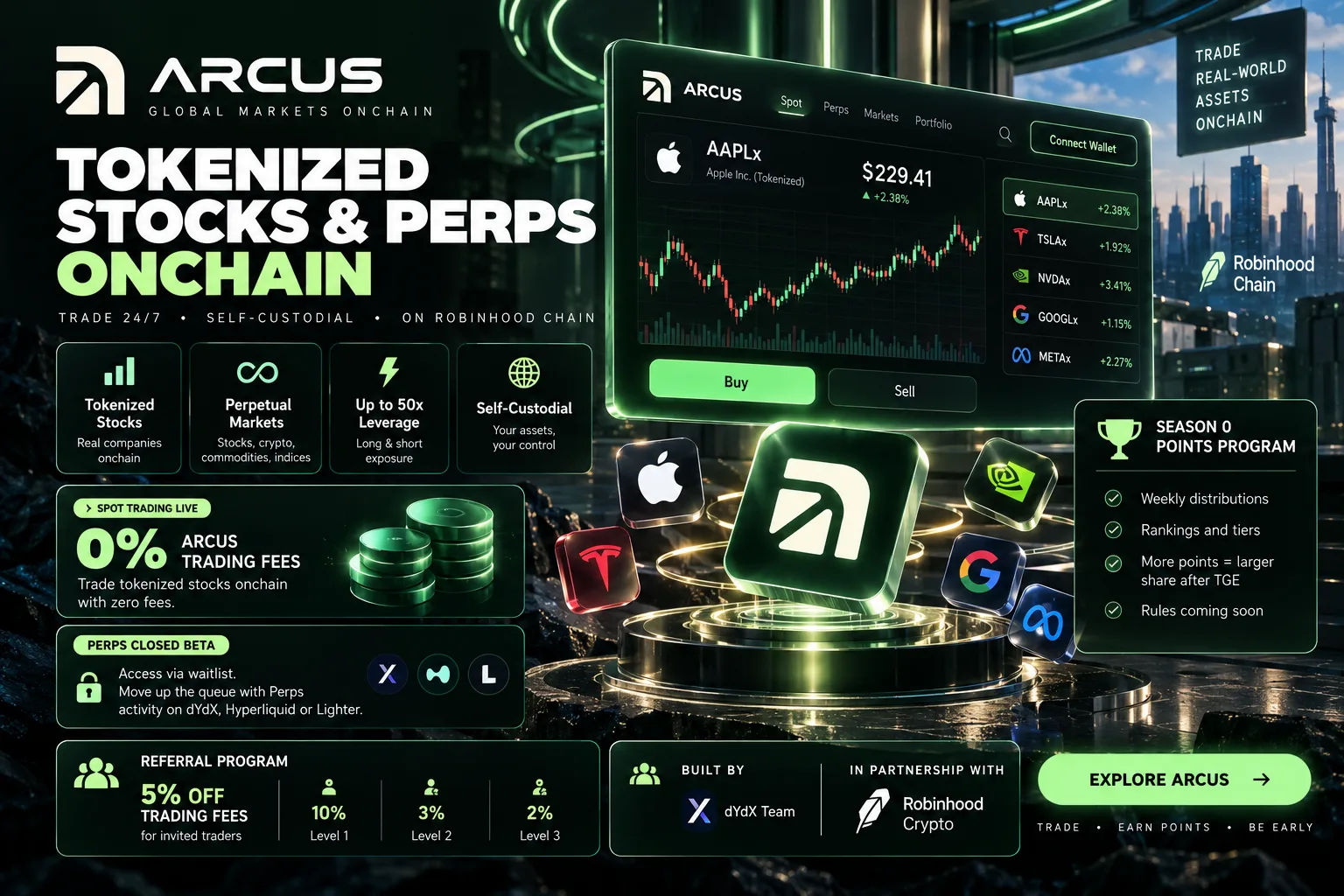
 Arcus Exchange
 JoinCare
 Breath of Estova
The investor watchlist
- Holder concentration: Watch whether top-wallet ownership declines after distribution or remains concentrated among teams, market makers and early insiders.
- Liquidity after incentives: Compare DEX depth during a campaign with conditions after boosts and reward periods end.
- Exchange sweeps and leverage: Rising deposits, open interest and positive funding together would indicate increasing sell-side and liquidation risk.
- Alpha review outcomes: Fewer removals and stronger post-campaign retention would support the thesis that better data is improving token selection; repeated purges would weaken it.
Conclusion
Binance Alpha's February Alpha Box remains an important experiment in pooled, randomized airdrops, but it is not a fresh September launch. The timely development is Binance's attempt to put more risk evidence beside its reward machinery. That makes the platform more useful, not automatically safer. The next test is whether users employ the new holder and liquidity data before chasing points-or only after an incentive-driven token starts losing support.



 Gaming Platforms
 Crypto Casinos
 Blockchain Bridges
 Staking & Restaking
 DEX Token Swapping
 Crypto Wallets