
 BTC
BTC
 ETH
ETH
 USDT
USDT
 BNB
BNB
 XRP
XRP
 USDC
USDC
 SOL
SOL
 TRX
TRX
 FIGR_HELOC
 ZEC
ZEC
 HYPE
HYPE
 DOGE
DOGE
 XMR
XMR
 USDS
USDS
 WBT
WBT
 LINK
LINK
 LEO
LEO
 ADA
ADA
 NEAR
NEAR
 XLM
XLM
 RAIN
RAIN
 BCH
BCH
 USDE
USDE
 DAI
DAI
 LTC
LTC
 UNI
UNI
 CC
CC
 AVAX
AVAX
 USD1
USD1
 SUI
SUI
 GRAM
GRAM
 HBAR
HBAR
 XAUT
XAUT
 USDG
USDG
 QNT
QNT
 PYUSD
PYUSD
 SHIB
SHIB
 TAO
TAO
 ENA
ENA
 CRO
CRO
 RLUSD
RLUSD
 USYC
USYC
 USDY
USDY
 OKB
OKB
 M
M
 BUIDL
BUIDL
 AAVE
AAVE
 BTW
BTW
 ONDO
ONDO
 PUMP
PUMP
 USDF
USDF
 PEPE
PEPE
 EURSAFO
 PAXG
PAXG
 ASTER
ASTER
 USDD
USDD
 DOT
DOT
 MNT
MNT
 WLFI
WLFI
 WLD
WLD
 U
U
 SKY
SKY
 ICP
ICP
 HTX
HTX
 MORPHO
 BFUSD
BFUSD
 BGB
BGB
 USDGO
USDGO
 VVV
VVV
 ETC
ETC
 ARB
ARB
 JST
JST
 KCS
KCS
 GT
GT
 KAS
KAS
 POL
POL
 ALGO
ALGO
 JUP
JUP
 RENDER
 ATOM
ATOM
 PI
PI
 OUSD
OUSD
 NEXO
NEXO
 INJ
INJ
 LIT
LIT
 FIL
FIL
 USTB
USTB
 AKE
AKE
 GHO
GHO
 ZRO
ZRO
 DASH
DASH
 CAKE
CAKE
 XDC
XDC
 PEARL
PEARL
 NIGHT
NIGHT
 ETHFI
ETHFI
 APT
APT
 PYTH
PYTH
 BDX
BDX
 JAAA
JAAA
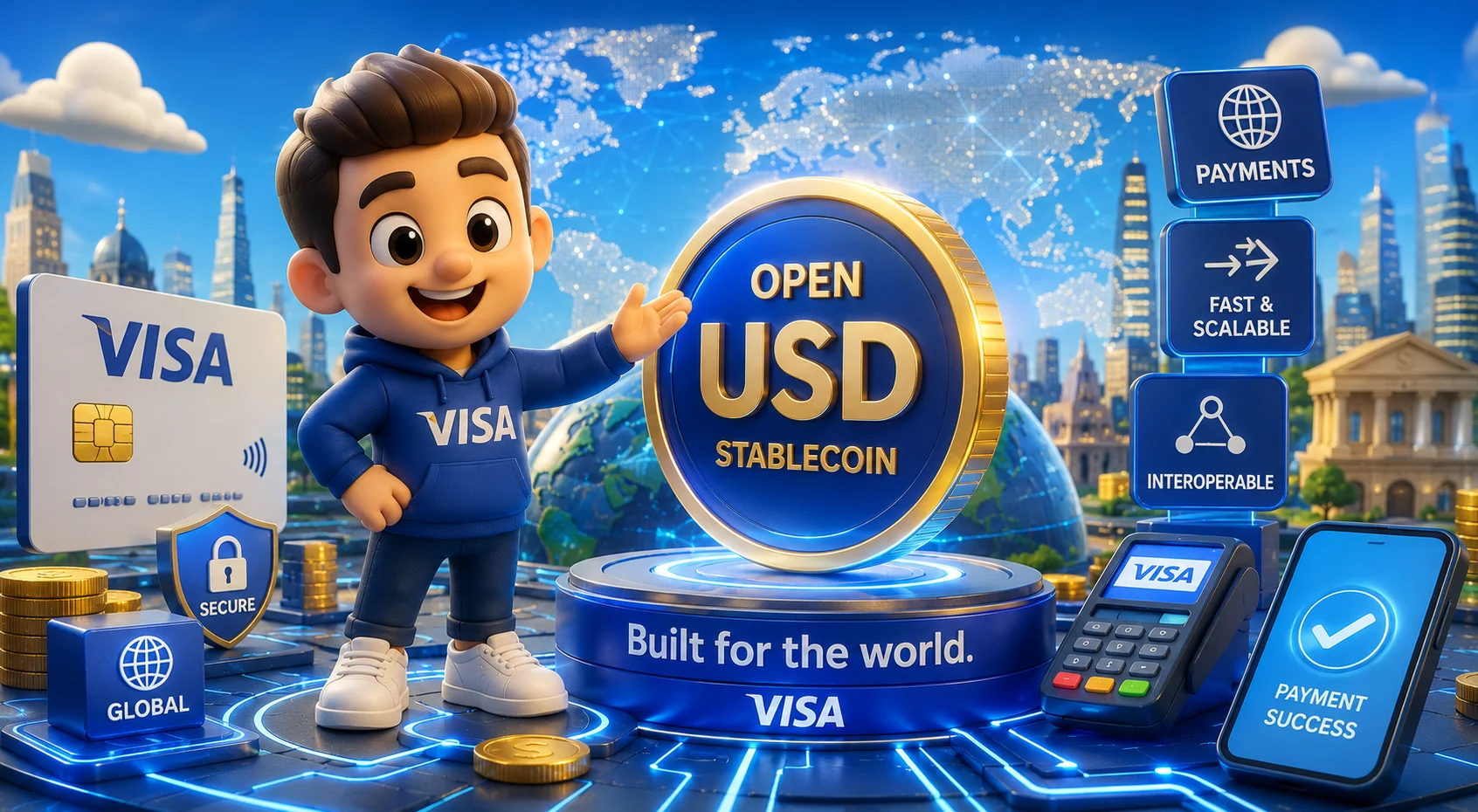

Introduction to Visa's Open USD Stablecoin
Visa's introduction of the Open USD Stablecoin marks a significant development in the digital assets landscape, presenting a new USD-pegged stablecoin designed to integrate seamlessly with Visa's extensive global payment network. This initiative directly challenges the current dominance of Circle's USDC, which has long been a leading USD stablecoin in the crypto ecosystem. By leveraging Visa's established fintech infrastructure and payment processing capabilities, the Open USD Stablecoin aims to enhance scalability, adoption, and interoperability across multiple financial markets.
Current Landscape of USD Stablecoins and Circle's USDC Dominance
What Are Stablecoins and Why Do They Matter?
Stablecoins are digital assets pegged to fiat currencies, primarily the US dollar, designed to maintain price stability and facilitate efficient transactions within the crypto and digital asset markets. They play a crucial role in crypto trading, payments, and liquidity provision by offering a reliable medium of exchange and store of value amidst volatile cryptocurrencies.
Circle's USDC: Market Position and Strengths
Circle's USDC has established itself as a dominant USD stablecoin, widely adopted across cryptocurrency exchanges, decentralized finance platforms, and payment systems. Its regulatory compliance, transparent reserves, and broad ecosystem support have contributed to its market leadership. However, the stablecoin sector remains dynamic, with new entrants like Visa seeking to leverage their infrastructure to capture market share.
Still unsure about wallets, eligibility, or reward rules? Visit our FAQ page for quick answers before joining any new crypto campaign.
Technical and Strategic Features of Visa's Stablecoin
Visa's Payment Network Integration Advantages
Visa's Open USD Stablecoin is designed to integrate with its existing payment networks and fintech infrastructure, potentially enabling faster, more scalable, and more accessible digital asset payments. This integration could facilitate seamless cross-border transactions, reduce settlement times, and expand stablecoin usage beyond crypto-native platforms into mainstream financial services.
While detailed technical architecture comparisons between Visa's stablecoin and USDC remain limited, Visa's global reach and established partnerships in the payments ecosystem provide strategic advantages in adoption and interoperability.
Regulatory Environment Surrounding Stablecoins
Regulatory Challenges and Compliance Considerations
Stablecoins have attracted increased regulatory scrutiny globally due to their growing market relevance and potential systemic risks. Authorities are focused on ensuring consumer protection, anti-money laundering compliance, and financial stability. Visa's stablecoin initiative will need to navigate complex regulatory frameworks across jurisdictions, which remain uncertain and evolving.
Regulatory approvals and frameworks applicable to Visa's stablecoin could significantly influence its market penetration and operational scope. The regulatory landscape also shapes investor confidence and the broader fintech ecosystem's response to stablecoin innovation.
Impact on Crypto and Digital Asset Markets
Visa's entry into the USD stablecoin market could affect crypto market dynamics by introducing a new liquidity source and payment option. The Open USD Stablecoin may compete with USDC in trading pairs, custody solutions, and decentralized finance applications, potentially altering market share distribution.
Integration with Visa's payment network might also encourage wider adoption of stablecoins in everyday transactions, bridging the gap between traditional finance and digital assets. However, the extent of this impact depends on user acceptance, regulatory clarity, and technological interoperability.
Influence on Central Banks and Macroeconomic Policies
If you want reward-focused opportunities that involve tasks or activity, compare more earn crypto airdrops before choosing where to spend your time.
Stablecoins and Central Bank Digital Currency (CBDC) Interactions
Central banks worldwide are actively exploring or piloting central bank digital currencies (CBDCs) as sovereign digital money alternatives. Visa's stablecoin initiative introduces competitive dynamics between private stablecoins and CBDCs, potentially influencing central bank strategies and monetary policies.
Central banks may respond by accelerating CBDC development or adjusting regulatory frameworks to address private stablecoins' roles in payments and financial stability. The coexistence and interaction between Visa's stablecoin and CBDCs remain an area of uncertainty and ongoing observation.
Effects on Commodities, Forex, and Traditional Financial Markets
Transmission Channels: From Crypto Exchanges to Forex Markets
Stablecoins, including Visa's Open USD Stablecoin, could impact forex markets by facilitating cross-border payments and remittances with greater speed and lower costs. This may influence currency flows, liquidity, and exchange rate dynamics, particularly in emerging markets where stablecoins are increasingly used for dollarization.
In commodities trading, stablecoins might be adopted for settlement purposes, potentially affecting pricing and market access for assets like gold, silver, and oil. The integration of stablecoins into commodity trading platforms could enhance transparency and efficiency but also introduces new regulatory and operational considerations.
Potential Scenarios and Market Outlook
The future trajectory of Visa's Open USD Stablecoin depends on multiple factors, including regulatory approvals, market acceptance, competitive responses from Circle and other stablecoin issuers, and central bank policies. Potential scenarios range from Visa capturing significant market share and driving fintech disruption to regulatory constraints limiting its expansion.
Geopolitical tensions may also affect cross-border stablecoin usage and regulation, influencing adoption rates and operational risks. Investors and stakeholders should monitor regulatory developments, central bank initiatives, and Visa's strategic partnerships to assess the evolving stablecoin landscape.
Conclusion: The Future of Stablecoins in Global Finance
Visa's Open USD Stablecoin represents a pivotal moment in the evolution of digital assets and fintech innovation. By challenging Circle's USDC dominance and leveraging its payment network, Visa aims to reshape digital finance, payments, and cross-border transactions. While uncertainties remain around regulatory frameworks, central bank responses, and market dynamics, the initiative underscores the growing significance of stablecoins in global financial markets.
Market participants should closely watch Visa's stablecoin integration progress, regulatory developments, and central bank digital currency strategies to understand the broader implications for crypto, fintech, forex, commodities, and banking sectors.
DeFi campaigns can involve protocol usage, liquidity, staking, or wallet activity. Before spending gas or locking funds, compare more DeFi airdrops and review the effort-to-reward balance.
Strategic Partnerships and Ecosystem Integration of Visa's Stablecoin
Visa's entry into the USD stablecoin market is not merely a product launch but a strategic move to embed its stablecoin within a broader fintech ecosystem. By leveraging existing partnerships with banks, payment processors, and merchants worldwide, Visa aims to create a seamless bridge between traditional finance and digital assets. This ecosystem integration could accelerate adoption by enabling businesses and consumers to transact using the stablecoin within familiar payment environments, reducing friction typically associated with crypto payments.
Moreover, Visa's collaboration with fintech startups and blockchain platforms may foster innovation around use cases such as programmable payments, real-time remittances, and tokenized asset settlements. Such partnerships could differentiate Visa's stablecoin by offering enhanced functionality beyond simple value transfer, positioning it as a versatile tool in digital finance.
Central Bank Perspectives on Private Stablecoins Versus CBDCs
Central banks worldwide are actively exploring central bank digital currencies (CBDCs) as sovereign digital money alternatives. Visa's stablecoin initiative introduces a competitive dynamic, as private stablecoins could offer faster innovation and broader network effects but also raise concerns about monetary sovereignty and financial stability.
Some central banks may view Visa's stablecoin as complementary to CBDCs, potentially serving as an on-ramp or interoperability layer between private and public digital currencies. Others may perceive it as a challenge requiring stricter regulatory oversight to mitigate risks such as fragmentation of the monetary system or reduced control over monetary policy transmission.
Understanding these nuanced perspectives is critical, as regulatory frameworks and central bank policies will shape the operational environment and adoption trajectory of Visa's stablecoin.
Geopolitical Risks and Cross-Border Stablecoin Transactions
Cross-border payments represent a significant use case for stablecoins, offering speed and cost advantages over traditional correspondent banking. However, geopolitical tensions and differing regulatory regimes pose risks to the seamless use of stablecoins like Visa's Open USD Stablecoin in international transactions.
Sanctions enforcement, anti-money laundering (AML) compliance, and jurisdictional disputes could complicate cross-border stablecoin flows, potentially limiting their utility in certain regions. Visa's global footprint may help navigate these challenges through established compliance frameworks and local partnerships, but geopolitical uncertainties remain a critical factor influencing stablecoin adoption and market penetration.
Potential Impact on Traditional Banking and Payment Systems
The introduction of Visa's stablecoin could disrupt traditional banking and payment infrastructures by providing an alternative settlement layer that is faster and potentially cheaper. Banks may face pressure to innovate or integrate stablecoin capabilities to remain competitive, especially in areas like cross-border payments and real-time settlements.
At the same time, Visa's stablecoin could complement existing systems by enhancing liquidity and interoperability, fostering a hybrid financial ecosystem where traditional and digital assets coexist. The extent of this impact will depend on regulatory acceptance, technological integration, and market demand.
 Arcus Exchange
 JoinCare
 Breath of Estova
Case Studies: Stablecoin Use in Commodities and Forex Settlements
While still emerging, stablecoins are increasingly explored as settlement mediums in commodities and forex markets. Their price stability and digital nature can reduce settlement times and counterparty risks compared to traditional methods.
Visa's stablecoin, with its integration into a vast payment network, could facilitate commodity trading platforms accepting stablecoins for gold, silver, or oil settlements, streamlining processes and enhancing transparency. Similarly, forex markets might benefit from stablecoin liquidity pools that improve currency exchange efficiency and reduce reliance on correspondent banking.
These use cases highlight the potential for Visa's stablecoin to extend beyond retail payments into institutional finance, further challenging incumbent systems.
Strategic Implications of Visa's Entry into the Stablecoin Market
Visa's launch of the Open USD Stablecoin not only introduces a new player in the stablecoin arena but also signals a strategic shift in how traditional payment networks engage with digital assets. Unlike Circle's USDC, which primarily targets crypto-native users and decentralized finance ecosystems, Visa's stablecoin is poised to bridge the gap between conventional payment infrastructures and emerging digital asset markets.
This bridging role could accelerate mainstream adoption by enabling merchants and consumers to transact using stablecoins within familiar payment frameworks. The potential for Visa's stablecoin to be embedded directly into point-of-sale systems and online payment gateways offers a seamless user experience that could drive higher transaction volumes and liquidity.
Moreover, Visa's extensive network of partnerships with banks, fintech firms, and payment processors provides a fertile ecosystem for rapid integration and scaling. This contrasts with Circle's approach, which relies heavily on crypto exchanges and blockchain platforms. Visa's strategy may thus redefine stablecoin utility beyond crypto trading, positioning it as a fundamental component of everyday digital payments.
Regulatory Nuances and Compliance Strategies for Visa's Stablecoin
While regulatory scrutiny on stablecoins is intensifying globally, Visa's established compliance frameworks and experience navigating complex financial regulations offer a competitive advantage. Visa's stablecoin initiative is likely to incorporate robust anti-money laundering (AML) and know-your-customer (KYC) protocols aligned with global standards, addressing key regulatory concerns that have challenged other stablecoin issuers.
Additionally, Visa's proactive engagement with regulators could facilitate smoother approvals and foster trust among institutional partners. This contrasts with some crypto-native stablecoins that face fragmented regulatory landscapes and uncertainty. Visa's ability to harmonize compliance across multiple jurisdictions may prove critical in scaling its stablecoin usage internationally.
However, the evolving nature of stablecoin regulation means Visa must remain agile in adapting to new rules, especially as central banks and policymakers weigh the implications of private stablecoins on monetary sovereignty and financial stability.
Potential Market Dynamics: Impact on Liquidity and Cross-Border Payments
Visa's stablecoin could significantly influence liquidity dynamics within crypto markets and beyond. By leveraging Visa's payment rails, the stablecoin may facilitate faster settlement times and reduce friction in cross-border transactions, which traditionally suffer from delays and high costs.
This enhanced efficiency could attract institutional investors and corporate users seeking reliable digital payment solutions, thereby increasing stablecoin transaction volumes and market depth. Furthermore, Visa's stablecoin might encourage greater interoperability between fiat and digital currencies, potentially impacting forex market flows by providing an alternative medium for currency exchange and remittances.
In commodity markets, the stablecoin's integration could streamline settlement processes, offering a transparent and efficient alternative to traditional payment methods. This could lead to increased acceptance of stablecoins in commodity trading platforms, further embedding digital assets into conventional financial ecosystems.
Further Market Research
For additional context, explore our financial markets and crypto analysis. These resources provide broader background on digital assets, financial markets and risk awareness.





 Gaming Platforms
 Crypto Casinos
 Blockchain Bridges
 Staking & Restaking
 DEX Token Swapping
 Crypto Wallets