
 BTC
BTC
 ETH
ETH
 USDT
USDT
 BNB
BNB
 XRP
XRP
 USDC
USDC
 SOL
SOL
 TRX
TRX
 FIGR_HELOC
 ZEC
ZEC
 HYPE
HYPE
 DOGE
DOGE
 XMR
XMR
 USDS
USDS
 WBT
WBT
 LINK
LINK
 LEO
LEO
 ADA
ADA
 NEAR
NEAR
 XLM
XLM
 RAIN
RAIN
 BCH
BCH
 USDE
USDE
 DAI
DAI
 UNI
UNI
 LTC
LTC
 CC
CC
 AVAX
AVAX
 USD1
USD1
 SUI
SUI
 GRAM
GRAM
 HBAR
HBAR
 XAUT
XAUT
 USDG
USDG
 QNT
QNT
 PYUSD
PYUSD
 SHIB
SHIB
 TAO
TAO
 ENA
ENA
 CRO
CRO
 RLUSD
RLUSD
 USYC
USYC
 USDY
USDY
 OKB
OKB
 M
M
 BUIDL
BUIDL
 AAVE
AAVE
 ONDO
ONDO
 PUMP
PUMP
 USDF
USDF
 PEPE
PEPE
 EURSAFO
 PAXG
PAXG
 ASTER
ASTER
 BTW
BTW
 USDD
USDD
 DOT
DOT
 WLFI
WLFI
 MNT
MNT
 WLD
WLD
 U
U
 SKY
SKY
 ICP
ICP
 MORPHO
 HTX
HTX
 BFUSD
BFUSD
 BGB
BGB
 USDGO
USDGO
 VVV
VVV
 ETC
ETC
 ARB
ARB
 JST
JST
 KCS
KCS
 GT
GT
 KAS
KAS
 POL
POL
 ALGO
ALGO
 JUP
JUP
 RENDER
 ATOM
ATOM
 PI
PI
 OUSD
OUSD
 NEXO
NEXO
 INJ
INJ
 LIT
LIT
 FIL
FIL
 USTB
USTB
 AKE
AKE
 GHO
GHO
 ZRO
ZRO
 CAKE
CAKE
 DASH
DASH
 NIGHT
NIGHT
 XDC
XDC
 PEARL
PEARL
 ETHFI
ETHFI
 APT
APT
 PYTH
PYTH
 BDX
BDX
 STX
STX
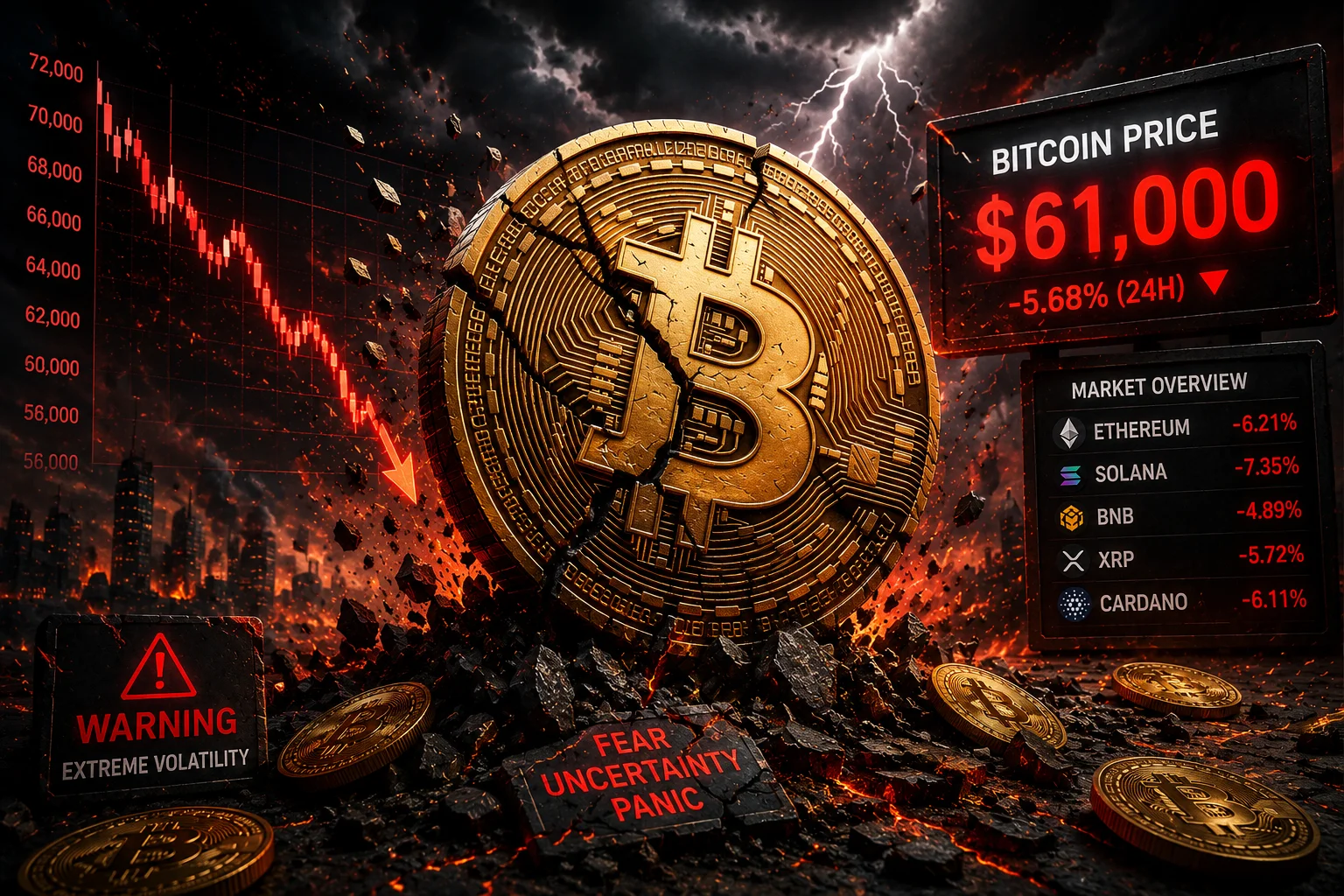

Is Bitcoin Crashing? The Real Reasons Behind the Latest BTC Price Drop and What Experts Predict Next
Bitcoin is once again making headlines after a sharp decline that has left millions of investors asking the same question:
Is Bitcoin crashing, or is this simply another correction before the next major rally?
The world's largest cryptocurrency has experienced significant volatility throughout its history. While dramatic price drops often create fear and uncertainty, experienced investors know that market corrections have frequently been part of Bitcoin's long-term growth story.
In this comprehensive guide, we'll explore why Bitcoin is falling, how far it could drop, whether now is a good time to buy, and what experts expect for the future of BTC.
Why Is Bitcoin Falling?
There isn't a single reason behind Bitcoin's latest decline.
Instead, several factors are combining to create selling pressure across the cryptocurrency market.
Understanding these factors can help investors make more informed decisions rather than reacting emotionally to short-term price movements.
Profit-Taking by Large Investors
One of the most common reasons for Bitcoin price declines is profit-taking.
After strong rallies, institutional investors, hedge funds, and large holders often sell part of their positions to lock in gains.
These large transactions can create significant downward pressure on the market and trigger additional selling from retail investors.
If you want reward-focused opportunities that involve tasks or activity, compare more earn crypto airdrops before choosing where to spend your time.
Liquidation of Leveraged Positions
Leverage amplifies both profits and losses.
When Bitcoin begins to fall, traders using leverage can be forced to close their positions automatically.
This process, known as liquidation, often accelerates market declines and creates a domino effect that pushes prices even lower.
Many of Bitcoin's sharpest corrections in recent years have been fueled by massive liquidation events.
Global Economic Uncertainty
Bitcoin does not exist in isolation.
Interest rate decisions, inflation data, economic growth concerns, and geopolitical tensions can all influence investor sentiment.
When uncertainty increases, investors often move capital away from risk assets, including cryptocurrencies.
This shift can contribute to temporary weakness in Bitcoin's price.
Fear and Market Psychology
Market sentiment plays a major role in cryptocurrency price movements.
Negative news headlines, social media panic, and fear-driven selling can cause investors to make emotional decisions.
As fear spreads, selling pressure increases, creating even more volatility.
How Much Further Could Bitcoin Fall?
This is one of the most searched questions during every market correction.
The truth is that nobody can predict Bitcoin's exact bottom.
However, historical data shows that Bitcoin has experienced numerous corrections of 20%, 30%, and even 40% before continuing its long-term upward trend.
For this reason, many analysts focus on broader market cycles rather than short-term price fluctuations.
Investors should remember that volatility has always been part of Bitcoin's nature.
If this opportunity involves trading, deposits, or exchange activity, review our crypto trading guide for beginners to understand fees, risk control, and safer decision-making.
Could Bitcoin Actually Crash to Zero?
This question resurfaces every time Bitcoin experiences a major decline.
While critics have predicted Bitcoin's collapse for more than a decade, the cryptocurrency has repeatedly recovered from severe market downturns.
Bitcoin has survived:
-
Global regulatory crackdowns
-
Major cryptocurrency exchange failures
-
Economic recessions
-
Bear markets lasting several years
-
Massive market liquidations
Despite these challenges, Bitcoin continues to attract investors, developers, and institutions around the world.
Most industry experts believe the probability of Bitcoin falling to zero remains extremely low.
Is Now a Good Time to Buy Bitcoin?
Timing the market perfectly is nearly impossible.
Even professional investors struggle to identify exact market bottoms.
However, history suggests that some of the most successful long-term investments have been made during periods of extreme fear and uncertainty.
This does not guarantee future returns, but it highlights the importance of maintaining a long-term perspective.
Before investing, individuals should carefully assess their financial goals and risk tolerance.
Has Bitcoin Recovered From Similar Drops Before?
Yes.
Bitcoin's history is filled with dramatic corrections followed by remarkable recoveries.
Major crashes occurred in:
-
2013
-
2018
-
2020
-
2022
Each of these periods generated widespread fear across the market.
Yet Bitcoin eventually recovered and reached new milestones over time.
While past performance never guarantees future results, historical patterns demonstrate Bitcoin's resilience.
Still unsure about wallets, eligibility, or reward rules? Visit our FAQ page for quick answers before joining any new crypto campaign.
What Are Experts Predicting for Bitcoin?
Although forecasts vary, many analysts remain optimistic about Bitcoin's long-term outlook.
Several key factors support this perspective.
Limited Supply
Bitcoin's maximum supply is capped at 21 million coins.
Unlike traditional currencies, new Bitcoin cannot be printed indefinitely.
This scarcity is one reason many investors view Bitcoin as a potential store of value.
Growing Institutional Adoption
Large financial institutions continue to increase their exposure to Bitcoin.
Investment funds, corporations, and asset managers are becoming more active participants in the cryptocurrency market.
Institutional demand may contribute to long-term market growth.
 Arcus Exchange
 JoinCare
 Breath of Estova
Increasing Global Adoption
More individuals, businesses, and governments are becoming familiar with Bitcoin every year.
As adoption expands globally, demand could continue to grow over the long term.
What Should Bitcoin Investors Do Right Now?
Market experts generally recommend the following strategies during periods of volatility:
-
Avoid panic selling.
-
Focus on risk management.
-
Limit excessive leverage.
-
Maintain a long-term perspective.
-
Diversify investments when appropriate.
-
Stay informed about economic developments.
Emotional decisions often lead to poor investment outcomes.
Remaining disciplined is one of the most important traits of successful investors.
Final Thoughts: Is Bitcoin's Decline a Warning Sign or an Opportunity?
Bitcoin's latest correction has undoubtedly created uncertainty among investors.
However, similar declines have occurred many times throughout Bitcoin's history.
The key question is not whether Bitcoin is falling today, but how investors respond to market volatility.
Future price movements will likely be influenced by economic data, institutional activity, global adoption trends, and overall market sentiment.
While no one can predict the future with certainty, one thing remains clear:
Bitcoin continues to be one of the most closely watched financial assets in the world, and its next move could shape the broader cryptocurrency market for months to come.






 Gaming Platforms
 Crypto Casinos
 Blockchain Bridges
 Staking & Restaking
 DEX Token Swapping
 Crypto Wallets