
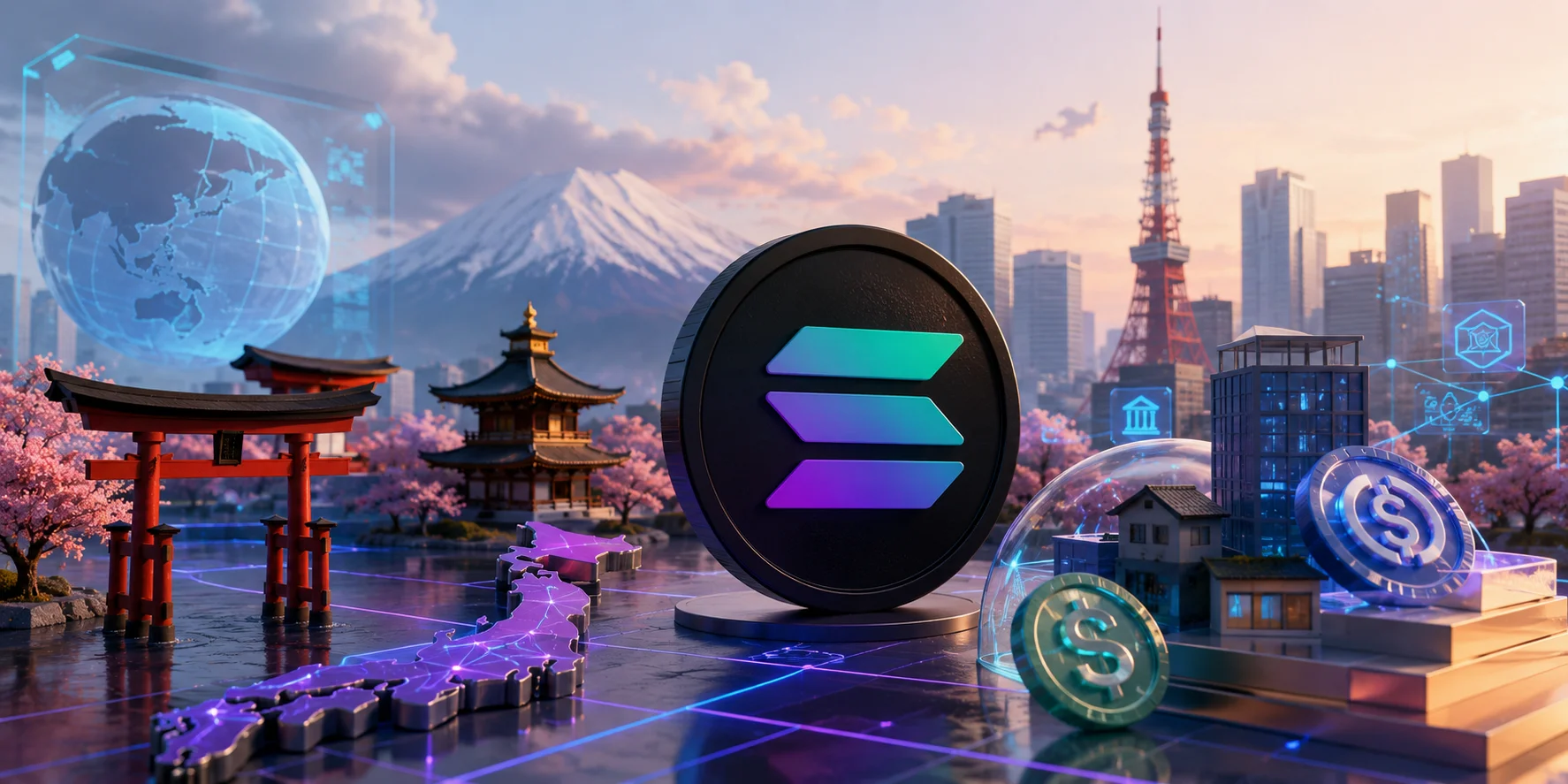

In 2026, Solana’s strategic expansion in Japan is opening new avenues for real world asset (RWA) tokenization, stablecoin adoption, and crypto investment. With regulatory support, institutional partnerships, and a thriving developer ecosystem, Solana is positioning itself as a leading blockchain for Japanese investors, traders, and builders seeking innovative digital asset opportunities. This analysis explores the drivers, risks, and future outlook for Solana’s Japan growth, with actionable insights for market participants.
Overview: Solana’s Strategic Expansion in Japan (2026)
Solana’s presence in Japan has accelerated in 2026, driven by a convergence of favorable regulatory signals, growing institutional interest, and a maturing crypto investor base. As one of Asia’s largest economies and a global leader in technology adoption, Japan’s embrace of blockchain innovation has made it a key target for Solana’s global strategy.
Unlike earlier waves of crypto adoption, Solana’s Japan expansion is characterized by a focus on real world asset (RWA) tokenization, stablecoin infrastructure, and deep engagement with both retail and institutional investors. The network’s high throughput and low transaction costs have made it attractive for developers and enterprises seeking scalable blockchain solutions.
Key drivers of this expansion include:
- Regulatory clarity on digital assets and tokenized securities
- Growing demand for stablecoins and on-chain payment rails
- Institutional partnerships with Japanese financial and technology firms
- Dedicated developer grants and hackathons in major Japanese cities
For investors and traders, Solana’s Japan push signals new opportunities—alongside new risks—in one of the world’s most dynamic crypto markets.
Solana and Real World Asset (RWA) Tokenization in Japan
Tokenizing real world assets—such as real estate, equities, and commodities—has become a central theme in Japan’s digital asset landscape. Solana’s architecture, designed for speed and cost-efficiency, is increasingly being leveraged by Japanese fintechs and asset managers to bring RWAs on-chain.
How RWA Tokenization Works on Solana
RWA tokenization involves creating blockchain-based representations of physical or financial assets. On Solana, this process typically includes:
- Asset origination and legal structuring to comply with Japanese regulations
- Issuance of tokens representing ownership or claims to the underlying asset
- Integration with Solana’s smart contract infrastructure for programmable compliance and settlement
- Secondary market trading on Solana-based exchanges or DeFi platforms
Japanese asset managers are piloting tokenized real estate and private credit products, aiming to increase liquidity and broaden investor access. While adoption is still in its early stages, the trend is drawing attention from both retail and institutional investors seeking exposure to alternative assets.
For a deeper dive into the mechanics and risks of RWA tokenization, see our crypto guides and market analysis.
The Rise of Stablecoins on Solana for Japanese Users
Stablecoins have become a cornerstone of Japan’s digital asset market, providing a bridge between yen-denominated assets and global crypto liquidity. Solana’s ecosystem now hosts a range of stablecoins tailored for Japanese users, including both global and locally-issued tokens.
Popular Stablecoins on Solana in Japan
- USDC and USDT: Widely used for trading, remittances, and DeFi applications.
- JPY-backed stablecoins: Several Japanese fintechs have launched yen-pegged stablecoins on Solana, facilitating on-chain payments and settlements.
- Regulated stablecoins: New entrants are focusing on compliance with Japan’s evolving stablecoin framework, targeting institutional and enterprise use cases.
Compared to Ethereum and other blockchains, Solana’s low fees and fast finality have made it a preferred choice for stablecoin issuers and users in Japan. However, users should remain vigilant about counterparty risk and regulatory compliance, as the stablecoin landscape continues to evolve.
Opportunities for Crypto Investors and Traders in Japan
Solana’s Japan expansion is reshaping the opportunity set for crypto investors and traders. Key trends include:
- Access to new RWA products: Tokenized assets on Solana are opening up alternative investment avenues previously limited to institutional players.
- Stablecoin arbitrage and DeFi yield strategies: Japanese traders are leveraging Solana’s DeFi protocols for cross-border arbitrage and yield farming, though risks remain.
- Increased liquidity and market depth: Institutional participation and new listings are deepening Solana-based markets in Japan.
- Community-driven projects: Local DAOs and NFT initiatives are gaining traction, offering new ways for users to participate in the ecosystem.
Investors should carefully assess project fundamentals, regulatory status, and counterparty risks before allocating capital. For practical safety tips, consult our crypto safety guide.
Institutional Adoption: Solana’s Partnerships and Integrations
Institutional adoption is a defining feature of Solana’s 2026 Japan strategy. Major Japanese banks, securities firms, and technology companies are exploring or piloting Solana-based solutions for asset management, payments, and digital identity.
DeFi campaigns can involve protocol usage, liquidity, staking, or wallet activity. Before spending gas or locking funds, compare more DeFi airdrops and review the effort-to-reward balance.
Major Institutional Collaborations in 2026
While specific partnership details are often confidential, industry analysts point to:
- Collaborations between Solana ecosystem projects and Japanese asset managers for RWA tokenization pilots
- Integration of Solana stablecoins into payment and remittance platforms
- Joint developer initiatives with Japanese universities and fintech accelerators
These collaborations are fostering a more robust and compliant digital asset market, with the potential to drive mainstream adoption of blockchain technology in Japan’s financial sector.
Developer Ecosystem: Building on Solana in Japan
Japan’s developer community has become a key pillar of Solana’s growth. In 2026, dedicated grants, hackathons, and educational programs are fueling innovation across DeFi, NFTs, and enterprise solutions.
Developer Grants and Resources in Japan
- Solana Foundation grants: Targeted funding for Japanese teams building core infrastructure, DeFi protocols, and RWA platforms.
- Hackathons and bootcamps: Regular events in Tokyo, Osaka, and Fukuoka are attracting new talent and fostering collaboration.
- Localized documentation and support: Japanese-language resources are lowering barriers for developers entering the Solana ecosystem.
For developers interested in building on Solana, access to grants and community support is at an all-time high. However, competition for funding is intense, and teams must demonstrate strong technical and business fundamentals.
Regulatory Landscape for Solana in Japan (2026)
Japan’s regulatory environment has historically been among the world’s most stringent for digital assets. In 2026, new guidelines for RWA tokenization and stablecoins are shaping how Solana projects operate in the country.
Navigating Japanese Crypto Regulations
Key regulatory themes include:
- Licensing requirements: RWA issuers and stablecoin providers must comply with Financial Services Agency (FSA) rules, including registration and reporting obligations.
- Investor protection: Enhanced disclosure and risk management standards for tokenized products.
- Anti-money laundering (AML): Strict KYC/AML protocols for exchanges and wallet providers.
While regulatory clarity has enabled innovation, it also imposes significant compliance costs. Projects operating in Japan must balance speed-to-market with adherence to evolving legal standards. For a comprehensive overview, see our guide to crypto regulations in Japan.
Airdrop Opportunities and Community Incentives
As Solana’s Japan ecosystem matures, airdrops and community reward programs have become a tool for onboarding new users and incentivizing participation. In 2026, several projects are running targeted campaigns for Japanese users, especially those engaging with RWA and stablecoin protocols.
How to Qualify for Solana Airdrops in Japan
- Participate in testnets or beta launches of new Solana-based platforms
- Hold or use specific stablecoins or RWA tokens on Solana
- Engage with community governance or provide liquidity to DeFi protocols
While airdrops can offer early access to new tokens, users should exercise caution and verify the legitimacy of campaigns. For the latest updates, visit our latest crypto airdrops page.
Future Outlook: Solana’s Role in Japan’s Crypto Market
Looking ahead, Solana’s expansion in Japan is poised to deepen as regulatory frameworks mature and institutional adoption accelerates. Key trends to watch include:
- Scaling of RWA tokenization from pilot projects to mainstream investment products
- Broader integration of Solana stablecoins into payment, remittance, and e-commerce platforms
- Continued growth of the developer ecosystem, with Japan emerging as a regional hub for Solana innovation
- Increased collaboration between Japanese regulators, financial institutions, and blockchain startups
However, risks remain. Regulatory shifts, market volatility, and technological challenges could impact the pace and direction of Solana’s Japan journey. Investors, developers, and institutions should maintain a cautious, research-driven approach as the landscape evolves.
For ongoing analysis and practical guides on navigating Japan’s crypto market, explore our crypto guides and market analysis.
If you prefer curated opportunities instead of browsing everything manually, check our featured airdrops and compare higher-signal campaigns first.
Helpful Crypto Resources
For deeper context, explore our crypto guides and market analysis. These resources can help you compare opportunities, understand market risks, and follow crypto trends more safely.
Solana and Real World Asset (RWA) Tokenization in Japan
One of the most significant aspects of Solana’s Japan expansion in 2026 is the rapid growth of real world asset (RWA) tokenization projects. Japanese enterprises, ranging from real estate firms to supply chain operators, are leveraging Solana’s high-speed blockchain to digitize and fractionalize physical assets. This trend is driven by regulatory clarity from Japan’s Financial Services Agency (FSA), which has provided clear guidelines for tokenized securities and asset-backed tokens.
How RWA Tokenization Works on Solana
Solana’s architecture enables the creation of tokenized representations of real estate, commodities, and even intellectual property. These tokens can be traded on regulated exchanges or used as collateral in DeFi protocols. For example, a Tokyo-based property management company recently launched a pilot project to tokenize commercial building ownership, allowing retail investors to purchase fractional shares with instant settlement and transparent ownership records.
- Transparency: All transactions are recorded on-chain, reducing fraud and increasing investor trust.
- Liquidity: Fractional ownership enables easier buying and selling of traditionally illiquid assets.
- Compliance: Smart contracts can enforce Japanese regulatory requirements, such as KYC and investor limits.
For more on the mechanics and benefits, see our guide on real world asset tokenization.
The Rise of Stablecoins on Solana for Japanese Users
Stablecoins have become a cornerstone of Solana’s ecosystem in Japan. With the yen’s stability and Japan’s appetite for digital payments, both yen-pegged and USD-pegged stablecoins are gaining traction among retail users and businesses. Solana’s low fees and fast settlement times make it an ideal platform for stablecoin transactions, cross-border remittances, and on-chain payroll solutions.
Popular Stablecoins on Solana in Japan
| Stablecoin | Peg | Issuer | Use Cases |
|---|---|---|---|
| JPYX | Japanese Yen | Japanese fintech consortium | Payments, remittances, DeFi |
| USDC (Solana) | US Dollar | Circle | Trading, savings, cross-border |
| JPYC | Japanese Yen | JPYC Inc. | Merchant payments, payroll |
Compared to Ethereum and other blockchains, Solana’s stablecoin ecosystem offers lower transaction costs and faster confirmation times, making it especially attractive for Japanese users seeking efficiency and reliability.
Opportunities for Crypto Investors and Traders in Japan
Solana’s expansion has unlocked new opportunities for both retail and institutional investors in Japan. The combination of RWA tokenization, stablecoins, and a growing number of DeFi protocols on Solana is enabling diversified investment strategies. Japanese traders are increasingly participating in Solana-based decentralized exchanges (DEXs), liquidity pools, and yield farming platforms.
Investor Strategies for Solana’s Japan Market
- Participating in RWA projects: Investors can gain exposure to real estate, commodities, and other assets via tokenized offerings.
- Stablecoin yield farming: Japanese stablecoins on Solana offer yield opportunities with lower volatility risk.
- Early access to airdrops: Active participation in new Solana projects can qualify users for Solana airdrops and community incentives.
For a step-by-step guide on participating in airdrops, see our resource on latest crypto airdrops.
Institutional Adoption: Solana’s Partnerships and Integrations
2026 has seen a surge in institutional adoption of Solana in Japan. Major financial institutions, including regional banks and asset managers, are piloting Solana-based solutions for asset tokenization, settlement, and compliance. Notably, a consortium of Japanese banks has launched a proof-of-concept for interbank settlements using Solana’s stablecoin infrastructure, aiming to reduce costs and settlement times compared to legacy systems.
NFT-related campaigns often depend on timing, community activity, and collection mechanics. You can compare more NFT airdrops before deciding which opportunities are worth your attention.
Major Institutional Collaborations in 2026
- Asset managers: Launching tokenized investment funds on Solana, accessible to both retail and accredited investors.
- Banks: Exploring stablecoin-powered remittance and payment rails for domestic and international transactions.
- Regulated exchanges: Listing Solana-based RWA tokens and stablecoins, expanding access to compliant digital assets.
These partnerships are accelerating the mainstream adoption of blockchain technology in Japan’s financial sector.
Developer Ecosystem: Building on Solana in Japan
Japan’s developer community is playing a pivotal role in Solana’s ecosystem growth. In 2026, Solana Foundation and local partners have launched grant programs, hackathons, and educational initiatives to support Japanese developers. This has led to a surge in new dApps, DeFi protocols, and NFT projects tailored for the Japanese market.
Developer Grants and Resources in Japan
- Solana Foundation Grants: Funding for startups and open-source projects building on Solana.
- Hackathons: Regular events in Tokyo, Osaka, and online, with prizes and mentorship opportunities.
- Localized resources: Japanese-language documentation and community support via Solana developer resources.
Developers interested in joining the ecosystem can access tutorials, SDKs, and funding opportunities to accelerate their projects.
Regulatory Landscape for Solana in Japan (2026)
Japan’s regulatory environment has been a key enabler of Solana’s expansion. The FSA’s updated guidelines in 2025 clarified the treatment of tokenized assets, stablecoins, and DeFi protocols, providing a clear path for compliant innovation. However, projects must adhere to strict KYC/AML requirements and investor protection standards.
Navigating Japanese Crypto Regulations
- Tokenized securities: Must be registered and comply with disclosure requirements.
- Stablecoins: Issuers must maintain 1:1 reserves and undergo regular audits.
- DeFi protocols: Subject to ongoing monitoring and consumer protection rules.
For a detailed overview, see our crypto regulations in Japan guide.
Airdrop Opportunities and Community Incentives
Solana’s vibrant ecosystem in Japan offers frequent airdrop opportunities for early adopters and active users. In 2026, several new projects are distributing tokens to users who interact with their dApps, provide liquidity, or participate in governance. Japanese users can maximize their chances by staying informed about upcoming airdrops and engaging with the community.
 HoodTracker
 Pacifica
 FarmTown
How to Qualify for Solana Airdrops in Japan
- Use Solana-based wallets and dApps regularly (see How to use Solana wallets).
- Participate in governance votes and community events.
- Provide liquidity to Solana DEXs and DeFi platforms.
- Follow project announcements on official channels and Japanese crypto forums.
For the latest updates, visit our Solana airdrops page.
Risk Analysis: What Users Should Watch For
While Solana’s Japan expansion brings exciting opportunities, users should be aware of potential risks:
- Regulatory changes: Future amendments to Japanese crypto laws could impact token listings and DeFi operations.
- Smart contract vulnerabilities: As with all blockchains, bugs or exploits in dApps can lead to loss of funds.
- Market volatility: RWA tokens and stablecoins may still be subject to liquidity risks and price fluctuations.
- Phishing and scams: Increased activity has attracted bad actors. Always verify official sources and use secure wallets. See our crypto safety guide for tips.
Key Takeaways
- Solana’s 2026 expansion in Japan is driven by RWA tokenization, stablecoin adoption, and institutional partnerships.
- Japanese investors and developers have access to new opportunities, including airdrops and grant programs.
- Regulatory clarity is enabling compliant innovation, but users must stay informed about evolving rules and risks.
- Active participation in the Solana ecosystem can unlock rewards and early access to new projects.
Frequently Asked Questions
- What makes Solana attractive to Japanese investors in 2026?
Solana offers high-speed, low-cost transactions, regulatory compliance, and access to innovative RWA and stablecoin projects tailored for the Japanese market. - How can Japanese users participate in Solana airdrops?
By using Solana dApps, providing liquidity, and engaging with project communities. Visit our Solana airdrops page for current opportunities. - Are there risks associated with Solana’s RWA projects in Japan?
Yes. Risks include regulatory changes, smart contract bugs, and market liquidity issues. Always conduct due diligence and use secure wallets. - Which Japanese institutions are partnering with Solana?
Several regional banks, asset managers, and fintech firms are piloting Solana-based solutions for asset tokenization and payments. - How do stablecoins on Solana differ from other blockchains in Japan?
Solana stablecoins offer faster settlement and lower fees compared to Ethereum and other networks, making them more practical for everyday use in Japan.
Helpful Crypto Resources
For deeper context, explore our crypto guides and market analysis. These resources can help you compare opportunities, understand market risks, and follow crypto trends more safely.
Helpful Crypto Resources
For deeper context, explore our crypto guides and market analysis. These resources can help you compare opportunities, understand market risks, and follow crypto trends more safely.
Helpful Crypto Resources
For deeper context, explore our crypto guides and market analysis. These resources can help you compare opportunities, understand market risks, and follow crypto trends more safely.
 Gaming Platforms
 Crypto Casinos
 Blockchain Bridges
 Staking & Restaking
 DEX Token Swapping
 Crypto Wallets